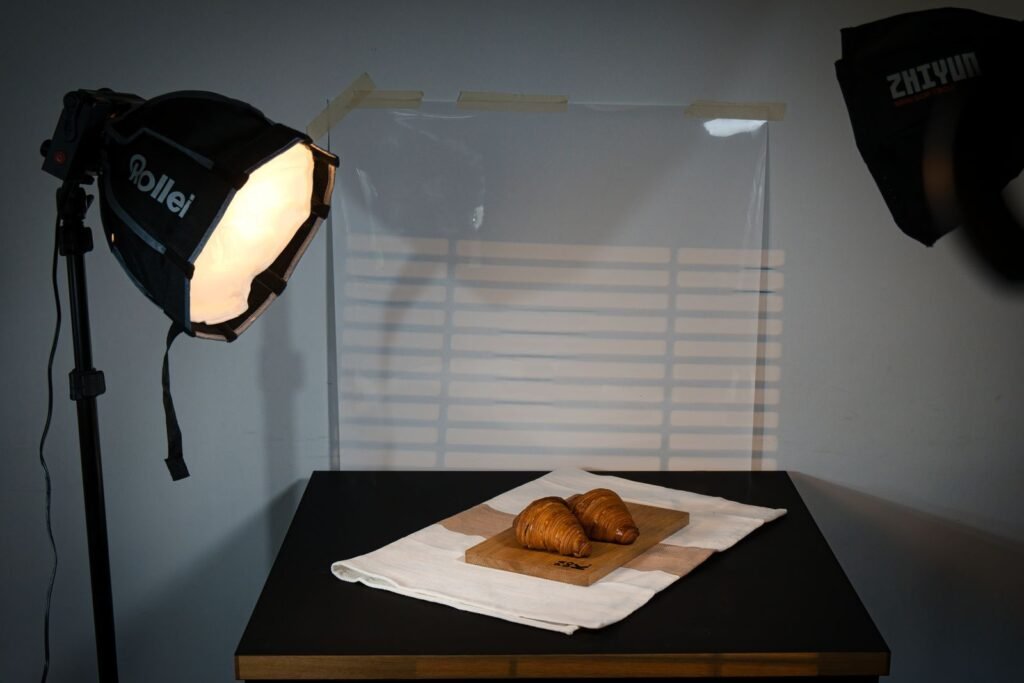
A commercial food photography shoot in Singapore can cost anywhere from about SGD 800 for a focused half-day session to more than SGD 5,000 for a larger campaign with multiple dishes, advanced styling, motion or extensive usage rights. The correct price depends less on the number of photographs than on the preparation, styling, production time, retouching and places where the images will be used.
For a restaurant, cafe, food manufacturer or delivery brand, the cheapest quote is not automatically the best value. A technically competent image may still fail if the portion looks flat, the brand styling is inconsistent or the files are unsuitable for delivery platforms and paid advertising. Singapore’s dense F&B market makes visual differentiation commercially important, especially on social media, delivery apps, menus and Google Business Profiles.
This guide explains food photography Singapore price ranges, what is normally included, how agencies and photographers build a quote, and how to decide whether a proposed package is fit for purpose.
Food photography Singapore price: The local market context
Singapore food businesses operate in a market where customers compare options quickly. A diner may see a restaurant on Instagram, check its Google listing, browse delivery platforms and then look at recent customer photographs before deciding whether to visit. Retail food brands face a similar path across supermarkets, marketplaces, social platforms and their own ecommerce websites.
That journey changes the job of photography. The shoot is not simply about creating attractive pictures for a printed menu. It may need to produce square social assets, vertical story crops, wide website banners, delivery-platform images, product pack shots and detail photographs for a paid campaign. Each format can affect the composition, number of setups and time required.
Singapore’s operating costs also influence pricing. Studio hire, transport, assistants, food stylists, prop sourcing, culinary preparation, equipment and post-production all add to the production budget. A photographer shooting in a client’s premises may need to work around a busy kitchen, inconsistent natural light and limited space. A controlled studio offers more consistency, but introduces rental and logistics costs.
PDPA considerations matter when people appear in the frame. If a shoot includes staff, diners or user-generated content, the business should clarify consent and intended usage before publication. The same discipline applies to brand assets, packaging and locations. A commercial shoot should be planned around how the images will be distributed, not only how they look on the photographer’s portfolio.
For businesses considering support beyond a single shoot, our content marketing services in Singapore can connect visual production with the pages, campaigns and editorial assets that use the final images. Photography becomes more valuable when it is planned as part of a customer acquisition system rather than treated as an isolated creative purchase.
What determines food photography pricing in Singapore?
Number of dishes is only the starting point
A quote based only on the number of dishes can be misleading. Ten straightforward plated dishes may take less time than three hero dishes requiring complex garnishing, steam effects, pouring shots or several styling variations. The photographer needs to understand the intended shot list before giving a useful estimate.
The main questions are practical. How many finished dishes need to be photographed? Does each dish require a hero angle and detail angle? Are there ingredient, preparation or packaging shots? Will the food be supplied ready to shoot, or does someone need to prepare and style it on set? Will the same dish be photographed in multiple compositions for different channels?
In our experience, a clear shot list is one of the simplest ways to prevent budget surprises. It lets the client distinguish essential assets from nice-to-have images and gives the production team a basis for estimating setup changes.
Styling and preparation
Food styling is often the difference between a snapshot and a commercial image. The stylist may need to select garnishes, adjust portion placement, manage sauces, replace wilted ingredients, create texture or prepare duplicate portions. Some food photographs require several versions of the same dish because heat, moisture and time affect appearance.
For a small cafe shoot, the chef may be able to plate the food while the photographer directs the composition. For a packaged food campaign, a dedicated stylist may be necessary to make the product look consistent across a range of scenes. Styling fees commonly sit outside a basic photographer-only package, so they should be stated clearly in the proposal.
Location, studio and equipment
Shooting at a restaurant can reduce studio costs and make the images feel authentic. It can also create constraints. Kitchens are busy, daylight changes, tables may be reflective and power or space may be limited. A studio gives the team more control over light, backgrounds and styling, but adds rental, transport and setup charges.
Specialist equipment can also change the price. Macro lenses, overhead rigs, tethered capture, continuous lighting, strobes, diffusion, smoke tools and motion equipment are not always required. They become relevant when the brief includes close texture, pouring, splashing, steam or video-compatible production.
Retouching and delivery requirements
Basic colour correction and cropping may be included in a standard package. Detailed retouching is a separate level of work. It can include removing crumbs, repairing packaging, cleaning reflections, rebuilding imperfect ingredients, balancing surfaces and creating precise web-ready exports.
Ask whether the quote includes high-resolution files, web-optimised files, different aspect ratios and naming conventions. A restaurant may need a small selection for its menu, while a food manufacturer may need a structured asset library for ecommerce, distributor presentations and campaigns. The more versions required, the more important post-production planning becomes.
Usage rights and exclusivity
Usage rights are frequently overlooked in food photography quotes. A photographer may license images for the client’s own website and social channels, while paid advertising, packaging, outdoor media, editorial licensing or third-party retailer use may require broader terms.
There is no universal correct licensing model. The right approach depends on the campaign. A neighbourhood restaurant may need simple, ongoing use on owned channels. A packaged food brand launching across Singapore may need permission for retail, print, paid media and partner distribution. Confirm the duration, territory, channels, exclusivity and whether the client receives ownership or a usage licence.
Typical food photography prices in Singapore
The ranges below are planning estimates, not fixed market tariffs. A photographer’s experience, production complexity, turnaround and licensing terms can move the final quote significantly. GST, studio rental, props, ingredients, talent and paid usage may also be charged separately.
| Project type | Typical planning range in SGD | Usually suitable for | Main cost variables | Commercial risk if under-scoped |
|---|---|---|---|---|
| Simple half-day restaurant shoot | SGD 800 to SGD 1,500 | A small menu refresh or selected social assets | Number of dishes, location readiness, basic retouching | Too few usable crops or inconsistent dish styling |
| Full-day restaurant or cafe shoot | SGD 1,500 to SGD 3,000 | Menu, delivery platforms, website and organic social content | Shot list, styling support, setup changes, file versions | Important menu items may be rushed near the end of the day |
| Product and packaged food shoot | SGD 1,500 to SGD 4,000 | Ecommerce listings, catalogues and product launches | Pack preparation, reflections, backgrounds and retouching | Packaging defects and poor consistency across SKUs |
| Campaign shoot with professional styling | SGD 3,000 to SGD 7,000+ | Paid advertising, seasonal launches and brand campaigns | Creative direction, props, stylist, location, licensing | Attractive images may not cover required campaign formats |
| Motion or photo and video production | SGD 4,000 to SGD 12,000+ | Launch campaigns, social ads and recipe demonstrations | Crew size, choreography, sound, editing and deliverables | Still images cannot support the full campaign journey |
A low quote can be appropriate when the brief is narrow and the client is operationally prepared. It becomes risky when the business expects a full content library from a short session. We recommend comparing quotes by deliverables and intended use, not by the photographer’s day rate alone.
For businesses that need a broader digital plan, our full-service digital marketing support can help map photography requirements against search, paid media, website and social priorities. That exercise often reveals that the business needs fewer hero images but more practical variations for conversion points.
What should be included in a food photography quote?
A professional quote should describe the production clearly enough that two parties can identify what is and is not included. At minimum, it should cover the creative brief, pre-production, shoot duration, location, crew, equipment, number of dishes or products, approximate final images, retouching standard, turnaround, file formats and usage rights.
Pre-production may include a briefing call, moodboard, shot list, prop direction and location assessment. Some providers include this work in the project fee. Others charge a creative or production fee. Neither model is inherently better, but hidden preparation costs create friction when the scope changes.
The shoot section should state whether food styling is included and who supplies the ingredients. If the client expects a chef, stylist, assistant or art director, the quote should name that role. It should also specify whether the client can request selects during the shoot or only after receiving a proof gallery.
Post-production should identify how many final images are included and what counts as a revision. A colour correction pass is different from extensive compositing. If the client wants every photograph delivered, confirm whether proofs and unedited files are included. Many commercial projects work better when the client selects a defined number of final images for detailed retouching.
Payment terms are equally relevant. A common arrangement is a deposit to secure the date, a balance on delivery or approval, and additional charges for scope changes. Confirm cancellation terms, rescheduling, overtime, rush delivery and the treatment of unused ingredients or props.
Our team recommends asking for a sample delivery specification. It should show file dimensions, colour profile, naming structure and versions for the channels that matter. A beautiful file that cannot be uploaded cleanly to a delivery platform is an avoidable production failure.
How to plan a food photography shoot for business results
Start with customer touchpoints
Before choosing a style, list where customers will encounter the images. A restaurant might prioritise Google Business Profile, delivery listings, menu boards, Instagram and its website. A food manufacturer might prioritise ecommerce product pages, distributor decks, retail listings, recipe content and paid social.
Each touchpoint has a different job. A menu image must make the dish easy to identify. A hero image should create appetite and communicate the brand. A product image may need to show packaging accurately. A lifestyle image should place the product in a believable consumption context. One photograph rarely performs all these jobs equally well.
Build a shot hierarchy
Divide the brief into essential, supporting and experimental images. Essential images cover the products or dishes customers must understand. Supporting images create variety, detail and reusable backgrounds. Experimental images test a new visual direction without consuming the whole budget.
This hierarchy helps when the shoot runs behind schedule. The photographer and client know which assets must be completed first. It also prevents a common problem, spending too much time perfecting one hero setup while leaving the rest of the menu undocumented.
Prepare the food and location
Operational preparation has a direct effect on the final cost. Ingredients should be available, dishes should be tested, packaging should be clean and the kitchen or studio should be ready before the crew arrives. If the team loses an hour waiting for food, the business is effectively paying for production time without receiving more images.
For restaurants, nominate one decision-maker who can approve plating and selects. For packaged products, prepare duplicate units because labels, seals and surfaces can show defects under strong lighting. For delivery businesses, decide in advance whether the image should show the actual delivered portion or an ideal plated presentation. Accuracy protects customer trust.
Connect assets to distribution
Photography should be planned alongside the channels that will distribute it. If the business intends to run Google Ads, the landing page and offer need suitable visual support. If the priority is organic discovery, product and menu pages need useful copy and technical SEO. Our SEO services in Singapore and copywriting support are relevant when images are part of a larger search and conversion project.
Images do not replace a clear offer, fast mobile experience or accurate information. They support those elements. A restaurant with excellent images but outdated opening hours still loses customers. A food product with attractive photography but weak delivery information still creates hesitation.
Comparing photographers, studios and agencies
The best supplier depends on the problem being solved. A specialist food photographer may be the right choice for a focused shoot and can offer strong craft at a clear production fee. A studio may be useful when the brand needs controlled pack shots, repeatable lighting and a catalogue system. An agency may be more appropriate when the images need to feed a website, content, paid media and social campaign.
| Evaluation factor | Independent photographer | Commercial studio | Digital marketing agency | Best fit when |
|---|---|---|---|---|
| Creative control | Often high and personal | Structured and production-led | Linked to campaign strategy | The brief has a defined visual direction |
| Strategic distribution | Usually limited to the shoot | Usually limited to production | Stronger across search, web, paid and social | Assets must support customer acquisition |
| Production scale | Small to medium | Medium to large | Varies, often coordinated with partners | Many products or formats are required |
| Pricing clarity | Often simple for narrow scopes | Detailed production estimates | May bundle strategy and channel work | The client can define deliverables clearly |
| Revision and campaign adaptation | May require a new booking | Usually handled as production changes | Can be planned into content workflows | The brand expects ongoing use and iteration |
A common purchasing error is to compare a photographer’s quote with an agency’s quote as though both include the same work. They often do not. The photographer may be pricing capture and retouching. The agency may include planning, channel specifications, creative direction, copy, landing page requirements and campaign rollout.
We found that the right comparison begins with a shared brief. Give each supplier the same number of dishes, formats, usage needs and deadline. Then compare the quality of the proposed process, not merely the total at the bottom of the page.
If the images are intended for a new site or online shop, website structure also matters. Our website design services and ecommerce website design in Singapore can be considered when product photography is being commissioned for a conversion-focused rebuild.
FIELD NOTES
- 1 shot list: This is the minimum planning document we recommend before requesting comparable quotes. Without it, suppliers make different assumptions about dishes, angles and final files.
- 2 decisions: Nominate a creative approver and an operational contact. Having two clear roles reduces delays when plating, selects or brand details need an immediate decision on set.
- 3 formats: At minimum, consider square, vertical and landscape crops if the images will appear across social, websites and advertising. Designing only for a single crop can create expensive reshoots.
- 24 hours: Allow at least a full working day for internal review where possible. Rushed approvals often lead to avoidable retouching requests and missed campaign deadlines.
- 6 months: Review the asset library after six months of active use. Dishes, packaging, prices and brand priorities change, so an image library should be managed rather than left untouched indefinitely.
The uncomfortable truth about cheap food photography
The lowest food photography quote is often not the lowest total cost. It can be economical for a tightly defined task, but it becomes expensive when the business later discovers that the images do not work across its actual channels.
A business may commission ten photographs, then ask for vertical crops, banner versions, cut-outs, packaging corrections and alternate backgrounds. If those requirements were not included in the original brief, the business pays through additional editing or another shoot. The original price looked low because the scope was incomplete.
The contrarian position is this: businesses should sometimes buy fewer final images, not more. Ten well-planned images that cover the homepage, menu, paid social and product pages can create more value than thirty similar photographs that provide no useful variation. The goal is not to fill a folder. It is to remove visual obstacles from the customer journey.
This does not mean every business should choose a small shoot. A large menu, seasonal calendar or multi-SKU product range may justify extensive production. It means the volume should follow distribution and commercial priorities. In our experience, clients get better value when they decide which customer questions each image must answer before adding more dishes to the shot list.
Another uncomfortable point is that photography alone rarely fixes weak conversion. If customers cannot find pricing, delivery information, allergens, opening hours or a clear booking action, better images have limited effect. We see stronger outcomes when photography is commissioned alongside the page and campaign changes that give each asset a job.
That is also why technical decisions matter. Image dimensions, compression, accessibility text and page speed affect how assets perform online. The visual brief and the digital implementation should be connected from the start.
Client example: a Singapore restaurant planning a menu refresh
We worked with a Singapore restaurant that needed fresher menu and social images but did not want to photograph every item on its menu. The initial instinct was to book a short session and capture as many dishes as possible.
The planning discussion changed the scope. The restaurant identified its priority dishes, the images needed for delivery listings, the formats required for social posts and the seasonal content it expected to publish. The team then separated hero images from supporting detail shots and prepared duplicate portions for dishes likely to change during the session.
The useful lesson was not a particular result or a claimed percentage improvement. It was the change in decision-making. Instead of asking how many dishes could fit into a day, the restaurant asked which assets would help customers choose, understand and order. That produced a more defensible brief and made the quotation easier to evaluate.
For a food manufacturer, the same principle might involve separating accurate pack shots from lifestyle images. For a cafe, it might mean prioritising bestsellers, interiors and seasonal offers. The commercial logic is consistent even when the visual style differs.
Frequently Asked Questions
How much does food photography cost in Singapore?
A focused half-day shoot commonly falls around SGD 800 to SGD 1,500, while a full-day restaurant or cafe shoot may be around SGD 1,500 to SGD 3,000. Product campaigns with styling, studio production, detailed retouching or wider usage rights can reach SGD 4,000 to SGD 7,000 or more. Treat these as planning ranges and check whether GST, props, ingredients, studio hire and licensing are included.
Should a restaurant hire a photographer or a digital marketing agency?
Hire a specialist photographer when the requirement is a clearly defined shoot with limited strategic support. Consider an agency when the images need to support website changes, search, paid campaigns, social content and conversion planning. The decision should be based on the full deliverable, not supplier labels. Ask who will create the shot list, manage formats and connect the images to the channels that matter.
How many dishes should be photographed in one session?
There is no useful universal number. It depends on plating complexity, styling, setup changes and the number of angles required. A simple menu refresh may cover more dishes than a campaign shoot with elaborate styling. We recommend prioritising dishes by commercial importance, then defining hero and supporting shots. This protects the essential images if the schedule becomes tight.
Are food styling and retouching included in the price?
Sometimes, but never assume. Basic colour correction may be included, while a food stylist, prop stylist, advanced retouching or compositing may cost extra. Ask the supplier to define the retouching standard with examples and to identify who supplies ingredients and props. A detailed quote should also state how many final images receive full retouching.
Do I need a studio for food photography in Singapore?
Not necessarily. A restaurant, cafe or commercial kitchen can provide useful context and reduce studio costs, but it may introduce space, light and scheduling constraints. A studio is preferable when the brand needs controlled lighting, clean backgrounds, consistent product shots or complex styling. The right location is the one that supports the required images without creating avoidable production delays.
What usage rights should a Singapore food business request?
Ask for rights that match the intended channels, such as the website, organic social, delivery listings, email, paid advertising, print and packaging. Confirm territory, duration, exclusivity and whether third-party partners may use the images. A neighbourhood restaurant may need straightforward ongoing owned-channel usage, while a packaged food brand may require broader commercial rights for retailers and campaigns.
Is professional food photography worth paying for if we mainly use Instagram?
It can be, but the business should assess the complete content plan. Instagram may require multiple crops, recurring formats and a consistent visual system rather than a single set of hero images. If the business can reuse the assets across menus, listings, website pages and paid campaigns, the value is easier to justify. If the shoot produces images for only one short post, a narrower production may be more sensible. For teams that would rather hand this to a specialist, see our video and photography production services.
Closing recommendation
Before requesting a food photography quote in Singapore, define the dishes, customer touchpoints, formats, styling level, retouching standard, deadline and usage rights. Then ask suppliers to price the same brief. This is more reliable than comparing day rates or choosing the cheapest headline package.
For a small restaurant, start with the images that remove the biggest buying hesitation. For a food brand, separate accurate product assets from campaign-led lifestyle work. For a larger launch, connect production to the website, content and paid media plan before the camera is booked.
Our recommendation is straightforward: commission photography as a commercial asset library, not as a collection of attractive pictures. If you want help assessing the scope, channel requirements or wider digital plan, you can contact Digital Marketing Singapore with your menu, product range and intended uses, and our team can help clarify the next step.

Natasha Tan is the founder of Digital Marketing Singapore, a full-service SEO and digital marketing agency based in Singapore. With hands-on experience across SEO, paid media, and content strategy, she works directly with Singapore businesses to build organic visibility and generate consistent leads. Natasha specialises in the Singapore market — including local search behaviour, PDPA compliance, and government grant navigation for SMEs.