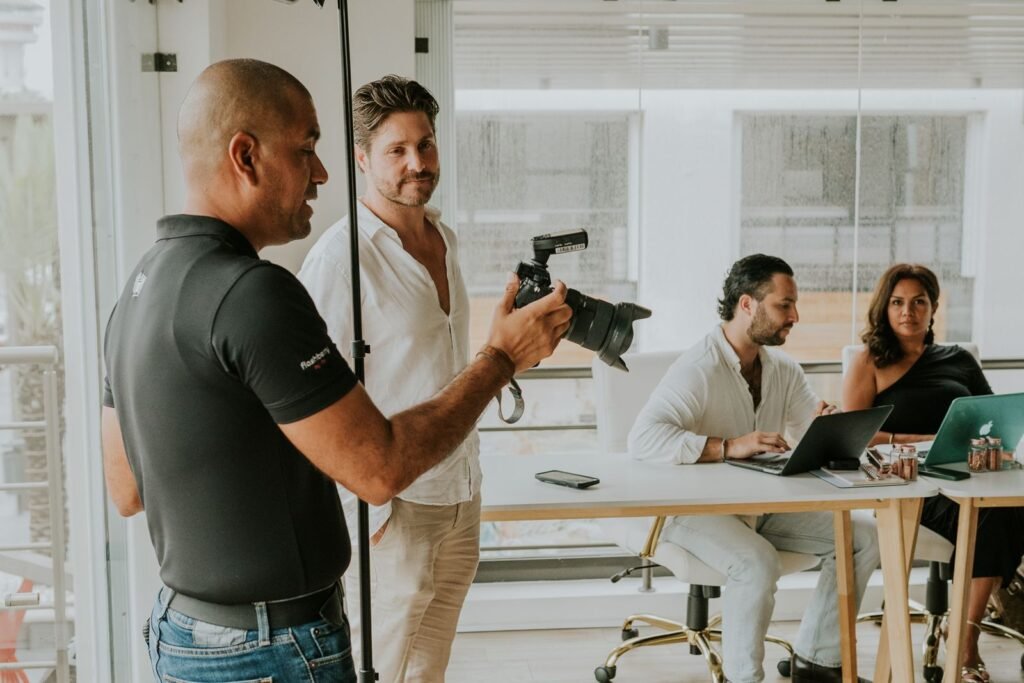
A good corporate event photographer does more than document who stood on stage. They deliver a usable record of the event: images that show the speakers, audience, atmosphere, sponsors and key moments, with files ready for the channels and deadlines you care about. The difference usually starts before the event, with a clear brief, a prioritised shot list and agreed delivery terms.
For Singapore businesses, that brief also needs to reflect practical constraints such as venue access, tight run-of-show timings, guest privacy and the use of images across regional or global channels. This guide explains what to tell a corporate event photographer, how to build a shot list, what turnaround to agree and how to assess a quote. The aim is not to collect the most photographs. It is to make sure the photographs you receive are relevant, cleared for their intended use and delivered when your team can still act on them.
The Singapore market angle: venue, permissions and intended use
Corporate events in Singapore range from a product launch in a hotel ballroom to a customer conference at a convention centre, an internal town hall, a trade event at Singapore EXPO or a networking reception in a restaurant. The event type affects the photography brief. A conference may need clear speaker and audience coverage. A launch may need product details, partner interactions and carefully timed reveal images. A staff event may need more candid interactions and fewer formal stage photographs.
The venue is not a minor logistical detail. Each location can have its own rules for loading equipment, access to the stage, flash photography, tripods, backstage movement and where a photographer may stand. Confirm those rules with the venue and event organiser before briefing the photographer. If the event is in a hotel or exhibition space, ask whether the photographer needs to be registered as a contractor, attend a technical rehearsal or provide equipment details in advance. A photographer who only learns the restrictions on arrival may miss the very moments the brief prioritises.
Guest privacy needs equal attention. Under Singapore's Personal Data Protection Act (PDPA), organisations should consider how personal data is collected, used and disclosed. Identifiable event photographs may be personal data, depending on the circumstances and how they are handled. This is not a substitute for legal advice. It is a practical reason to coordinate with the person responsible for privacy, event registration and attendee communications. Decide how guests will be informed, how opt-outs will be handled, and whether there are people who should not be photographed or published.
The distinction between taking a photograph and having the right to use it matters. Ask the photographer to set out image licensing, ownership, permitted channels, territory, duration and any restrictions in writing. Then check that those terms align with the event registration notice and your own communications plan. A team may intend to use images in a Singapore press release, on LinkedIn, in paid advertising, on a global website and in next year's event promotion. Those uses should not be assumed to be covered by a vague promise of "full usage".
Singapore events also tend to run to a tight programme, with speakers arriving from different markets and changes happening on site. The photo brief should include a named decision-maker who can approve quick changes, coordinate VIP access and resolve conflicts between stage coverage and other requested shots. We see avoidable gaps when several internal stakeholders give different instructions but nobody has authority to set priorities. One event contact keeps the photographer working from a consistent plan.
Build the brief around outputs, not just the event schedule
Start with what the images need to do after the event. If the communications team needs a same-day LinkedIn post, that is a different delivery requirement from an annual report due next month. If the sales team wants images of product demonstrations and customer conversations, a programme that only lists speeches does not tell the photographer what to capture. In our experience, teams get a more useful result when they explain the intended audience and use of the images before discussing the camera setup.
A concise brief should identify the event's purpose, audience, venue, date, access times, programme, dress code, key people, important brand details, delivery deadline and image usage. Include the event name and correct spelling of organisations, products, titles and speakers. Provide a pronunciation guide where names may be unfamiliar. If a photograph will be used with a caption or press release, confirm the preferred names and job titles with whoever owns that information. Photographers can capture the moment, but they should not be expected to verify every factual detail afterwards.
Explain the visual style in practical terms. "Professional" and "dynamic" mean different things to different teams. Better instructions might be: clean stage images with screens legible where possible; candid networking photographs that show people actively talking; a mix of wide room views and closer interactions; neutral colour treatment consistent with the brand; and no staged handshake photographs unless specifically requested. If you have reference images, label what you like about them. Is it the framing, lighting, level of formality or balance between people and venue? A reference should guide the photographer, not require an exact copy of another event.
Give the photographer a run sheet, but identify the parts that are fixed and the parts that may change. Mark the doors-open time, registration, keynote, panel, product reveal, award presentation, group photograph and networking period. Add the expected location of each segment and a contact who can confirm changes. A timetable is particularly useful if the photographer has to cover simultaneous activity, such as a plenary session and a sponsor demonstration. State which one takes precedence if one person cannot be in both places.
The brief should specify the delivery package in operational terms. Ask how many edited photographs are included, whether there is a preview or same-day selection, what file formats and resolutions will be supplied, how files will be organised, and how long the download gallery will remain available. Clarify whether basic colour correction is included and whether extensive retouching, image compositing or removal of objects is extra. We recommend agreeing on a practical selection rather than requesting every frame. A smaller, well-edited collection is easier to review, caption, approve and publish.
For a campaign where photographs need to sit beside copy, landing pages or paid media, plan the assets together. DMS helps businesses coordinate creative and channel requirements through its content marketing services and copywriting services. The point is not that every event needs a larger marketing package. It is that the photographer should know whether the final images need to support a specific campaign, an event recap or a continuing library of brand content.
Make the shot list prioritised and achievable
A shot list is a priority guide, not a promise that every named person can be photographed in every possible combination. It should distinguish essential images from useful extras. Put the moments that cannot be repeated at the top: a launch reveal, award handover, signing, keynote, group photograph or VIP arrival. Add expected time and location when known. For people who must appear, provide names, roles and a reference photo if appropriate, and tell the photographer who can identify them on site.
A practical list often has five categories. First, establish the event: venue exterior or entrance, registration, room setup, stage and signage. Second, capture the programme: speakers, panelists, audience questions and audience reactions. Third, cover people: guests networking, organisers at work, partners and VIPs. Fourth, document the story: product details, demonstrations, sponsor areas, awards or a reveal. Fifth, create usable communications images: a few clean frames with space for text, horizontal and vertical compositions, and portraits that can work as speaker or team features.
Do not make every category equally important. If the launch moment is the reason the event exists, it should not be buried among twenty optional images of venue decor. A useful brief gives the photographer the top five or so must-have outcomes, then a supporting list. It also names the people who can help arrange a quick portrait or identify a guest. The photographer should have room to respond to moments that were not on the schedule, but flexibility works best after the non-negotiable requirements are clear.
Think about format as well as subject. A photograph that works as a wide image on a desktop website may crop badly in a vertical social placement. If the team knows it needs both, request suitable compositions rather than assuming that a crop can solve everything later. Tell the photographer which channels matter, whether text will be overlaid, and whether the image must leave clear space on one side. DMS's website design services may be relevant when event photography will be used on a campaign page or corporate site, because image dimensions and page layout should be considered together.
The shot list should also say what not to photograph. Examples include confidential screens, unreleased products, private conversations, empty plates, identifiable guests who have opted out, or an area where photography is restricted. Include instructions for handling a guest who declines a photograph. Make the event contact responsible for resolving uncertainty rather than expecting the photographer to interpret privacy policy in the middle of a keynote.
A final check is whether the shot list can be completed with one photographer. If the event includes simultaneous rooms, a stage programme and a separate networking reception, explain the overlap and ask the photographer to recommend coverage. A second photographer may be worthwhile when simultaneous moments are important, when the venue is large or when the brief needs both close stage work and candid coverage elsewhere. If the schedule allows one person to move between locations and the priority is clear, a second photographer may add cost without adding enough value. Decide from the coverage gap, not from a vague preference for more images.
What to expect on pricing and turnaround
Photography quotes should be compared on scope, not just the number at the bottom. A lower fee can exclude preparation, additional coverage hours, transport, assistant support, editing, expedited delivery or usage beyond a narrow set of channels. Ask each photographer to price the same brief and show what is included. For planning purposes, a straightforward Singapore corporate event might require a budget in the broad range of SGD 800 to SGD 1,500 for a shorter assignment, while full-day or more complex coverage may fall around SGD 1,500 to SGD 3,000 or more. These are indicative planning ranges, not a market tariff or a DMS quote. Scope, experience, deliverables, timing and licensing all affect the final fee.
Ask the supplier to distinguish coverage time from the total time commitment. A three-hour event may require earlier arrival, a technical check, travel, a briefing and post-event editing. Confirm whether the quoted hours begin at the photographer's arrival or at the first scheduled programme item. Agree on the process for overtime and who may authorise it. This avoids an awkward discussion when a speech runs late or the networking session continues beyond the booking.
Turnaround should be agreed in days and deliverables. A same-day selection for a social post is not the same as a full edited gallery. If same-day images are essential, specify how many, what level of editing they receive, how they will be transferred and who is available to approve them. For the main gallery, set a deadline that suits the communications workflow, not an arbitrary demand for immediate delivery. A team that cannot review images until the following week gains little from paying extra for a full gallery overnight.
Ask whether the photographer will provide a small preview selection, and make sure the preview is not confused with the final delivery. Find out whether the gallery includes web-ready and high-resolution files, whether the files are watermarked, and whether image names or metadata can be supplied in a way that helps your team organise them. If you require retouching, identify the specific images and the required treatment. Extensive retouching across a large gallery can increase both cost and delivery time.
For broader campaign support, DMS's digital marketing services can help connect the content plan with search, paid media and social distribution. If event images will support a paid search or follow-up campaign, align the photography deadline with the media plan. A photographer's delivery date is one part of the chain. Internal approvals, captions, landing page updates and ad reviews also need time.
Compare photographers by coverage risk, not by portfolio alone
A polished portfolio proves that a photographer can make attractive images. It does not prove that they understand your event, can work around venue restrictions, will deliver on the agreed schedule or have clarified usage rights. Ask to see examples that resemble your event format. A hotel ballroom conference, a restaurant reception and a product demonstration place different demands on access, lighting and timing. Then ask how the photographer would cover the specific moments in your brief.
|
Evaluation point |
Lower-risk answer |
Follow-up if unclear |
|---|---|---|
|
Briefing |
Photographer reviews the run sheet and confirms priorities before event day |
Who will confirm changes and identify VIPs? |
|
Coverage |
Quote defines hours, locations, arrival time and overtime approval |
Are simultaneous sessions included, and by whom? |
|
Delivery |
Preview and final gallery dates, formats and file access are specified |
What is included in same-day delivery versus the edited gallery? |
|
Usage |
Written terms cover intended channels, duration and territory |
Are paid ads, partner use and global publication included? |
|
Privacy |
Client and photographer agree on opt-outs and restricted subjects |
Who handles guest requests during the event? |
|
Resilience |
Photographer explains backup equipment and contingency arrangements |
What happens if illness or equipment failure prevents coverage? |
The comparison should also account for working style. Ask how the photographer handles a late-running programme, a sudden change of stage, a speaker who declines a portrait or a VIP who has only a short window. You do not need to test a supplier with a contrived scenario. A direct conversation can show whether they have thought through the real constraints. We found that a clear answer about communication and fallback plans is often more useful than a long equipment list.
Check the deliverables and rights before you sign. A photographer may retain copyright while licensing agreed use to your organisation, which is different from an outright transfer. Neither arrangement is automatically right for every company. The key is that the terms match your likely use. If a sponsor, event partner or regional office will need the files, state that up front and ask how sublicensing or sharing is handled. Confirm whether the photographer may use the images in their own portfolio, and whether that is subject to your approval or an embargo.
A photographer's event coverage can sit alongside other production needs, but the services should not be confused. Video interviews, event highlights and photography require different schedules and resources. DMS's production services can support broader content production planning. For a photography-only brief, be explicit that video is not required, or specify a separate video deliverable so that the supplier does not assume one is included.
FIELD NOTES
-
5 priority images or outcomes is a useful starting point for the must-have part of a brief. It forces stakeholders to rank the moments that matter instead of sending an unfiltered wish list.
-
2 versions of a key composition, horizontal and vertical where feasible, can make one moment more adaptable across a website, presentation and social post. Discuss framing before the event rather than relying on a later crop.
-
1 named event contact should make decisions and relay schedule changes. A single point of contact reduces conflicting directions and helps the photographer respond quickly.
-
24 hours is a sensible planning window to discuss when same-day or next-day previews are important. It is a requested service level to confirm with the supplier, not a universal delivery promise.
-
3 items should be explicit in usage terms: where images can appear, for how long and who may use them. Clear terms prevent avoidable disputes when partners or regional teams request files later.
-
2 coverage locations happening at once create a real staffing decision. If both moments are essential, ask whether a second photographer is needed rather than assuming one person can cover both.
The uncomfortable truth: more coverage can produce less useful photography
It is tempting to treat a longer booking and a larger gallery as safer choices. They are not automatically safer. More hours can mean more photographs of low-priority activity, while a large, poorly organised gallery increases the work required to find, caption and approve the images you need. If the brief has no hierarchy, extra coverage does not solve the underlying problem. It simply captures more of the ambiguity.
The better investment is usually clarity about the decision the images must support. If the event is intended to strengthen partner relationships, identify which people and interactions demonstrate that story. If the objective is to announce a product, make the reveal, product details and relevant audience reaction the priority. If the goal is an internal culture record, the image mix may need to include teams outside the executive group. The answer changes with the event, which is why generic shot lists are weak.
There is also a risk in asking the photographer to make marketing decisions without giving them context. A photographer can notice a strong moment and use visual judgement, but they cannot reliably infer which sponsor needs prominence, which product can be shown publicly or which executive should be featured. That is the organiser's responsibility. In our experience, the strongest event briefs leave room for creative judgement while setting firm boundaries around priority, privacy and intended use.
Do not choose a supplier solely because they promise the fastest turnaround, either. Speed is valuable when there is a real publishing deadline. But when a rushed gallery arrives before anyone has confirmed names, cleared use or checked the event messaging, faster delivery can create extra work. We recommend paying for expedited images only when a named person can review and publish them promptly. Otherwise, invest in a realistic delivery plan and a reliable selection process.
Client example: event coverage that helped a MICE company win more proposals
One MICE company we worked with ran corporate conferences and incentive trips in Singapore, a market where every agency claims flawless execution and corporate clients want to see real events before they choose a partner.
We chose four upcoming events that showed the company's range, a regional sales conference, an awards gala, an incentive trip and a product launch, and agreed filming permissions and brand rules with each end client before the day. Coverage included same-day edits delivered on site and highlight reels afterwards.
Five months in, the company received 9 proposal requests a month instead of 6 and won 33% of its proposals, up from 24%. Highlight reels averaged 5,800 views each on LinkedIn, and two clients booked their next event within weeks. The same planning applies to event photography: agree permissions and the shot list before the day. Read the full MICE event videography case study.
What to send before you confirm the booking
Before accepting a quote, send the supplier the event date, venue, programme, expected coverage hours, guest or speaker priorities, intended uses and preferred delivery date. Ask for a written response on what the fee includes, overtime, travel or other expenses, image selection, editing, file formats, licensing, cancellation terms and backup arrangements. If anything is still unknown, mark it as pending rather than leaving it implicit. A supplier can price and plan more accurately when they know which details are confirmed and which may change.
Once booked, provide the final brief early enough for the photographer to review it and raise questions. Share venue access details, registration or contractor requirements, the floor plan if available, the run sheet, contact numbers, speaker list, brand references and a list of restricted subjects. Confirm the arrival point and who will meet the photographer. Keep one current version of the shot list so that changes do not create competing instructions.
On event day, the event contact should be easy to reach but should not have to direct every frame. Agree in advance how changes will be communicated, then let the photographer work. At the end of the event, confirm the next delivery milestone and the person who will receive the gallery. After delivery, store the licence terms with the files, label the gallery clearly and record any usage restrictions. These habits make it easier to reuse the images responsibly, instead of discovering months later that nobody knows which files are cleared for a particular channel.
DMS's SEM services and social media marketing services may be relevant when event assets are part of a wider acquisition or audience plan. They are not substitutes for a precise photography brief. The photo supplier needs concrete instructions on what to capture and deliver; the marketing team needs to decide where each asset fits after delivery.
Frequently Asked Questions
How far in advance should I book a corporate event photographer in Singapore?
Book once the event date, venue and approximate programme are confirmed, especially if the date falls during a busy conference period or requires specialist coverage. More lead time gives the photographer room to review venue access, plan around simultaneous sessions and clarify usage. If the event is approaching, contact suppliers with the essential details immediately. Be prepared to adjust the shot list or staffing plan if your first-choice photographer is unavailable.
How many photographs should I request?
Request a clearly edited gallery that covers the agreed priorities, rather than a target number detached from the event. The right volume depends on event duration, programme density, number of locations and intended use. Ask how many edited images are included in the quote and whether selecting from contact sheets or requesting additional edits costs extra. A concise gallery that is easy to publish is usually more useful than a large set of near-duplicates.
What should a corporate event photographer cost in Singapore?
As an initial planning guide, a shorter assignment may be around SGD 800 to SGD 1,500, while full-day or more complex event coverage may be around SGD 1,500 to SGD 3,000 or more. These are indicative ranges, not fixed rates. Confirm the hours, editing, delivery speed, licensing, travel, assistants and overtime included. Ask suppliers to quote against the same brief so that you are comparing equivalent scope rather than headline fees.
Should I hire one photographer or two?
One photographer is often suitable when the programme is sequential, the venue is manageable and the organiser has ranked priorities. Consider two when essential moments happen at the same time, the event spans separate locations or the brief requires simultaneous stage and candid coverage. Ask the photographer to explain the coverage gap and recommend a staffing plan. Do not add a second photographer simply to increase the image count if there is no specific coverage need.
Can we use the photographs on social media, our website and in advertisements?
Do not assume that a general photography booking includes every use. Ask for written terms covering channels, territory, duration, paid promotion, partner sharing and portfolio use. Also coordinate the intended use with your attendee communications and privacy process. If regional teams or sponsors may use the images, describe that before signing. A clear licence is easier to agree at booking than to renegotiate after the photographs have been delivered.
How quickly should the edited photographs be delivered?
Agree separate deadlines for any preview, same-day selection and final edited gallery. Same-day delivery may suit a live event post or media update, but it can involve an additional fee and requires someone to review the images promptly. For the full gallery, choose a deadline that allows time for selection and editing while still meeting your campaign schedule. Put the agreed dates in the booking terms rather than relying on a verbal estimate.
What if guests do not want to be photographed?
Set a process before the event. Tell attendees how photography will be used, provide a clear route for raising an objection and identify a contact who can relay opt-outs to the photographer. Agree how guests will be recognised without drawing unnecessary attention to them. The exact approach depends on the event and your organisation's privacy obligations, so consult your privacy lead where needed. The photographer should not be left to create policy on the spot.
Closing recommendation
Before you choose a corporate event photographer in Singapore, write a one-page brief that identifies the event's purpose, five priority outcomes, key people, restricted subjects, image uses, delivery deadlines and the person authorised to make decisions. Compare quotes against that same brief, confirm venue and privacy requirements, and get licensing and turnaround in writing. If a supplier cannot explain how they will cover your most important moments within the real schedule, keep looking. A precise brief will do more for the final gallery than a longer wish list.

Natasha Tan is the founder of Digital Marketing Singapore, a full-service SEO and digital marketing agency based in Singapore. With hands-on experience across SEO, paid media, and content strategy, she works directly with Singapore businesses to build organic visibility and generate consistent leads. Natasha specialises in the Singapore market — including local search behaviour, PDPA compliance, and government grant navigation for SMEs.