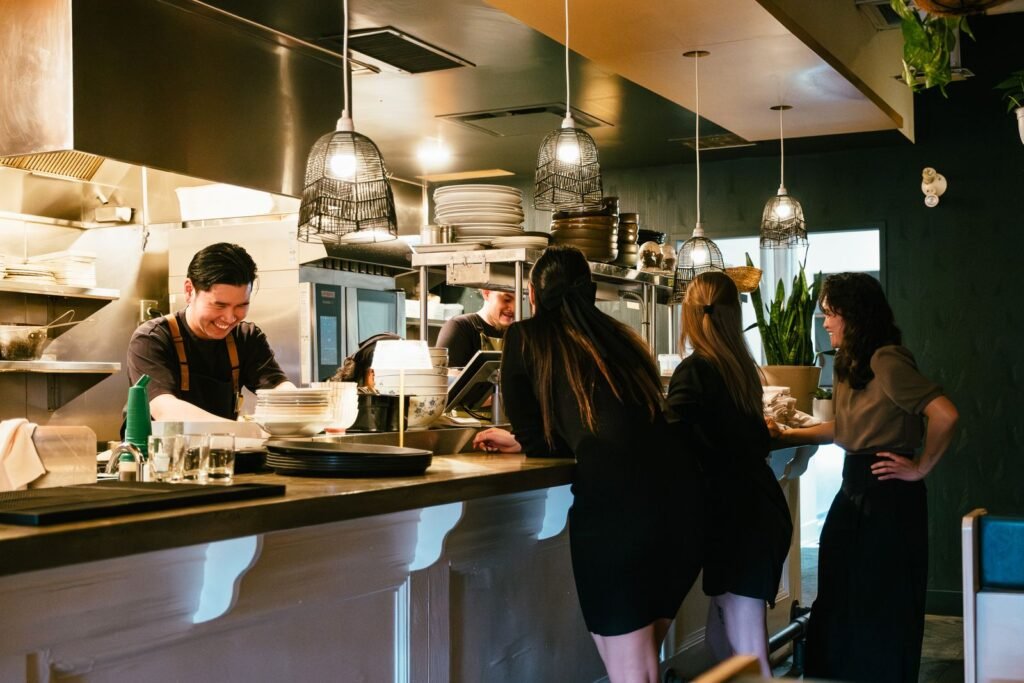
For a Singapore restaurant, cafe or food brand, effective F&B marketing is not simply about getting more people to see a promotion. It is about attracting the right diners, making the next step easy, and giving first-time visitors a reason to return. That usually means joining up local search, social content, a clear website or menu, and a practical retention plan rather than treating each channel as a separate campaign.
Singapore's dense neighbourhoods and competitive dining scene make location and timing especially important. Someone choosing lunch near an office, ordering dinner in a residential estate or planning a group meal has different needs. The best marketing reflects those differences, then measures whether attention leads to bookings, orders or repeat visits. This guide sets out how to build that system, what to prioritise and what to expect from the work.
The Singapore market angle: location, convenience and trust
A diner in Singapore often makes a decision within a small geographic area. They may be comparing restaurants around an MRT station, choosing a takeaway option near home or looking for a place that can accommodate a family, colleagues or dietary preferences. A strong campaign has to make the location, offer and next action clear quickly. Generic creative that could promote a restaurant anywhere is unlikely to answer the practical questions that shape a local decision.
The market also combines many types of F&B businesses in a compact space. A cafe in Tiong Bahru, a halal eatery in Tampines and a central business district lunch operator compete under different conditions, even when they sell similar food. Trading hours, delivery coverage, nearby offices, residential footfall and peak periods all affect which audiences are valuable. In our experience, a useful strategy starts with the outlet's actual catchment and customer behaviour, not a broad claim that every Singaporean is the target audience.
Trust and accuracy matter as much as visibility. Keep prices, opening hours, menus and booking details consistent across the website, social profiles and directory listings. Make sure promotional terms are clear, particularly for limited-time offers and set menus. If a campaign collects personal information for a reservation, loyalty programme or newsletter, handle it in line with the Personal Data Protection Act (PDPA). Collect only what is needed, explain how it will be used and ensure access to customer data is controlled.
Singapore's support schemes, including the Productivity Solutions Grant (PSG) and IMDA's SMEs Go Digital programme, may be relevant when a business is assessing eligible digital solutions. Eligibility, approved solutions and grant conditions can change, so confirm current details directly before budgeting on the assumption that support will be available. A grant is not a substitute for a marketing plan. A business still needs to decide what it wants the technology or service to achieve and how it will judge whether the investment is worthwhile.
Build a channel mix around the diner journey
F&B marketing works best when each channel has a job. Search can capture people already looking for a meal nearby. Social media can show the food, atmosphere and reasons to visit. Paid media can increase reach around a specific offer, opening or location. Email or a consent-based messaging programme can help bring existing customers back. A website or ordering page should make the final decision straightforward.
Start by distinguishing discovery from conversion. Discovery channels introduce a restaurant to people who may not know it exists. Conversion channels help an interested person take action, such as booking a table, placing an order or checking a menu. Retention activity gives past customers a reason to return. A business that measures only reach may mistake exposure for demand. A business that measures only last-click orders can miss the contribution of discovery and brand familiarity.
For a dine-in outlet, local search is often an essential foundation. Accurate business information, location-specific service pages and useful content can support SEO for Singapore businesses. Paid search can complement that work when the intent is immediate, for example when a person is actively searching for a restaurant type or meal in a particular area. The channel choice should reflect the competitive landscape and the value of a booking or order, not an assumption that paid media is automatically faster or better.
Social media should make a restaurant easier to imagine and choose. A mix of menu highlights, preparation details, staff or founder stories, customer occasions and practical information is usually more useful than a constant stream of discounts. A planned social media marketing programme can set a consistent publishing rhythm and give organic content a clear role. For a campaign that relies on external creators, influencer marketing may add reach, but audience fit, usage rights and trackable actions need to be agreed before content is commissioned.
Content should answer real questions. A group choosing a venue may need to know whether it takes reservations, whether there is space for a larger party, what the menu costs and how to get there. A family may care about dietary options or child-friendly seating. A customer ordering delivery wants clear portions, availability and delivery conditions. A practical content marketing plan turns those questions into useful website and social content instead of producing posts simply to fill a calendar.
A restaurant's website should support the decision without adding friction. Put the menu, location, opening hours, booking or ordering route and contact details where visitors can find them. Check the experience on mobile, since someone discovering a place while travelling or deciding where to eat is likely to be using a phone. A website designed to convert should prioritise clarity and speed over decorative effects. If online ordering is central to the model, the customer journey and fulfilment details deserve particular attention.
What to expect from an F&B marketing process
A sound process begins with a short commercial diagnosis, not an immediate content calendar. First, identify the business model and the commercial outcome: more weekday covers, higher-value group bookings, direct orders, stronger awareness for a new outlet or more repeat visits. Then review the menu, pricing, service area, current customer path, existing channels and the data available to measure activity. Different objectives call for different plans. A delivery-led brand and a reservation-led restaurant should not be handed the same channel mix by default.
Next, map the customer journey and identify the point of friction. A campaign might be generating visits to a menu page, but the menu could be hard to read on mobile. Social posts might generate saves, yet the location and booking link may be missing. Paid search might attract clicks from outside the delivery radius. Fixing those problems can be more valuable than increasing media spend. Our team recommends agreeing on the conversion action and reporting method before a campaign launches.
The execution stage can include local search optimisation, paid campaigns, social content, copywriting, photography, short-form video or landing page work. The right scope depends on the gap identified in the diagnosis. For example, if the restaurant has strong food photography but unclear offers and weak calls to action, better copywriting for web and campaign pages may be the more useful first step. If the offer is already compelling but nobody nearby sees it, paid distribution or local SEO may deserve more attention.
Finally, review performance against the original objective and adjust. Separate platform activity from business outcomes where possible. Ad impressions, video views and follower counts can help explain delivery, but they do not prove that a campaign generated profitable business. Look at booking enquiries, orders, redemption behaviour, returning customers and the quality of demand. For businesses using several channels, a broader digital marketing strategy can clarify how the parts work together and prevent each platform from optimising to a different goal.
The first review should not be treated as a final verdict. F&B demand can vary by day, season, weather, holidays, promotions and outlet capacity. Make changes based on a useful pattern, not a reaction to one quiet service or one unusually busy weekend. In our experience, a disciplined testing process is more informative than repeatedly changing the offer, audience and creative at the same time.
Compare channels by job, cost and operational fit
There is no universal best channel for an F&B business. A channel can be effective in one situation and wasteful in another. The table below compares typical roles and constraints to help decide where to start. These are planning considerations, not performance guarantees.
|
Channel or activity |
Best suited to |
Main cost or effort |
What to assess before prioritising |
|---|---|---|---|
|
Local SEO |
Capturing nearby search demand and improving the accuracy of location information |
Ongoing optimisation and content work; progress typically takes time |
Whether local searches are relevant, listings are accurate and the website answers location-specific questions |
|
Paid search |
Reaching people actively searching for a relevant meal, venue or service |
Media spend plus campaign management |
Search intent, competition, conversion tracking and whether the outlet can serve the targeted area |
|
Social content |
Showing food, atmosphere, occasions and brand personality |
Planning, production, approvals and consistent publishing |
Whether the business can produce distinctive content and respond to audience interest |
|
Paid social |
Promoting a launch, offer, event or location to a selected audience |
Media spend plus creative production and management |
Whether the offer has a clear audience, a useful landing destination and a measurable action |
|
Website or ordering improvements |
Removing friction between interest and booking or purchase |
Design, development, copy and integration work |
Mobile usability, menu clarity, booking or ordering steps and operational capacity |
|
Customer retention |
Encouraging repeat visits from people who have opted in |
Offer planning, customer data management and message production |
Consent, audience relevance, frequency and the real reason customers should return |
Use the comparison to make a choice, not to add every channel at once. If the restaurant cannot fulfil a surge in demand during its busiest period, a campaign optimised purely for volume can create service problems. If the outlet has capacity on weekday afternoons, a more specific offer may fit better than a general awareness campaign. If online bookings are difficult to complete, more traffic could amplify a conversion problem rather than solve it.
Budget should follow the required work and the business's capacity to act on it. As a planning reference, a small, tightly scoped F&B engagement for one outlet may start around SGD 1,500 to SGD 3,000 per month for a limited channel or defined set of deliverables. A broader programme involving multiple channels, content production, reporting and campaign management may be around SGD 3,000 to SGD 8,000 or more per month. These are indicative planning ranges, not fixed DMS package prices or a promise of results. Media spend, photography, video, website development and multi-outlet complexity may be additional, depending on scope.
Ask what each quote includes. Does it cover media spend or only management? How many outlets, campaigns or content assets are in scope? Who supplies photography and menu information? Is tracking configuration included? How often will performance be reviewed, and who is responsible for implementing website changes? A low monthly fee can be poor value if essential work is excluded, while a larger scope can be unnecessary if the business has not established what it needs to improve.
Field Notes
-
1 outlet at a time: If a brand has several locations, begin by checking whether each outlet has accurate details, a usable local landing page and a distinct trading context. This matters because a single generic campaign can obscure location-level differences in demand and capacity.
-
2 conversion routes: Decide whether the primary action is a booking, direct order or visit before launching a campaign. This matters because each route needs its own destination, tracking and operational follow-through.
-
3 practical content questions: Check whether a new customer can quickly find the menu, location and opening hours. This matters because missing basic information can undermine otherwise persuasive social posts or search visibility.
-
4 weeks for an initial review: Use an initial review window as a working checkpoint, not a guaranteed results deadline. This matters because teams need enough time to check delivery, tracking and early behaviour without treating one day's fluctuations as a trend.
-
5 checks before a promotion: Confirm the offer terms, dates, outlet eligibility, redemption process and staff instructions. This matters because an unclear promotion can create customer frustration and operational confusion even when the advertising reaches the right people.
The uncomfortable truth: more reach can be the wrong goal
F&B businesses are often told to grow reach, post more frequently or spend more on ads. Those actions are not inherently useful. If an outlet has no clear point of difference, an unclear menu or a slow ordering journey, more exposure can simply send more people into a poor experience. If the kitchen is already at capacity during the promoted period, successfully increasing demand can damage service quality and reviews.
We see a better question: which customers should the business attract, at what time, through which offer, and can the operation serve them well? For a neighbourhood restaurant, attracting nearby residents who return may be more valuable than reaching a much larger audience that is unlikely to visit. For a catering business, qualified enquiries may matter more than social engagement. For a new concept, a campaign may need to explain the offer before it asks people to book.
This position is not an argument against reach or paid media. It is an argument against treating reach as the objective. A good campaign can deliberately increase awareness, but it should have a reason for doing so and a way to learn from the audience response. If the business is still resolving service, pricing or conversion issues, fixing those foundations can be the more commercially responsible marketing decision.
That also affects how you evaluate an agency. Ask the team to explain what it would not recommend and why. A practitioner should be able to identify dependencies, such as missing tracking, insufficient operational capacity or a weak offer. If every conversation leads to more channels and a larger scope, the recommendation may not be grounded in the business's actual constraint.
Client example: a premium F&B brand with three locations
One premium F&B brand we worked with had three dine-in locations and wanted delivery and catering to become a dependable part of the business rather than an add-on.
Over 12 months we ran Meta Ads and Google Ads for delivery and catering and, just as important, put revenue attribution in place so every campaign could be tied to actual sales.
In one financial year the brand attributed S$720K in revenue directly to the programmes, at a 4.1x blended return on ad spend. With attribution in place, the brand could plan delivery and catering marketing as a predictable, ROI-driven line of the business. Read the full F&B full-stack case study.
Frequently Asked Questions
Which F&B marketing channel should a Singapore restaurant use first?
Start with the main commercial constraint. If people nearby cannot find accurate information, address local search and listings. If customers find the restaurant but cannot understand the offer or book easily, fix the website or booking path. If the foundation is sound and demand needs to grow, test a suitable paid or social campaign. The right first channel depends on customer intent, location, capacity and the action the business wants diners to take.
How much should an F&B business budget for marketing in Singapore?
As an indicative planning range, a limited single-channel engagement may start around SGD 1,500 to SGD 3,000 per month. A broader programme with multiple channels, content and reporting may sit around SGD 3,000 to SGD 8,000 or more per month. Media spend and production can be separate. Ask for a written scope that states deliverables, exclusions, reporting and who handles implementation before comparing quotes.
Should a restaurant invest in SEO or paid advertising?
Choose based on urgency, competition and the time horizon. Paid search can help reach people with immediate intent, but it requires media budget and a working conversion route. SEO can build durable visibility, but it is not an instant substitute for demand. Many outlets use both selectively. Before committing, check whether local information is accurate, whether relevant searches exist and whether the restaurant can track bookings or orders from each source.
Is social media enough to market a cafe or restaurant?
Social media can show the food, atmosphere and people behind a business, but it does not replace accurate opening hours, a useful menu, clear directions or an easy booking and ordering process. Platform reach also depends on factors outside the business's control. Treat social as one part of the customer journey, then make sure interested people can take the next step without searching through old posts or sending a message for basic information.
How can we tell whether a campaign is bringing in customers?
Set up measurement before launch. Use trackable links, booking or ordering data, campaign-specific offer codes where appropriate, and a simple staff question about how customers discovered the business. No single method will capture every influence, especially when people see a post and visit later. Compare several signals and record the limits of the data. Do not treat views, reach or clicks as proof of sales.
What should we prepare before hiring an F&B marketing agency?
Prepare the outlet list, current menus and prices, opening hours, business objectives, existing channel access and any available booking or order data. Be ready to discuss capacity, service area, high and low demand periods, and the customer groups you want to reach. This makes it easier to identify what the agency should do, what the business must provide and whether the proposed scope is proportionate.
Does a Singapore restaurant need a website if it already uses social media?
A website gives the business more control over essential information and the route to booking, ordering or enquiries. Social profiles can change, and useful details can become buried in a feed. A simple, mobile-friendly website may be enough if it clearly presents the menu, location, hours and next action. The requirement is not a complicated site, but a reliable destination that supports the decision and can be measured.
Make the next marketing decision specific
The practical starting point is to choose one business outcome, identify the point in the customer journey that is limiting it, and invest in the channel or fix that addresses that constraint. Keep the first scope small enough to measure, but complete enough to include a clear offer, destination and reporting plan. If you are assessing an agency, ask for its diagnosis before accepting a channel list, and make sure the proposed work fits the restaurant's operations as well as its marketing budget. For a grounded review of your current setup, speak with Digital Marketing Singapore.

Natasha Tan is the founder of Digital Marketing Singapore, a full-service SEO and digital marketing agency based in Singapore. With hands-on experience across SEO, paid media, and content strategy, she works directly with Singapore businesses to build organic visibility and generate consistent leads. Natasha specialises in the Singapore market — including local search behaviour, PDPA compliance, and government grant navigation for SMEs.