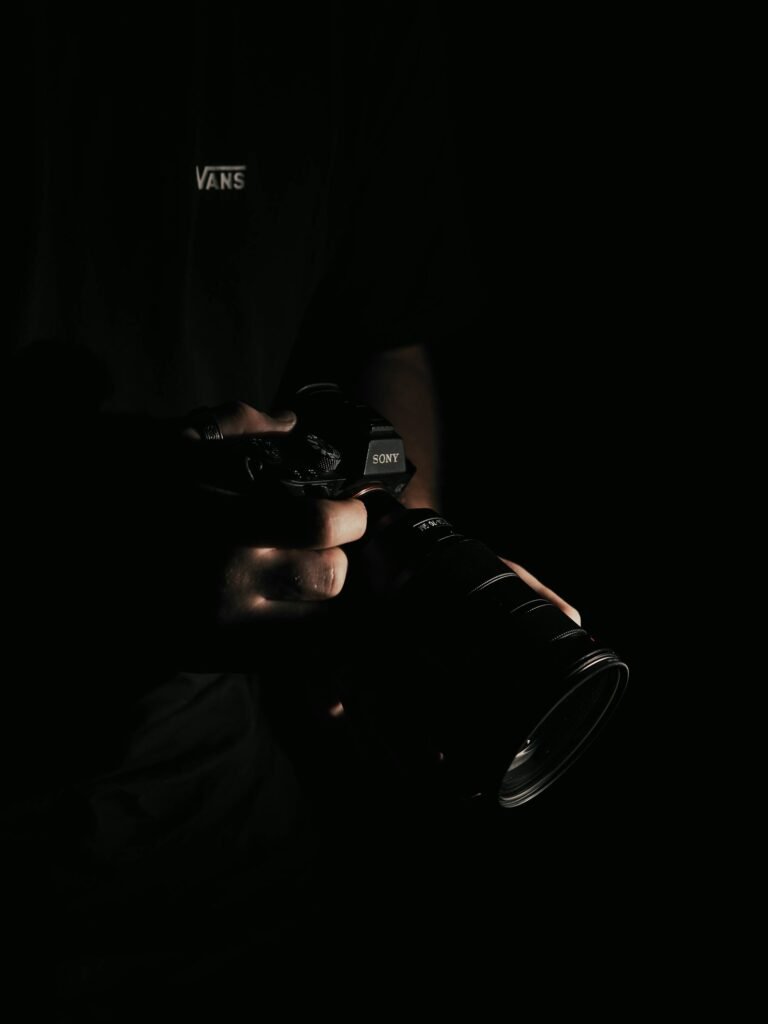

Most Singapore business owners we speak with treat photography as the last line item in the marketing budget, something to sort out once the logo, the website, and the ad spend are locked in. In our experience, that ordering is backwards. Photography is not the decoration on top of a marketing plan. It is the layer every other channel, your website, your Google Business Profile, your social feed, your marketplace listings, actually runs on. A weak photo does not just look unpolished. It quietly taxes the performance of everything downstream of it.
The habit is understandable. Photography does not show up on a spreadsheet the way ad spend does, so it gets treated as discretionary rather than as infrastructure. We think that framing is wrong. A photo library is closer to a warehouse of inventory than a marketing expense: it gets drawn down constantly, across every channel, for months after the invoice is paid, and running out of usable stock mid-campaign is a real, recurring problem we see clients hit.
This guide sets out what professional photography for Singapore business actually changes, where the return shows up, and where we think most SMEs get the brief wrong before the photographer even arrives on site.
The Contrarian Bit First: Better Cameras Are Not the Answer
Here is the part that surprises most business owners in our first conversation. Upgrading from a smartphone to a professional camera is not what fixes weak marketing photography. We have shot for clients using rented gear that outperformed other clients' full studio setups, purely because the brief was right. The camera is a tool. The brief, what the images need to do on each channel, in what order, for which customer, is the actual product.
Most Singapore SMEs skip the brief entirely. They book "a photographer for the day," get a folder of pretty images, and only discover three months later that nothing fits the Instagram grid, the marketplace template, or the website's hero banner dimensions. That is not a photography problem. It is a planning problem, and it is the single biggest reason photography spend in Singapore underperforms its potential.
Why the First Impression Is Visual, Not Verbal
Research from the Visual Teaching Alliance puts the processing speed gap between images and text at roughly 60,000 to 1. Long before a website visitor reads your headline, they have already reacted to what they can see. That reaction, formed in a fraction of a second, decides whether they scroll further or bounce.
For most Singapore businesses, the homepage hero image or the first product photo on a listing is carrying an outsized share of that first impression. A dim, inconsistent, or oddly cropped image tells a visitor the business cuts corners, even if the product itself is excellent. A clean, well lit image does the opposite: it signals competence before a single word is read.
In a market as visually literate as Singapore, where buyers routinely compare three or four providers side by side in the same browser tab, that visual first impression often decides who gets the enquiry and who gets scrolled past.
Where Photography Actually Touches Conversion
The link between image quality and conversion rate is well documented in e-commerce specifically. MDG Advertising's research found that 67% of online shoppers rate image quality as "very important" to a purchase decision, ahead of product description length and close to price itself.
For service businesses the effect shows up differently but just as clearly. A renovation company that documents its work through sharp, well composed before-and-after photography proves an outcome in a way a paragraph of copy cannot. We recommend our production clients treat before-and-after documentation as a standing part of every project, not an afterthought booked only for flagship jobs.
Client example. One packaged sauce and snack brand we worked with had 2 phone photos per product for its website and marketplace listings. After a 2-day studio shoot of all 24 products, with a clean main image, a texture close-up, the food in use and a scale shot in hand for each, monthly online orders rose from 640 to 830 within three months and product page conversion from 1.8% to 2.4%. Read the full food brand product photography case study.
At Digital Marketing Singapore, our production work is built around that principle: images are commercial assets first, aesthetic objects second.
The same logic holds for B2B service businesses that assume photography is only relevant to consumer brands. A logistics company's warehouse and fleet photography, or a professional services firm's office and team photography, does the same trust-building work on a proposal deck or a website case study page that product photography does on a marketplace listing. Buyers evaluating a six-figure contract are still forming a visual impression of competence before the first meeting, usually from whatever is on the website, and generic stock imagery undercuts that impression just as much in B2B as it does in retail.
Social Feeds Reward Quality, Not Just Effort
If your business runs an active social presence, photography quality has a direct, measurable effect on reach and engagement. Higher quality visuals consistently generate more shares, more saves, and better organic reach across Instagram, Facebook, and LinkedIn.
This effect has become sharper as feeds have become more crowded. When a user scrolls past hundreds of posts in a session, it is the polished, visually distinct content that actually stops the thumb. Grainy, poorly lit smartphone shots, even of a genuinely good product, tend to get scrolled past without registering at all.
For Singapore businesses running paid social media marketing, this compounds further. The same ad budget produces a materially better cost per result when the creative is strong, because ad platforms reward content that holds attention by showing it to more people at a lower cost per impression. We have watched identical budgets produce very different outcomes purely because of creative quality, nothing else in the campaign setup changed. Businesses layering in influencer marketing feel this even more acutely, since creator content is judged against a feed full of other creator content, not against a business's own historical bar.
Product Photography for E-Commerce and Marketplaces
If you sell through your own site or through Lazada, Shopee, Carousell, or any comparable marketplace, the photography requirements are specific and the commercial stakes are high. Each platform sets its own rules for the primary listing image, typically a clean white or neutral background with consistent lighting and framing, before you even get to the supporting gallery.
Beyond the primary shot, supplementary images matter more than most sellers assume: the product in use, a scale reference against a familiar object, close-ups of material or finish, and a lifestyle shot in a relevant setting. A shopper who can see a product from several angles, in context, and at a level of detail that answers their unspoken questions is measurably more likely to add to cart rather than click away to compare elsewhere.
The table below is the shot list we walk clients through before any e-commerce or marketplace shoot, matched to what each image type is actually doing commercially.
| Shot Type | Primary Channel | Commercial Job It Does |
|---|---|---|
| Clean hero (white/neutral background) | Marketplace primary image, website product page | Meets platform rules, establishes trust in seconds |
| Scale reference shot | Marketplace gallery, website | Removes size uncertainty, a top cause of returns |
| Close-up texture/finish | Marketplace gallery, social feed | Answers quality questions text cannot |
| Lifestyle/in-use | Social feed, paid ads, website | Helps the buyer picture ownership |
| Flat-lay or grouped set | Social feed, email marketing | Signals range without a full new shoot |
Sellers who supply this full set consistently outperform competitors relying on a single hero shot, in both click-through rate and conversion, across every marketplace we have reviewed client data for.
Photography for F&B and Hospitality Businesses
For restaurants, cafes, hotels, and hospitality businesses in Singapore, photography is arguably the single most important marketing asset a business owns. Before a Singapore diner books a table or visits a new cafe, they check the photos first, on Google Maps, Burpple, Instagram, and Eatigo, in that rough order.
The gap between F&B businesses with professional food photography and those without shows up consistently in review counts, booking volumes, and social following. A new restaurant that launches with a full set of professionally shot dishes and interior images tends to have a real head start over a competitor relying on dim phone photos taken during a busy service.
Good food photography is not simply "making food look nice." It depends on light temperature, styling, composition, and genuinely communicating what the experience of eating there feels like. Our clients in this category almost always underestimate how much styling work happens before the shutter clicks, not after in editing.
Corporate and Team Photography: The Overlooked Category
Product and food photography tend to get the attention, but corporate and team photography is one of the most under-invested categories we see among Singapore SMEs. An About page with a warm, consistent set of team photos does measurable trust-building work, particularly for service businesses where the buyer is essentially hiring people, not just a product. A LinkedIn profile using the same photographer's headshot style across a leadership team reads as a coordinated, credible business rather than a loose collection of individuals.
We routinely see this category get postponed indefinitely because no single project seems to justify it, then get requested urgently when a founder is preparing for a press feature, an award submission, or a funding round and realises every existing photo is a mismatched phone selfie. Scheduling team photography alongside a product or F&B shoot, even briefly, avoids that scramble later.
What Actually Happens During a Professional Shoot
A common misconception is that professional photography demands an expensive studio and a wall of equipment. Equipment matters, but what a working photographer brings above all is judgement: how to light a product so its texture reads correctly, how to compose a frame so the eye lands where it should, which backgrounds or props add context rather than clutter, and how to shoot in formats that hold up across every channel you will actually use the image on.
A typical shoot for a Singapore SME covers hero shots for the homepage, full catalogue coverage, lifestyle shots showing the product or service in use, and a dedicated batch of social-ready crops. For businesses that also produce video, we increasingly recommend scheduling event videography alongside a photography session where a launch or activation is involved, since the crew is already on site and the incremental cost of covering both is lower than booking two separate visits.
Delivery typically includes edited, high-resolution files suitable for print and digital, plus web-optimised and social-cropped variants, so nothing needs re-processing before it goes live on any channel.
In practice a shoot we run for a Singapore SME typically follows a five-step arc: a short planning call to confirm the channel list and shot count, a mood board or reference pull so everyone agrees on the look before anyone shows up on site, the shoot day itself, a first-pass select where the client picks favourites from proofs, and a final edit and delivery pass. Skipping the planning call is the single most common reason a shoot under-delivers, because the photographer ends up guessing at priorities on the day instead of executing a shared brief.
Turning One Shoot Into a Content System
The highest-leverage use of professional photography is not a one-off website refresh. It is treating a single, well planned shoot as a content library that feeds multiple channels at once.
A properly planned session produces assets for the website homepage, individual service or product pages, Google Business Profile, the social feed, paid ad creative, email marketing, and printed collateral, all from the same day on set. Each image is contextually appropriate for a different point in the customer journey, which is a very different outcome from booking "a shoot" with no channel plan attached.
We have found that the businesses getting the most out of photography investment plan the full range of intended usage before the shoot happens, rather than discovering gaps afterward and booking a second, more expensive session to patch them. That planning step is also where photography intersects with the rest of a marketing stack: a refreshed website design needs imagery sized and art-directed for its actual templates, an e-commerce website needs a consistent product photography style across every category, and a content marketing calendar runs out of momentum fast without a photo library to draw from.
Photography also has knock-on effects for SEO, since original, well optimised images support page relevance and time-on-page in ways stock photography does not, and for paid search landing pages, where a mismatch between the ad creative and the landing page photography noticeably increases bounce. Connecting the visual library to the broader digital marketing plan is what keeps a shoot's value compounding for months instead of fading after the initial website update.
Common Objections, Answered
Two objections come up in almost every first conversation we have about photography, and we think both deserve a direct answer rather than a brush-off.
"Smartphone cameras are good enough now." Sensor quality has genuinely improved, and for a founder's personal social account, that may be fine. But a smartphone photo still lacks controlled lighting, a considered background, and someone directing composition toward a commercial goal. The gap has moved from a hardware problem to a craft problem, and craft is exactly what a phone cannot supply on its own.
"We will just use stock photography instead." Stock imagery is faster and cheaper up front, and there are contexts where it is a reasonable stopgap. The trade-off is that stock photography actively works against trust the moment a customer recognises it, and in a small market like Singapore, where a buyer might see the same stock image used by two competitors in the same week, that recognition happens more often than businesses expect. Original photography of your actual product, team, or premises does not carry that risk, and it compounds in value with every additional channel it gets reused on.
Field Notes
A few observations from recent Singapore SME shoots our production team has worked on this year, offered as field notes rather than a formal study:
- Across the last batch of e-commerce shoots we reviewed, clients who requested the full five-shot set (hero, scale, texture, lifestyle, flat-lay) saw noticeably fewer "is this the actual size" pre-sale enquiries than clients who used only a hero shot.
- On F&B projects specifically, roughly 3 in 4 clients told us the close-up texture and interior ambience shots got more engagement on social than the plated hero shot they had originally asked for as the priority.
- Shoots that were planned against a channel list in advance took, on average, about 30% less follow-up editing time than shoots booked without one, simply because fewer images needed reformatting after the fact.
- Corporate and team photography requests have grown to roughly 1 in 5 of our production bookings this year, up from a small fraction two years ago, mostly driven by founders preparing for press coverage or hiring.
None of this is a controlled study. It is a pattern we keep seeing across client work, and it is why we push clients toward planning the brief before booking the crew.
Conclusion: Professional Photography Is a Revenue Decision
In Singapore's digital-first commercial environment, professional photography is not a cosmetic upgrade sitting outside the marketing budget. It is a decision that directly affects how many visitors convert into customers, how well social content performs, and how a business is perceived next to competitors in the same search results or the same marketplace category.
Businesses that treat photography as an investment rather than an expense to be trimmed tend to convert more enquiries and build stronger recognition over time. A typical professional shoot for an SME in Singapore runs from roughly S$800 for a focused product session to S$3,000 or more for a full-day multi-location brief, and in our experience the return shows up fastest for businesses that plan the channel list before the shoot rather than after.
The businesses we see get the most out of this over a two to three year horizon are the ones who stop treating each shoot as an isolated event and instead schedule a refresh on a cycle, typically every twelve to eighteen months, so the photo library never falls far enough behind the business's actual products, team, or premises to look dated.
At Digital Marketing Singapore, we combine production services with the strategic work needed to deploy the results properly, from the team background behind the work to the channels the images end up living on. Ready to put a real brief behind your next shoot? Get in touch with our team and we will walk through what a photography investment should look like for your specific business before a single frame is booked. If you would rather start with questions than a quote, reach out here and we will point you in the right direction.

Natasha Tan is the founder of Digital Marketing Singapore, a full-service SEO and digital marketing agency based in Singapore. With hands-on experience across SEO, paid media, and content strategy, she works directly with Singapore businesses to build organic visibility and generate consistent leads. Natasha specialises in the Singapore market — including local search behaviour, PDPA compliance, and government grant navigation for SMEs.