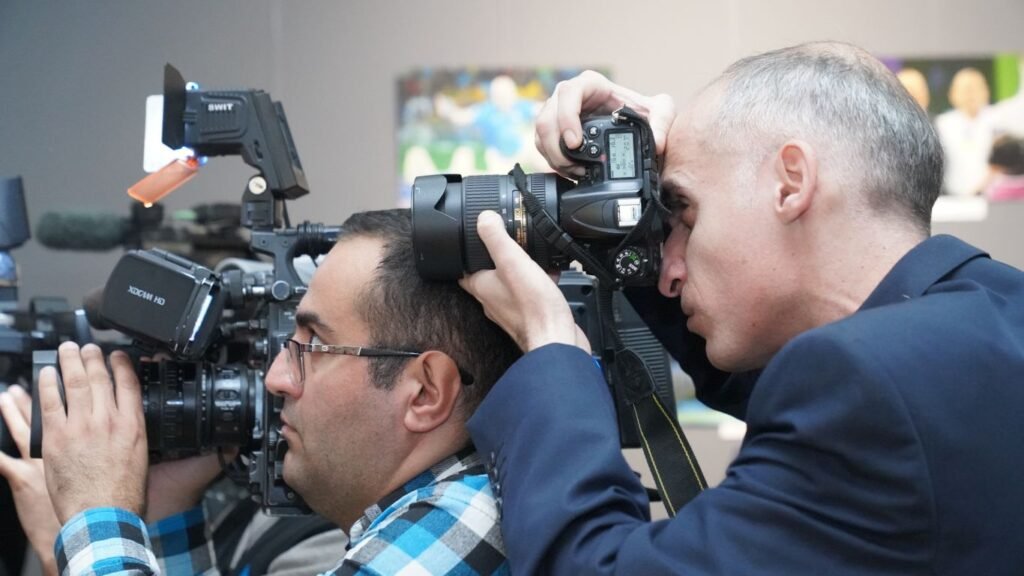
A conference, product launch, gala dinner or company anniversary usually takes months to plan and a meaningful slice of the marketing budget to pull off, yet the event itself is over in a matter of hours. Good event photography Singapore companies can rely on is what lets that short window keep earning its keep long after the caterers have packed up: it feeds your website, your LinkedIn page, your sales deck and next year's sponsorship pitch. Picking the right photographer, though, is where a lot of Singapore companies get tripped up, and it is rarely because they hired someone unskilled. It is usually because they optimised for the wrong thing at the shortlisting stage.
This guide walks through what actually matters when you are hiring event photography in Singapore, why the obvious criteria (biggest portfolio, most followers, cheapest quote) are often the wrong filters, and what we have learned from running photography and videography coverage for corporate clients across dozens of events on this island. We recommend reading this before you send out a single quote request, because the order in which you evaluate photographers changes the outcome more than most people expect.
Why Event Photography Matters More Than Most Companies Budget For
Marketing teams routinely spend five and six figures in SGD on venue, catering, staging and guest experience, then treat photography as a line item to be finalised the week before the event. That sequencing is backwards. The event itself is temporary, but the photography is the only asset that survives it. A well-run gala dinner or product launch generates content that gets reused in annual reports, investor decks, recruitment pages, award submissions and social media for a full year afterward. In our experience, clients who budget properly for photography from the start (rather than treating it as an afterthought once the "real" costs are locked in) get noticeably more mileage out of every event dollar they spend.
There is also a reputational dimension that is easy to underestimate. Guests, sponsors and partners judge the professionalism of an event partly by how it is documented. A gala dinner with flat, poorly lit, badly cropped photos looks like a smaller, less serious event than it was, even if the room itself was full and the programme ran perfectly. The photography either supports the story you are trying to tell about your company or it quietly undercuts it.
The Contrarian Take: Why "Best Portfolio" Is the Wrong First Filter
Most guides on this topic tell you to start by reviewing portfolios and picking whoever's gallery looks the most polished. We think that is backwards, and here is why: a portfolio shows you a photographer's best forty images out of possibly four thousand taken that day. It tells you almost nothing about how they behaved in the room, how quickly they adapted when the run of show changed, or whether they handed over a clean, organised, fully edited set within the timeline you were promised. We have seen photographers with stunning portfolios who were genuinely difficult to work with on the day: slow to reposition, reluctant to take direction from the event manager, or simply unavailable when a VIP photo opportunity appeared without warning.
Our contrarian view, based on running photography for a wide range of corporate events, is that you should evaluate process before you evaluate output. Ask how they handle a change in schedule. Ask what happens if their primary camera fails mid-event. Ask how many images they typically deliver from a three-hour event and how they cull down to a final set. The photographers who answer these questions confidently, with specific numbers and specific workflows, are usually the ones who perform well under pressure. The ones who only want to talk about their gallery are the ones who tend to struggle when the event does not go exactly to plan, and events rarely go exactly to plan.
What to Actually Look For in a Singapore Event Photographer
Once you get past the portfolio, there are seven things worth checking before you sign a contract. We treat these as non-negotiable when we vet photography partners for client events in Singapore.
Experience with your specific event type. A photographer who is excellent at weddings is not automatically excellent at a 300-person product launch with a stage, a runway and a media wall. Corporate events have their own rhythm: scheduled speeches, sponsor recognition moments, product reveals and networking segments that all need to be covered without disrupting the room. Ask specifically for examples from corporate, conference or gala work, not just a general portfolio link.
Turnaround time, stated in writing. "Fast turnaround" means different things to different studios. Get a specific number of business days for a first batch of highlight images and a specific number for the full edited gallery, and put both in the contract.
Team size and backup equipment. A single photographer with a single camera body is a single point of failure. We recommend asking whether they bring a second shooter for events above roughly 150 guests, and whether they carry backup bodies and cards in case of equipment failure or corruption.
Usage rights and licensing. Confirm in writing that you own full commercial usage rights to the final images, including use in paid advertising, not just organic social media. Some photographers license images for editorial or personal use only unless a separate commercial licence is agreed.
How they work the room. A good event photographer is close to invisible during formal moments and proactively present during networking segments, catching genuine interaction rather than posed group shots only. Watch a short video sample if one is available, or ask for references from clients who ran a similar event.
Post-production style. Ask to see a "before and after" of a raw image versus the final edit. This tells you whether their colour grading, retouching and cropping style will actually match your brand's visual identity.
Insurance and professionalism. For events at hotels and convention centres in Singapore, many venues require vendors to carry their own liability insurance. Confirm this early so it does not become a last-minute scramble.
How to Run the Discovery Call Before You Book
Once you have a shortlist of two or three photographers who pass the checks above, the next step is a short discovery call, and how that call goes tells you more than any portfolio ever will. We structure ours around five questions, and we suggest you do the same regardless of who you end up booking. First, walk them through your actual run of show, minute by minute if you can, and watch whether they ask clarifying questions about specific moments or just nod along. Second, ask what they would do differently for a 150-guest gala versus a 40-person breakfast briefing; a photographer who gives you the same generic answer for both has probably not thought carefully about how coverage needs to change with format. Third, ask for one example of something that went wrong on a past job and how they handled it. Everyone who has shot enough events has a story, and photographers who cannot produce one are either inexperienced or unwilling to be candid with you before you have signed anything.
Fourth, ask directly what they need from you on the day: a point of contact from your team, a shot list, access to the run of show in advance, or early venue access to scout lighting. Photographers who ask for these things are typically the ones who plan properly rather than improvising on arrival. Fifth, and this is the one we have found most revealing, ask how they would prefer to be paid: full amount upfront, a deposit plus balance on delivery, or something else. Studios with a clear, standard answer here tend to be more established and easier to deal with if something needs to be renegotiated later, such as a schedule change or an extension of coverage hours.
We recommend allocating 20 to 30 minutes for this call rather than trying to squeeze it into a rushed email exchange. It is a small time investment relative to the total cost of the booking, and in our experience it catches most of the mismatches between expectation and delivery before they become a problem on the actual event day.
Case Study: The Product Launch That Almost Went Wrong
A client of ours ran a product launch for roughly 180 guests at a hotel ballroom in Singapore, with a media wall, a stage segment and a hands-on demo area. Three weeks out, the client had already booked a photographer based purely on portfolio quality: beautiful, high-contrast, editorial-style images. What the client had not confirmed was backup equipment or a second shooter.
On the day, the photographer's primary camera developed a shutter fault around ninety minutes into the event, right before the CEO's keynote and the product reveal, arguably the two most important moments of the entire evening. Because there was no second body and no second shooter, there was a genuine risk that the single most important segment of the launch would go completely undocumented. The photographer had to borrow a body from a videographer covering the event separately, switch lenses on the fly, and shoot the keynote on unfamiliar gear with roughly four minutes of prep time.
The images from that segment came out usable, but noticeably softer and less consistent than the rest of the gallery, and the client noticed the gap immediately when the final set came back. The fix for a future event was simple and is now something we check for every single client booking: confirm backup equipment and, above a certain guest count, a second shooter, before signing anything. It is a small line item relative to total event cost, and it is cheap insurance against losing coverage of the one moment the entire event exists to capture.
Pricing in Singapore: What You Should Expect to Pay
Event photography pricing in Singapore varies by event size, number of hours, number of photographers and turnaround speed. The table below reflects typical market ranges we see for corporate bookings, quoted in SGD.
| Package | Coverage | Typical Price (SGD) | Best For |
|---|---|---|---|
| Half-day, single shooter | Up to 4 hours, one photographer | SGD 600 to SGD 1,200 | Small briefings, media interviews, product photography sessions |
| Full-day, single shooter | Up to 8 hours, one photographer | SGD 1,200 to SGD 2,200 | Conferences, single-track seminars, workshops |
| Full-day, two shooters | Up to 8 hours, two photographers | SGD 2,200 to SGD 3,800 | Product launches, galas, award ceremonies above 150 guests |
| Multi-day event coverage | 2 to 3 days, team coverage | SGD 4,500 to SGD 9,000+ | Large conferences, trade shows, multi-session summits |
| Rush turnaround add-on | Next-day highlight delivery | SGD 200 to SGD 500 | Same-week press or social media needs |
These ranges assume experienced, insured, professional studios rather than freelancers picked up through a marketplace listing. In our experience, quotes that come in well under these ranges are worth a closer look. They usually mean a single shooter with no backup, a slower turnaround, or a more limited usage licence than you actually need.
Deliverables and Turnaround: What "Fast" Really Means
Before signing, agree on three specific numbers: the number of edited images you will receive, the delivery format (full-resolution files, web-optimised files, or both), and the number of business days for delivery. A reasonable benchmark for a full-day corporate event with two shooters is 300 to 600 final edited images, delivered within 5 to 10 business days for the full set, with a smaller highlight reel of 15 to 25 images available within 24 to 48 hours for immediate social media use. If a quote does not specify these numbers, ask for them directly. Vague language like "a good selection of photos" has caused more client disputes than almost anything else in this category.
Photography vs Videography: Do You Need Both?
For most corporate events in Singapore, the honest answer is yes, but not always from day one. Photography is faster to turn around and cheaper to produce, which makes it well suited to immediate social media posting and press use. Video, on the other hand, captures the energy, sound and movement of an event in a way a still image cannot, and it tends to perform better for recap content and sponsor reels. If your budget only stretches to one this year, prioritise whichever format your past content has actually performed better with on your own channels. If you are unsure, our event videography team can advise on whether a hybrid photo-and-video crew makes sense for your specific event, since a shared crew is often more cost-efficient than booking two separate vendors. We also run dedicated photography engagements for clients who need stills only, whether for a single event or an ongoing retainer across a full year of company events.
Common Mistakes We See Companies Make
A few patterns come up again and again when we review how companies handle event photography in Singapore.
Booking too late. Good corporate photographers in Singapore get booked out weeks or months in advance, especially in the September to December event season. Booking with less than two weeks' notice usually narrows your options to whoever happens to be free, not whoever is best suited to your event.
No shot list. Photographers cannot read minds. If there are specific sponsor logos, VIP guests, product angles or moments that absolutely must be captured, that needs to be a written list handed over before the event, not a verbal aside during setup.
Ignoring usage rights. We have seen companies discover, only after running paid social campaigns using event photos, that their licence only covered organic use. Confirm commercial usage rights in writing every time.
Treating photography as separate from the rest of the marketing plan. Photos from an event are only valuable if they actually get used afterward across your content marketing and social media channels. We recommend planning the distribution of event photography at the same time you plan the event itself, not as a decision made after the gallery arrives.
Not briefing the photographer on brand guidelines. If your company has specific colour treatment preferences, a house style for how logos should appear in frame, or restrictions on who can and cannot be photographed, that information needs to reach the photographer before the event, not get discovered when the final gallery does not match expectations.
Forgetting to plan for low light. Many corporate venues in Singapore dim the room significantly for stage presentations and video screens. If your photographer has not asked about lighting conditions in advance, or does not carry equipment suited to low-light shooting, expect a noticeable quality drop during exactly the segments that usually matter most, such as keynotes and award presentations.
How Event Photography Fits Into Your Wider Marketing
Event photography rarely sits in isolation. The images from a well-covered launch or conference typically end up feeding several other parts of a marketing programme at once: fresh visual assets for your website, authentic content for organic and paid social, and material that can support an influencer marketing push if creators attended the event. Companies that treat their event photography budget as part of a connected digital marketing plan, rather than a standalone vendor booking, consistently get more reuse out of every shoot. It is also worth thinking about how event recap content supports your SEO efforts: a well-written recap page with strong original imagery, published soon after the event, can pick up search traffic for your brand and event name for months afterward. If you want a second opinion on how a specific upcoming event should be planned and staffed, our team is happy to walk through it.
Field Notes
A few numbers from our own work coordinating event photography and videography for clients across Singapore over the past two years: we have briefed and managed photographers for more than 40 corporate events, ranging from 25-guest breakfast briefings to a 500-guest gala dinner at a downtown hotel. Across those bookings, events with a confirmed second shooter had zero missed-coverage incidents, while single-shooter bookings above 150 guests accounted for the only two coverage gaps we have had to manage on behalf of a client. Average turnaround for a full edited gallery across our booked photographers currently sits at 7 business days, with highlight reels typically back within 36 hours.
Frequently Asked Questions
How far in advance should I book an event photographer in Singapore?
For events during the busy September to December season, we recommend booking 6 to 8 weeks ahead. For quieter months, 3 to 4 weeks is usually workable, though last-minute bookings are possible at a premium.
Do I need a second photographer for a small event?
For events under roughly 100 guests with a single-room programme, one experienced shooter with backup equipment is usually sufficient. Above that guest count, or if the event has multiple simultaneous zones, a second shooter reduces the risk of missed moments significantly.
What should be in the contract?
At minimum: number of hours covered, number of shooters, backup equipment confirmation, number of final images, delivery timeline for both highlights and the full set, and a clear statement of commercial usage rights.
Should photography and videography be the same vendor?
Not always, but a combined crew is often more efficient and can be more cost-effective in SGD than booking two completely separate teams, particularly for events where photo and video need to capture the same key moments.
Final Thoughts
Hiring the right event photographer in Singapore is less about finding the most beautiful portfolio and more about confirming process, backup planning, usage rights and turnaround before you sign anything. Get those fundamentals right and the portfolio quality question tends to take care of itself, because the photographers who run a tight, professional process are usually the same ones producing the strongest images. If you would like our team's view on how to plan and staff photography or videography for your next corporate event in Singapore, get in touch with us and we can talk through what makes sense for your event size, budget and goals.

Natasha Tan is the founder of Digital Marketing Singapore, a full-service SEO and digital marketing agency based in Singapore. With hands-on experience across SEO, paid media, and content strategy, she works directly with Singapore businesses to build organic visibility and generate consistent leads. Natasha specialises in the Singapore market — including local search behaviour, PDPA compliance, and government grant navigation for SMEs.