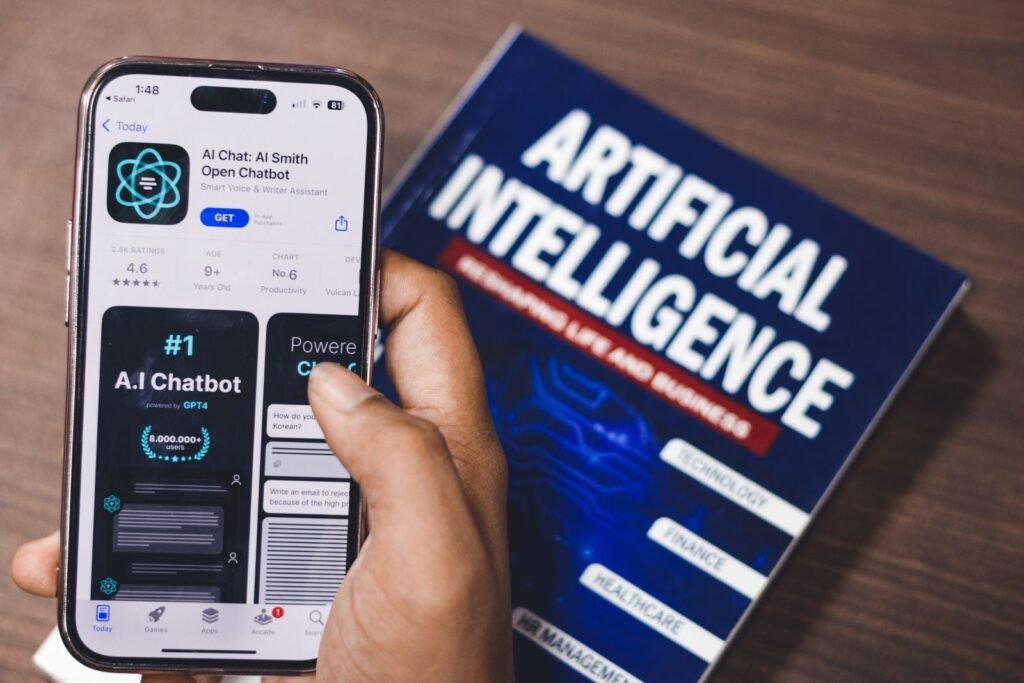
If you have been searching for a chatbot agency singapore business owners can rely on, you are probably already feeling the pressure that many local SMEs face today: customers expect a reply within minutes, not hours, whether they message you on WhatsApp, drop a comment on Instagram, or open a live chat window on your website. Handling that volume manually is exhausting, and it is exactly why more Singapore companies are exploring chat automation as part of their customer service and marketing setup.
The challenge is that the word chatbot means very different things depending on who you ask. A simple rule-based bot that answers FAQs is a very different investment from an AI-driven conversational tool that can qualify leads, recommend products, or hand off smoothly to a human agent. Choosing the right partner to help you set this up, and more importantly to keep it running well, matters just as much as the technology itself. In this guide we will walk through what a chatbot agency in Singapore actually does, how to evaluate one properly, and where chat automation fits into a wider marketing strategy.
Why Chat Automation Has Become a Serious Consideration for Singapore SMEs
Singapore's business environment has quietly shifted the bar for what customers expect from customer service. WhatsApp Business is now a default channel for many local retailers, clinics, salons and F&B outlets, and customers who message a business there expect a response that feels close to real time, even outside office hours. At the same time, e-commerce stores are fielding a steady stream of pre-purchase questions about sizing, delivery timelines and returns, often arriving late at night when no staff member is online to answer.
Social media has added another layer of pressure. Direct messages on Instagram and Facebook, along with comments that turn into private conversations, can pile up quickly for a brand running active campaigns. A business managing its own social media marketing efforts often finds that community engagement and customer service start to blur into the same inbox, and without some form of automation, messages get missed or answered a day late. In our experience, this is usually the moment a business owner starts searching for a chatbot agency in the first place, not because they read about the technology, but because they are drowning in unanswered messages.
None of this means every SME needs a fully custom AI chatbot. It means more businesses are asking a fair question: should some of this conversation volume be automated, and if so, who can help set it up properly and keep it aligned with the rest of our marketing?
What a Chatbot Agency in Singapore Actually Does
When people search for a chatbot agency, they are usually looking for help with one or more of the following:
- Setting up automated replies on WhatsApp Business, Facebook Messenger or Instagram DMs
- Building a website live chat widget or chatbot that can answer common questions and capture leads
- Connecting chat automation to a CRM or booking system so conversations turn into actual sales or appointments
- Writing the conversation scripts, tone of voice and FAQ content the bot will actually use
- Reviewing and improving chatbot performance over time as customer questions evolve
- Setting up handover rules so a human staff member is alerted the moment a conversation needs a real person
Very few agencies in Singapore position themselves purely as chatbot developers. In practice, this work tends to sit inside a broader digital marketing, web design or customer experience mandate, because a chatbot on its own does not generate value. It only works well when it is tied to your website, your social channels, your content and your overall digital marketing strategy. Our team typically frames chatbot and chat automation work as part of a wider customer engagement conversation rather than a standalone software purchase, because that is a more honest reflection of how the technology actually delivers value.
Rule-Based Bots vs AI-Driven Conversational Tools
One of the most useful things a good partner will do early on is help you understand which type of automation actually fits your business, rather than pushing you towards the most advanced, and most expensive, option by default. A common mistake we see Singapore business owners make is assuming that a more advanced AI chatbot is automatically the better choice. In reality, a simple rule-based bot often solves the actual problem more reliably, at a fraction of the cost and ongoing maintenance burden.
Rule-based bots
These follow a fixed decision tree: if a customer clicks or types a specific option, they get a pre-written response. They are inexpensive to build, easy to maintain, and well suited to businesses with a narrow, predictable set of questions, such as opening hours, delivery zones, pricing tiers or appointment booking. The trade-off is flexibility. If a customer asks something slightly outside the script, the bot cannot really improvise, and a poorly designed rule-based bot can frustrate a customer who just wants a straightforward answer.
AI-driven conversational tools
These use natural language processing to understand a wider range of phrasing and intent, so a customer can ask a question in their own words rather than clicking through a menu. They can be more useful for businesses with a broader product range, more complex queries, or a genuine need to qualify leads before passing them to a sales team. They also require more setup, more careful training on your business's specific information, and ongoing monitoring to make sure the responses stay accurate and on-brand. Left unmonitored, an AI-driven bot can confidently give a wrong answer, which often does more damage to trust than a simple bot that says it does not know and hands off to a human.
Most Singapore SMEs are better served starting with a well-built rule-based system and expanding to AI-driven features later, once there is a clear, repeated pattern of the kinds of conversations that would genuinely benefit from more flexibility. We typically recommend a phased approach: launch a rule-based bot to handle the top ten to fifteen most common questions, monitor what customers actually ask that falls outside that scope, and only then decide whether an AI layer is worth the added cost and complexity.
Comparing Chatbot Platform Types for Singapore Businesses
Because vendors and platforms vary widely in capability and cost, it helps to compare the broad categories before evaluating specific tools with any agency you are considering.
| Platform Type | Typical Setup Cost (SGD) | Ongoing Monthly Cost (SGD) | Best Suited For |
|---|---|---|---|
| Basic WhatsApp auto-reply | SGD 500 to SGD 1,500 | SGD 100 to SGD 300 | Small businesses needing simple FAQ and hours automation |
| Rule-based website chat widget | SGD 1,500 to SGD 4,000 | SGD 200 to SGD 600 | SMEs with a defined, repeatable set of customer questions |
| CRM-integrated chatbot | SGD 4,000 to SGD 10,000 | SGD 500 to SGD 1,200 | Businesses wanting chat to feed directly into sales pipelines |
| Custom AI-driven conversational tool | SGD 8,000 to SGD 25,000+ | SGD 800 to SGD 3,000+ | Larger businesses with high chat volume and complex queries |
Our review of typical Singapore SME budgets suggests that most businesses start in the first two categories, and a smaller number graduate to CRM-integrated or AI-driven tools once their chat volume and customer data justify the added investment.
What to Look for When Choosing a Chatbot Partner
Because chatbot agency is not a strictly defined category in Singapore, it pays to be specific about what you are evaluating. Here is what actually matters when you are comparing options.
1. They start with your customer journey, not the technology
A partner worth hiring will ask about your existing customer questions, your response times, and where conversations currently break down, before recommending any particular tool or platform. If a proposal jumps straight into software features without first understanding your business, that is a warning sign.
2. They can integrate chat into your website and marketing properly
A chatbot that lives only on your website but ignores how customers actually find you is only solving half the problem. Look for a partner who can also think about your website design, so the chat widget sits naturally within the user experience rather than feeling bolted on. For online stores, this matters even more, since a well-placed chat function on an e-commerce website can directly reduce abandoned carts caused by unanswered questions about sizing, stock or delivery.
3. They write conversation scripts that sound like your brand
Even the smartest chatbot will feel robotic if the scripting is generic. Good conversation design is really a form of copywriting, and it benefits from the same attention to tone, clarity and brand voice that goes into your website copy or ad campaigns. Ask any prospective partner who is actually writing the responses your customers will read, and whether they understand your business well enough to do it convincingly.
4. They plan for ongoing management, not just a one-time setup
A chatbot is not a set-and-forget project. Customer questions change with the seasons, new products launch, and promotions create spikes in specific queries. A partner who offers ongoing social media management alongside chat automation is often better positioned to keep your automated responses current, because they are already monitoring the same conversations day to day.
5. They are transparent about data handling and escalation
Ask how customer data collected through the chatbot is stored, who has access to it, and how a conversation gets escalated to a real staff member when the bot cannot help. A responsible partner will have clear answers here rather than vague reassurances.
6. They can show you how success will actually be measured
Before signing anything, ask what metrics the partner will track: response time, resolution rate, number of conversations handed off to a human, or leads captured. A partner who cannot answer this clearly probably has not thought carefully about what a successful chatbot deployment looks like for your specific business.
Common Mistakes Singapore Businesses Make With Chatbot Projects
Beyond over-investing in AI when a simple rule-based bot would do, there are a handful of recurring mistakes worth watching for.
- Launching without a content foundation. A bot is only as good as the information it can draw on, and businesses without clear FAQs or product information tend to launch a chatbot that gives vague or incorrect answers.
- No escalation path. Customers get frustrated fast when a bot cannot answer a question and there is no clear way to reach a human.
- Treating it as a one-off project. Questions change constantly, and a bot left untouched for months quickly falls out of date.
- Ignoring tone of voice. A chatbot that sounds nothing like the rest of your brand creates a disjointed customer experience.
- Choosing a platform before understanding the problem. Many businesses pick a tool based on a demo they liked, rather than starting from their actual customer questions and volume.
Chat Automation Works Best as Part of a Bigger Strategy
This is really the core point for any Singapore business evaluating chatbot agencies: chat automation is a tool that supports your marketing and customer service, not a strategy on its own. A chatbot that answers questions well but sits on a website nobody visits, or responds to social messages for a brand with no consistent content or engagement plan, will not move the needle much.
The businesses getting the most value from chat automation tend to be the ones treating it as one piece of a connected system: content that brings the right people to their website and social channels, a design that makes it easy for those visitors to ask a question, and automation that handles the first response quickly and consistently. That connection is where strong SEO and content work together with automation to add real value, compared to a narrow, single-tool vendor.
Content also plays a bigger role in chatbot performance than most business owners expect. A bot is only as good as the information it can draw on, and businesses with clear, well-organised content marketing foundations, like FAQ pages, product descriptions and service explainers, tend to get much more accurate and useful automated responses than those trying to build a chatbot from scratch with little existing content to work from.
For example, a Singapore skincare retailer we worked with had built a large product catalogue but very little supporting content explaining ingredients, usage, or suitability for different skin types. Their initial chatbot attempt fell flat because it had nothing useful to draw on. Once we helped them build out proper product content and FAQ pages, a much simpler rule-based bot pulling from that content performed far better than the more expensive AI tool they had tried first.
How Digital Marketing Singapore Approaches Chat Automation
At Digital Marketing Singapore, we do not position ourselves as a standalone chatbot development shop, and we think that is actually the more honest way to frame this kind of work. What we do bring is years of experience helping Singapore SMEs think through their overall customer engagement strategy, from the website and social channels through to the content that fills them, and chat automation is increasingly a natural extension of that conversation.
When a client asks us about chatbots or automated chat, we approach it the way we approach every channel: by looking at where your customers actually are, how they currently reach out to you, and what would genuinely improve their experience without adding unnecessary complexity or cost. Sometimes that means a straightforward rule-based bot on your website. Sometimes it means better structured social media replies as part of ongoing community management. The right answer depends on your business, not on whichever tool is trending. Our team has seen enough chatbot projects, both successful and unsuccessful, to know that the technology choice matters far less than the underlying content and strategy behind it.
How Chatbot Automation Fits Different Industries in Singapore
The right chatbot setup often looks quite different depending on the industry. Retail and e-commerce businesses tend to get the most value from automating sizing, stock, delivery and returns questions, which make up the bulk of pre-purchase enquiries. Clinics and wellness businesses often benefit most from appointment booking automation and basic triage questions, with clear escalation to a human for anything medical in nature. F&B businesses typically automate reservation enquiries, opening hours and menu questions, while professional services firms tend to use chat automation mainly for initial lead qualification before a consultant steps in.
Our clients across these different sectors have taught us that a template approach rarely works well. A rule-based flow built for a retail store will not map cleanly onto a clinic's booking process, and a partner who tries to force the same script structure across every client is usually cutting corners rather than genuinely understanding each business.
Frequently Asked Questions About Chatbot Agencies in Singapore
How much does a chatbot cost in Singapore?
Costs vary widely depending on complexity. A basic WhatsApp auto-reply setup can cost as little as a few hundred SGD a month, while a fully custom AI-driven conversational tool integrated with a CRM can run into the tens of thousands of SGD for setup plus an ongoing monthly fee. Most Singapore SMEs find a middle-ground rule-based or CRM-integrated option fits their needs and budget best.
Do I need a chatbot if I already have a social media manager?
Not necessarily, but the two often work well together. A social media manager can handle nuanced conversations and community engagement, while a chatbot handles repetitive, predictable questions, freeing up the human team to focus on the conversations that actually need a human touch.
Can a chatbot integrate with WhatsApp Business?
Yes, and this is one of the most common requests from Singapore SMEs, given how widely WhatsApp Business is used locally. Integration typically requires access to the WhatsApp Business API, which most reputable chatbot partners can set up on your behalf.
How long does it take to launch a chatbot?
A simple rule-based bot can often be built and launched within two to four weeks, including scripting and testing. A more complex AI-driven or CRM-integrated system typically takes six to twelve weeks, depending on how much existing content and data is available to train it on.
What happens when the chatbot cannot answer a question?
A well-designed chatbot should recognise when it is out of its depth and hand the conversation to a human team member, ideally with the relevant context already attached, rather than leaving the customer stuck in a loop of unhelpful responses.
Field Notes
In our audits of Singapore SME websites and social channels, we found that businesses relying on manual replies alone typically take 3 to 6 hours to respond to an after-hours WhatsApp enquiry, compared to under 2 minutes for a basic automated first response. We have also noticed that roughly a third of chatbot projects we review were built before the business had proper FAQ or product content in place, which is usually the real reason those bots underperformed rather than any flaw in the underlying software.
If you are exploring how chat automation could fit into your marketing and customer engagement strategy, our digital marketing services are the best place to start the conversation. We will look at your website, your social presence and your customer touchpoints as a whole, and help you work out where automation genuinely helps and where it does not. Get in touch with our team to talk through what a practical, well-integrated approach to chat automation could look like for your business, and if you are still weighing up a chatbot agency singapore shortlist, reach out to DMS for a straightforward second opinion before you commit to a vendor.

Natasha Tan is the founder of Digital Marketing Singapore, a full-service SEO and digital marketing agency based in Singapore. With hands-on experience across SEO, paid media, and content strategy, she works directly with Singapore businesses to build organic visibility and generate consistent leads. Natasha specialises in the Singapore market — including local search behaviour, PDPA compliance, and government grant navigation for SMEs.