The quotes come back at SGD 6,000, SGD 19,000 and SGD 41,000. Same brief, same brand, same two minute video. That spread is not a market failure and it is not anyone overcharging. It means the brief was loose enough that three teams read three different projects into it, and a video content production company can only price what it can see.
The fix is on the buyer side. Video is unusually sensitive to scope precision because so much of the cost is people and time on a specific day. Add a second shoot day and you have not added a line item, you have added a crew, a location, a kit hire and a chunk of edit. Get the brief right and the quotes converge to within a sensible band. Get it wrong and you are comparing a phone recorded interview against a crewed production and wondering why the numbers look mad.
This is a guide to scoping that brief: what to decide before you approach anyone, what formats cost roughly what in Singapore, what a production company actually hands you at the end, and where the money genuinely goes.
Decide the job the video has to do
Every scoping conversation should start here and most start with format instead. Format is an output of purpose, not an input.
There are broadly five jobs video does for a Singapore business, and they want different things.
Explaining something that is hard to explain in text. Complex products, technical processes, anything where a viewer needs to see a sequence. These reward clarity over polish and tend to be motion graphics or demonstration led.
Establishing credibility before a high consideration purchase. Corporate profile films, capability films, facility tours. The audience is usually a procurement committee or an enterprise buyer and the job is to make an organisation feel substantial and real.
Proving outcomes. Customer stories and testimonials. The single most persuasive format in B2B and the one most often botched, because it gets treated as a brand film with a customer in it rather than as evidence.
Capturing attention cold. Social first content, ads, short vertical formats. Judged entirely on the first two seconds and on volume, not on production value.
Recording something that happened once. Conferences, launches, awards, site visits. Logistics driven, unrepeatable, and the one category where under resourcing is unrecoverable.
Write down which of these you are buying. If your answer is more than one, you are commissioning more than one project and should scope them separately even if you shoot them on the same day.
The second thing to write down is where it will run and for how long. A film for a trade show loop has different requirements to a film that will be the hero asset on your homepage for three years, which is different again to a batch of clips for a six week campaign. Distribution determines aspect ratios, duration, captioning, versioning and, importantly, whether you need one film or twenty cutdowns.
What actually drives the cost
Buyers usually assume the camera is the expensive part. It is not, and the gap between assumption and reality is why quotes seem arbitrary.
Cost on a video project sits in four buckets: pre production, shoot day, post production, and rights and extras. Roughly speaking, on a professionally crewed corporate project the shoot day is a third to a half of the budget, post is a quarter to a third, and pre production is the part clients try to cut and should not.
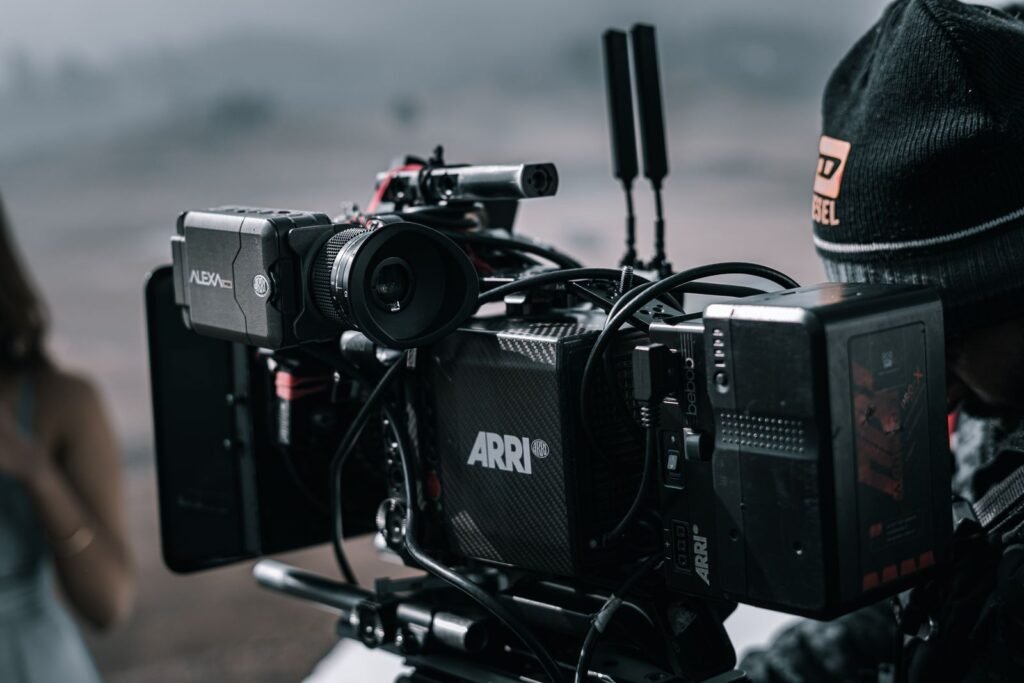
Shoot day cost scales with crew size, and crew size scales with ambition. A single operator with a camera, a light and a lapel microphone can produce a perfectly good talking head. The moment you want two camera angles, controlled lighting, clean audio in a noisy environment, and someone directing the subject so they do not read the autocue like a hostage, you are at four to six people. Each additional element pulls another person and another half day.
The other shoot day multiplier is location. One location, one day is the efficient case. Three locations across Singapore in a day is not three times the cost, it is roughly one and a half times the cost and two thirds of the output, because the time goes into moving and relighting. In our experience the most effective budget conversation is the one where we reduce locations from four to two and put the saved half day into a second camera and better sound.
Post production cost scales with the number of deliverables and the amount of graphics. An edit of one three minute film is one edit. The same film plus a 60 second cutdown, three 15 second social versions in vertical, subtitled in two languages, is closer to four edits and a subtitling job. This is the line item buyers most often discover late, and it is entirely predictable at brief stage.
Rights and extras cover licensed music, stock footage, talent usage rights, voice over artists and, occasionally, location permits. Talent usage in particular can surprise people: an actor engaged for organic social use and then repurposed into a paid campaign is a new usage and a new fee.
Realistic Singapore budget bands
These are working bands based on what we see quoted and delivered in the Singapore market. They are ranges, not prices, and the variables above move them.
| Format | Typical SGD range | What that usually buys | What pushes it higher |
|---|---|---|---|
| Single talking head interview | SGD 2,500 to 6,000 | Half day, small crew, one location, one edit | Multiple subjects, studio hire, teleprompter |
| Customer story or testimonial film | SGD 6,000 to 15,000 | One shoot day, customer site, b roll, two to three minute edit plus cutdowns | Overseas customer, multiple interviewees |
| Corporate profile or capability film | SGD 15,000 to 45,000 | Two to three shoot days, multiple locations, scripted, music licence, graphics | Aerial work, actors, scripted scenes, voice over talent |
| Product demonstration film | SGD 8,000 to 25,000 | Studio or controlled location, product handling, motion graphics | Complex product, macro work, animation heavy |
| Social first content batch | SGD 5,000 to 18,000 | One or two shoot days producing 10 to 30 short vertical assets | High volume, talent, per platform variants |
| Event coverage | SGD 3,000 to 12,000 per day | Crew on site, same day or next day highlights, full session recordings | Multi room, live streaming, multi camera switching |
| Animation or motion graphics only | SGD 6,000 to 30,000 | Script, storyboard, illustration, animation, voice over | Character animation, 3D, long duration |
A few notes on reading this table honestly.
The bottom of each band assumes a tightly scoped brief, a cooperative schedule and a client who can approve quickly. The top assumes complexity, not padding.
Nothing here includes media spend. If the video is an ad, the production budget and the distribution budget are separate conversations and the distribution one is usually larger.
And the cheapest option is frequently correct. A SGD 3,000 interview film that is honest, well lit and clearly audible will outperform a SGD 30,000 brand film that says nothing, in almost every B2B context we have measured.
What a production company actually delivers
Ask for the deliverables list in writing, itemised. This is where quotes diverge invisibly.
A complete deliverables list for a typical corporate project looks like this:
The master film, in a high quality delivery format, at the agreed duration, colour graded and audio mixed.
Platform versions. Web optimised MP4, a version sized for social, vertical and square crops if needed. Each of these is a real piece of work if done properly rather than by automatic crop, because reframing a wide shot to vertical requires decisions.
Cutdowns. Named and specified. "Three cutdowns" is not a specification. "One 60 second, two 30 second, three 15 second vertical" is.
Subtitle files, and whether they are burned in or supplied as separate caption files. Burned in captions are non negotiable for social. Separate SRT files are better for web and for search.
Thumbnail frames. Small thing, always forgotten, always needed.
Stills from the shoot. You have a crew and lighting on site. Getting stills at the same time is close to free and saves a separate product photography or portrait session later. Ask for it in the brief, because it is rarely offered by default.
Raw footage, or not. This is a genuine negotiation point. Most production companies do not include raw footage by default, for reasonable reasons: it is enormous, it is unusable without the project file, and it invites re editing that damages the work. If you want it, ask up front and expect it to be priced. What you should always secure is that the material is retained and retrievable for an agreed period.
Music licence documentation. You want evidence of the licence and its scope. A track licensed for web use and then run as a television commercial is a problem.
Project files and archive. Ask how long the editor keeps the project, and what a re edit costs in year two. Sites and messages change. A film you cannot update is a film with a short life.
You are probably buying too much production value
Here is the part that will not please everyone in this industry, including parts of ours.
Most businesses are buying too much production value and not enough content. A common mistake we see is a company spending its entire annual video budget on one flagship brand film, launching it, putting it on the homepage, and then having nothing to publish for eleven months.
The maths is unforgiving. One film at SGD 30,000 gives you one asset. That asset has a launch moment and then becomes furniture. The same SGD 30,000 spent as a properly planned batch, say two shoot days producing a customer story, four short explainers, a dozen social clips and a set of stills, gives you roughly a year of scheduled publishing. Unless your brand film is exceptional, and most are not because they are made by committee, the batch wins on every measure that matters.
In reality the highest performing video most Singapore SMEs could make is the least glamorous one: a named customer, on camera, explaining specifically what problem they had and what changed. No drone, no score, no scripted voice over. It is uncomfortable to commission because it does not look like an achievement. It converts because it is evidence.
The second piece of received wisdom worth challenging: that social video needs to be cheap and rough to feel authentic. Half true. The rough aesthetic works. Bad audio never works. If you cut one thing from a social video budget, cut the camera, not the microphone. Viewers forgive a soft image and leave immediately on muddy sound, and this holds across every platform we have run content on.
The third: that you should wait until you have a perfect script. Scripts matter enormously for scripted formats and are actively harmful for interview formats, where a written answer read aloud is instantly detectable. For interviews, prepare questions, not answers, and prepare the subject on what territory you will cover rather than what words to say.
One brief, three very different quotes
One Singapore industrial equipment distributor we worked with had a video budget of SGD 28,000 and an instinct to spend it all on a corporate film. Their reasoning was reasonable: their competitors all had one, and their existing site had none.
We pushed back and reframed the brief around a specific commercial problem instead. Their sales cycle involved technicians asking the same installation and maintenance questions repeatedly, and their enquiry form was producing leads that the sales team could not qualify without a 40 minute call.
The reallocated plan used two shoot days. Day one was at a customer site, producing one four minute customer story, a 90 second cutdown and eight short vertical clips of the customer and the technician talking through specifics. Day two was in their own warehouse, producing six short technical explainers of two to four minutes each, covering exactly the questions the sales team answered most often, plus a batch of equipment stills.
Total spend came in at just under SGD 26,000, with roughly SGD 4,000 of that going into a proper sound setup and a second operator rather than into locations or graphics.
What we watched happen over the following two quarters is the part worth reporting. The technical explainers became the most visited pages on the site after the homepage, because they answered search queries that the product pages never had. The sales team started sending specific clips ahead of calls, which shortened the qualifying conversation. And the customer story clip set was the only video content the business had that performed on paid social, because it was short, specific and did not look like an advertisement.
They did eventually make a corporate film, about fourteen months later. By then they knew what to say in it, because they had spent a year listening to which explanations landed. That sequencing, content first and brand film last, is the one we now recommend by default to businesses that have never produced video before.
Briefing well: the one page a production company actually needs
If you send a production company a single page containing the following, you will get comparable quotes and a better project.
The commercial objective, in one sentence, with the measure attached.
The audience, specifically. Not "businesses". "Facilities managers at manufacturing sites, typically the person who signs off maintenance contracts."
The format and duration you think you want, flagged as a hypothesis rather than a requirement. Good production teams will challenge it and you want them to.
The full deliverables list, including cutdowns, aspect ratios and captions.
Where it will run and for how long, which sets the licensing requirements.
Locations and access constraints. Whether you can shut down a production line. Whether the customer will agree to be filmed. Whether the building management needs notice.
Who is on camera, and whether they have done it before. This materially affects the shoot day plan.
Your approval process and who signs off. Video revisions are expensive after the edit is locked, and a scattered approval process is the main cause of exceeding the included revision rounds.
Your budget band. Withholding it does not get you a better price, it gets you a proposal aimed at the wrong project. Give a range and ask what is achievable within it.
Timeline, including the immovable date if there is one. An event, a trade show, a product launch. Immovable dates change the whole plan and they need to be in the brief, not mentioned in week three.
Where video fits alongside everything else
Video rarely fails because the film was bad. It fails because nobody planned what happened after delivery.
Before you commission, decide who is publishing it, on what schedule, and with what supporting copy. A film sitting on a Vimeo link that nobody embeds is a sunk cost. The assets need landing pages, descriptions, transcripts and a distribution calendar, and the transcripts in particular do real work for search that clients consistently underestimate.
If the intent is paid distribution, the creative needs to be built for it from the shoot day, which means shooting for vertical as well as wide and planning hook variants. That is a conversation to have with whoever runs your YouTube ads or your TikTok marketing before the camera is booked, not after the edit is locked. Retrofitting a horizontal brand film into vertical ad creative is possible and always compromised.
And if you are working with creators or partners, the usage rights conversation has to happen at contract stage. Our overview of working with an influencer marketing agency in Singapore covers how those rights are usually structured.
Field Notes
Across the video projects we have scoped for Singapore clients over the past year, the numbers we keep coming back to are these.
On reallocated briefs, where a client came in wanting one flagship film and left with a batch, the average number of usable published assets went from one to somewhere between fourteen and twenty for the same budget. That ratio is the strongest argument we have for batching.
On shoot days, we budget roughly 40 per cent of the scheduled day for setup, movement and reset. Clients consistently plan as though it is closer to 10 per cent, which is how a four location day becomes a two location day at 4pm with the most important location unshot.
And on revisions, the projects that exceeded their included rounds were almost entirely the ones without a single named approver. Where one person held sign off, we averaged under two rounds. Where approval was by group, three to five was normal, and each round beyond the second typically added five to eight working days to delivery.
Starting the conversation properly
If you are approaching production companies now, the most useful thing you can do this week is write the one page brief above and resist choosing a format until someone has challenged your assumption.
The second most useful thing is to decide how the finished assets get published, and who owns that. It is a smaller decision than the budget and it determines whether the budget was worth spending.
You can see the range we cover on our production page, with the specifics on our corporate video production, video production, videography and event videography pages. If the planning and publishing side is the gap rather than the filming, that sits with our video content team. When you have a brief, or a budget and no brief, send it over.

Natasha Tan is the founder of Digital Marketing Singapore, a full-service SEO and digital marketing agency based in Singapore. With hands-on experience across SEO, paid media, and content strategy, she works directly with Singapore businesses to build organic visibility and generate consistent leads. Natasha specialises in the Singapore market — including local search behaviour, PDPA compliance, and government grant navigation for SMEs.



