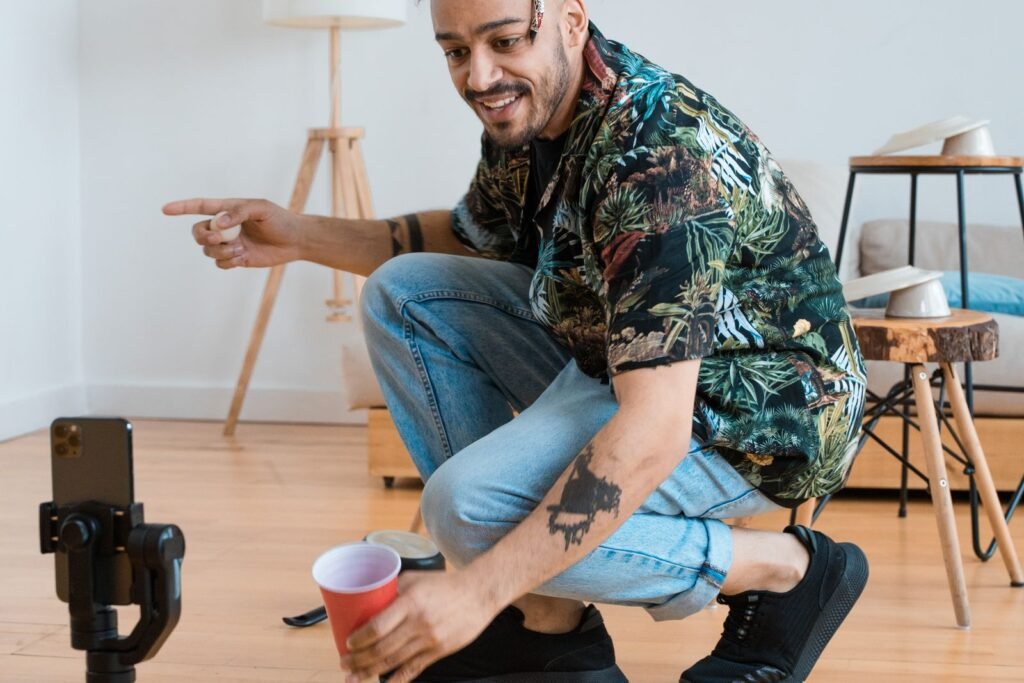
TikTok creator fees in Singapore depend on more than follower count. A creator's audience fit, average views, production effort, usage rights and exclusivity can change the cost substantially. For initial budgeting, an SME might set aside roughly S$300 to S$1,000 for a micro-creator's standard video, while established creators can charge several thousand dollars or more. Treat these as planning estimates, not a published rate card: creator quotes are negotiated individually and can vary by brief and timing.
The practical way to budget is to separate the creator fee from production, paid amplification and rights. That matters in Singapore's compact market, where a creator may reach a concentrated local audience but the available pool in a specialised niche can be small. This guide explains indicative fees by tier and content type, what to confirm before signing, and how to compare proposals without treating follower count as a performance guarantee.
The Singapore market angle: local reach, fit and disclosure
Singapore offers brands a dense, digitally connected audience, but that does not make every large account locally useful. A creator's follower base can include people outside Singapore, inactive accounts or viewers who are not prospective customers. For a local restaurant, tuition provider or retail brand, a smaller creator whose audience regularly watches Singapore-based food, education or shopping content may be more commercially relevant than a much larger regional account. Ask for audience location and recent video analytics rather than inferring local reach from the creator's profile or accent.
Local context also affects the brief. Food and beverage campaigns can use a visit, tasting or menu demonstration; a fintech brand needs more careful claim review and a clear explanation of product conditions; a retailer may prioritise product demonstration and a trackable store or online action. Content must feel native to the platform without making claims that the brand cannot substantiate. If personal data is collected through a campaign, such as through a lead form or a giveaway, the brand should plan for appropriate consent, notices and handling under Singapore's Personal Data Protection Act. This is separate from the creator's fee, but it belongs in the campaign plan.
Brands should also agree how sponsorship will be made clear to viewers. Do not leave disclosure to an informal assumption. Set the required wording and placement in the brief, and check current platform policies and applicable local advertising guidance before publication. For regulated or sensitive categories, build review time into the schedule and have the right person approve the final script and caption. A creator's casual delivery does not remove the advertiser's responsibility to check what is being claimed.
TikTok's role should be considered alongside the rest of the media plan. Influencer work can supply credible demonstrations and audience-specific creative, while social media marketing in Singapore helps coordinate platform activity and community response. It should not be commissioned in isolation if the brand has no landing page, no offer or no capacity to handle incoming enquiries. Our digital marketing services are planned around the commercial job each channel needs to do, rather than assuming a single post will carry the whole customer journey.
What creators charge by tier in Singapore
Follower bands are useful for organising a shortlist, but they are not a price formula. The ranges below are indicative working estimates for one creator-produced TikTok video, before paid usage, exclusivity, agency fees, GST where applicable, travel or product costs. They are not verified averages or guaranteed quotes. Some creators do not publish rates, and a creator's views, specialist credibility and workload may matter more than the nominal tier.
|
Creator tier by approximate follower count |
Indicative fee for one standard TikTok video |
When this tier may suit |
Main budgeting caution |
|---|---|---|---|
|
Nano, under 10,000 |
S$100 to S$400 |
Local niches, product seeding with a paid deliverable, testing several creative angles |
Small sample sizes make view and conversion patterns less predictable |
|
Micro, 10,000 to 50,000 |
S$300 to S$1,200 |
Local F&B, beauty, services and community-focused campaigns |
Validate Singapore audience share and typical views, not just total followers |
|
Mid-tier, 50,000 to 200,000 |
S$1,000 to S$4,000 |
Campaigns needing a stronger individual profile and more consistent production |
A quoted fee may cover only organic posting, not paid usage or exclusivity |
|
Macro, 200,000 to 500,000 |
S$3,000 to S$10,000 |
Broad awareness or a creator with strong category authority |
Reach can be regional, so local audience composition needs scrutiny |
|
Large or celebrity-level, above 500,000 |
S$8,000 and above |
High-profile launches and brands with a substantial distribution budget |
Fees are highly bespoke; production and rights can add materially to the total |
The ranges overlap because two creators at the same follower count can offer very different commercial value. One may receive strong local comments and consistent views; another may have a large but geographically dispersed following. A specialist creator may also invest substantial research, scripting or filming time. In our experience, it is more useful to compare a creator's last 10 to 20 relevant videos, typical view patterns and audience location than to negotiate from follower count alone. Treat any such sample as directional, because past performance does not guarantee future delivery.
A fee quote should specify the deliverable. One TikTok video might mean a creator-written concept, one filming session, editing, caption, one round of revisions and organic posting. Another quote might cover only a short clip with no revisions or a limited publication window. If a campaign needs a second hook, a cut-down, a different aspect ratio or raw footage, price those items before production rather than assuming they are included.
How content type changes the fee
A simple face-to-camera recommendation is generally less demanding to produce than a scripted demonstration with location filming, several scenes and product close-ups. The difference is not simply the final video length. Planning, travel, props, editing, approvals and reshoots consume time. When a brand requests detailed claims or multiple stakeholders' approval, the work can become more involved even if the deliverable is only 20 seconds long.
For initial planning, a basic creator-led video may sit near the creator's standard post rate. A more produced video with a location visit, additional scenes or substantial editing might add around 20% to 75% to that baseline. A bundle of two or three distinct videos can reduce the unit cost if filming is shared, but it is not automatically cheaper: separate concepts, dates or locations increase work. These are budgeting rules of thumb, not fixed Singapore tariffs. Ask the creator to show what the fee covers and what would be charged as an extra.
Content type also determines what the brand actually receives. A creator posting to their own audience is different from a creator producing an asset for the brand's account. The latter can require separate production and licensing terms, and it does not include the creator's audience distribution unless this is agreed. If the brand intends to adapt the video into paid ads, specify the intended platforms, duration, territories and editing rights. A creator's organic post fee should not be treated as an unlimited commercial licence.
|
Content or campaign format |
Typical cost effect to plan for |
Questions to resolve before confirming |
|---|---|---|
|
Creator's organic video, single concept |
Baseline creator fee |
Does the scope include concept, filming, edit, caption, posting and one revision? |
|
Product demonstration or tutorial |
Often above baseline if scripting and product handling are involved |
Who checks technical accuracy, and who supplies products or props? |
|
Location-based visit, such as a cafe or shop |
Allow for travel, filming time and possible expenses |
Is access arranged, and are travel or meal costs included? |
|
Multi-video bundle |
Per-video cost may fall when production is shared |
Are the ideas genuinely different, and when will each video publish? |
|
Creator-produced asset for brand channels |
Separate production and usage terms may apply |
Can the brand post, edit, boost or reuse it, and for how long? |
|
Paid amplification or creator-authorised ad use |
Additional rights or creator authorisation may be chargeable |
Which account, platform, territory and time period are covered? |
|
Category exclusivity |
May increase the fee because other work is restricted |
Which competitors, product category and dates are included? |
For brands without an in-house creative team, a creator partnership can be supported by professional planning and editing. But do not pay twice for overlapping work. Decide whether the creator, the brand or an agency owns scripting, filming, approval and adaptation. If the campaign also needs a campaign landing page, website design services can help ensure that the destination explains the offer clearly and works on mobile. A creator video can attract attention; a weak destination can still waste the opportunity.
Build the full campaign budget, not just the creator fee
A useful budget separates five cost areas: creator compensation, product or experience costs, campaign management, content rights and media spend. Depending on the campaign, it may also include agency fees, GST where applicable, shipping, travel, location access, giveaway fulfilment and measurement. Not every campaign needs all of these. The point is to identify them before a quote is approved so that a seemingly affordable post does not become an incomplete campaign.
For a small Singapore SME test, a practical planning envelope might be S$2,000 to S$6,000 for several micro-creators or a small creator and content pilot, excluding any significant paid media budget. A campaign with a mid-tier creator, multiple deliverables and paid usage can readily require S$5,000 to S$15,000 or more. These are planning budgets, not market benchmarks. Scope and rights can move the total substantially, so get itemised quotes and compare like with like. If an agency manages the work, ask whether the fee covers creator sourcing, negotiation, briefing, review, reporting and payment administration.
One way to control risk is to stage the spend. Start with a limited number of creator partnerships and a clear learning question, such as which product benefit earns relevant comments or which demonstration makes the offer easiest to understand. Agree how the content will be judged before launch. Then decide whether to renew, adapt the content or broaden the creator pool. This is more informative than spreading a fixed budget across many one-off posts without a common brief or measurement approach.
A campaign should have a defined commercial action, even when the primary objective is awareness. Depending on the business, the action could be a store visit, a product search, a qualified enquiry or a purchase. Use a suitable landing page, offer code or tagged destination where possible, but do not assume that a code captures every effect. Viewers may remember the brand and convert later through another route. Report direct response and supporting signals separately rather than claiming that every sale seen during the campaign came from a creator.
Content distribution beyond the initial post is another budgeting decision. Search-oriented articles, website copy and creator videos do different jobs, but they can support one another when the campaign has a clear message. DMS's content marketing services can help build the wider content plan; focused copywriting support can make the offer and landing-page message more consistent with the creator brief. The right mix depends on the audience journey, not a rule that every influencer campaign needs every channel.
What to expect: a practical campaign process
Begin with the business objective, the audience and the offer. A brief that says only to make a viral video is not a strategy. Specify what the viewer should understand, what action is relevant and what claims are approved. Set practical constraints such as location, campaign dates, product availability and whether the creator must visit a physical site. In Singapore, logistics can be compact but scheduling still matters, especially where a restaurant, event or retail location has peak periods.
Next, shortlist creators by content quality and audience relevance. Review several recent posts, not only a media kit. Look for consistency in views, comment quality, natural delivery, local audience evidence and prior category partnerships. Ask for current audience analytics and clear definitions of the figures supplied. We recommend documenting why each creator was selected. This makes it easier to compare proposals and reduces the temptation to choose solely on a manager's recommendation or a headline follower number.
The commercial agreement should set deliverables, dates, fee, payment timing, approval limits, revision count, cancellation terms and disclosure expectations. It should also describe the usage licence, paid amplification permissions, exclusivity and what happens if a post is delayed or removed. Agree how long content remains live if that matters to the campaign. Keep the brief focused enough that the creator can produce an authentic video, but precise enough to protect factual accuracy and brand safety.
After publication, capture the agreed evidence: the public post link, platform analytics at a specified interval and any tracked actions. Separate what the creator reports from what the brand's own analytics record. For an ongoing programme, compare creators on a consistent basis, while noting that one video is a small sample. DMS can also assess whether influencer activity belongs alongside organic search or paid search, using SEO services for longer-term discoverability or SEM planning when the campaign needs paid search coverage. Those channels should have separate objectives and budgets rather than being treated as interchangeable with creator reach.
Comparison: choosing a creator and a buying model
The right buying model depends on whether the campaign needs reach, reusable assets, credibility in a niche or a repeatable flow of content. A single high-profile creator may be efficient for broad attention, but it concentrates the budget and gives the brand fewer creative variations. Several smaller creators can provide a wider range of voices and learning, but require more coordination and do not guarantee more total local reach. A production-only arrangement can be useful when the brand needs content but does not need the creator to publish it to their audience.
|
Buying option |
Best fit |
Budget pattern |
Main trade-off |
|---|---|---|---|
|
One large creator |
A launch where recognisable reach is central |
High fee concentrated in one partnership, with rights and media separate |
Fewer independent creative tests and greater dependency on one post |
|
Several micro-creators |
Local audience testing or niche community access |
Smaller individual fees, plus higher coordination effort |
More approvals and variable quality across creators |
|
Mid-tier creator partnership |
A balance of established presence and manageable scale |
Moderate to high fee, often shaped by scope and rights |
Audience fit still needs verification; the tier alone proves little |
|
Creator as content producer only |
Brand needs social assets for its own channels |
Production and licence costs, without guaranteed audience distribution |
The brand must supply its own distribution plan |
|
Creator content plus paid amplification |
A post with a plan to extend reach or test an ad |
Creator fee plus negotiated usage and media spend |
Rights and ad performance are separate from the organic post |
Choose among these by comparing the cost of the complete job, not one line in a rate card. If the objective is local discovery, the key question is whether the creator reaches and persuades people in the target area. If the objective is a library of social assets, compare production scope and usage rights. If the objective is direct sales, confirm that the offer, tracking and purchase journey are ready before signing. For ecommerce businesses, an ecommerce SEO plan may address product discovery over time, while influencer content can create immediate attention; the measures and time horizons are different.
Field Notes
-
1 video is a useful minimum unit for a tightly scoped pilot, but it is not enough evidence to declare a creator consistently effective. Compare the post with similar content and treat results as directional.
-
3 quote components should always be separated: production, publication and usage rights. This makes it possible to compare two offers that otherwise appear to include the same deliverable.
-
10 to 20 recent relevant posts can provide a better first review sample than a creator's best-performing viral clip. The point is to inspect consistency, not to forecast an exact result.
-
30 days is a reasonable planning interval to request for an initial post review, unless the platform or agreement provides a more suitable measurement window. It gives the brand time to gather analytics without presenting a short-term view count as a final business outcome.
-
2 approval stages are often enough for a straightforward campaign: concept or script review, then final edit and caption checks. More approval rounds can delay publishing and should be agreed and priced rather than added informally.
The uncomfortable truth: the cheapest creator can be the most expensive choice
A low fee is not a saving if the creator cannot reach the intended audience, the video needs extensive revisions or the brand lacks permission to use the asset where it matters. Equally, a premium creator is not automatically the better investment. The assumption that bigger accounts reduce risk is often wrong. A high fee can buy more visibility, but it does not resolve weak audience fit, an unclear offer or poor execution after the post goes live.
The decision should be based on the cost of the usable outcome. That means asking what the campaign must produce, which part the creator controls and which parts depend on the brand. A creator controls their creative and publication commitments; the brand controls product availability, landing-page quality, customer service and much of the approval process. If those brand-side pieces are not ready, increasing the creator fee is unlikely to fix the bottleneck.
In our experience, the strongest budget discussions are specific about uncertainty. A brand may pay more for rights because it intends to test the video as an ad, but it should not buy a long licence without a use plan. A brand may commission several creators to reduce dependence on one voice, but it should reserve time to coordinate briefs and review. Spend is justified when it purchases something the campaign will actually use, not because a supplier labels an add-on as standard.
Client example: creators and TikTok for a bubble tea brand
A bubble tea brand we work with, six outlets across Singapore, was posting about four TikTok videos a month, mostly reused Instagram shots, and averaging around 1,900 views each. Engagement sat at 1.6%.
Alongside a weekly in-store shoot built on three content pillars, we worked with eight local food creators who visited the outlets, filmed their own reviews and shared a code with their followers. Each new flavour got a planned launch with a teaser, a creator video and a limited-time code, and the best organic and creator videos were boosted as Spark Ads on S$2,500 a month near each outlet. Over six months, average views per video rose from 1,900 to 14,200, engagement climbed to 4.2% and followers grew from 4,800 to 10,900.
TikTok influencer marketing works best when creator content is tracked with codes and the strongest videos get paid support. The results are in our bubble tea TikTok case study.
Frequently Asked Questions
How much should a Singapore SME budget for a TikTok influencer campaign?
For a small test, a planning envelope of S$2,000 to S$6,000 may cover several micro-creators or a limited creator-content pilot, before substantial paid media. A mid-tier creator campaign with multiple deliverables or usage rights may require S$5,000 to S$15,000 or more. These are indicative budgets, not fixed market rates. Get itemised quotes and confirm what is included before comparing totals.
Is it better to hire one large creator or several micro-creators?
Choose one large creator when the campaign needs a particular profile or broad attention and the budget can support the partnership. Several micro-creators can give a brand more creative variation and niche perspectives, but coordination takes time and their combined audience is not automatically more valuable. Compare audience location, recent content, expected deliverables and full rights costs against the campaign objective before deciding.
What should a creator quote include?
Ask whether the fee covers concept development, filming, editing, caption writing, publication, revisions, travel and product costs. Then confirm whether it includes only organic posting or also brand-channel use and paid amplification. The quote should state the publication date, revision limit, payment terms, disclosure requirements and any exclusivity. If an item is not written down, do not assume it is included.
Do TikTok creator fees include paid ad usage?
Usually, a brand should not assume that an organic post fee includes permission to use the video in paid advertising. Ask for a separate licence or authorisation that states the relevant platforms, account, duration, territory and permitted edits. Paid media spend is also separate from the creator's fee. Confirming those terms before filming avoids having a useful asset that the brand cannot use as planned.
How can I tell whether a creator reaches Singapore viewers?
Request recent audience analytics showing geography and, where available, age and other relevant audience characteristics. Review several recent videos in the same category and look at comment relevance, not just view counts. Ask how the creator defines their reported average views and the period covered. No single metric proves audience quality, so combine analytics with a clear match to the campaign's intended customer.
Should I pay for exclusivity?
Only pay for exclusivity when competitor activity could materially undermine the partnership. Define the product category, named competitors if appropriate, territory and restricted dates. A broad restriction can prevent the creator from accepting other work and may therefore cost more. For a short Singapore campaign, a narrowly defined period around publication may be more proportionate than a long, open-ended restriction.
Do I need an agency to run a TikTok creator campaign?
Not always. A capable in-house marketer can manage a small test if they have time to shortlist creators, negotiate scope, review claims, coordinate approvals and measure outcomes. An agency may be useful when many creators, complex rights or several channels need coordination. DMS explains its approach on the about page. If you are comparing support, share the campaign objective and budget envelope first so the scope can be assessed realistically.
Make the budget answer a business question
Before approaching creators, write down the audience, campaign action, deliverables, rights and total budget ceiling. Request itemised proposals and check local audience evidence. Start with a limited test when uncertainty is high, then expand only when the content and commercial signals justify it. For a review of how creator activity fits into a wider Singapore campaign, contact Digital Marketing Singapore with your objective, timing and indicative spend.
Meta description: Plan TikTok influencer marketing in Singapore with creator fee ranges by tier and content type, usage rights, campaign costs and budgeting guidance.

Natasha Tan is the founder of Digital Marketing Singapore, a full-service SEO and digital marketing agency based in Singapore. With hands-on experience across SEO, paid media, and content strategy, she works directly with Singapore businesses to build organic visibility and generate consistent leads. Natasha specialises in the Singapore market — including local search behaviour, PDPA compliance, and government grant navigation for SMEs.