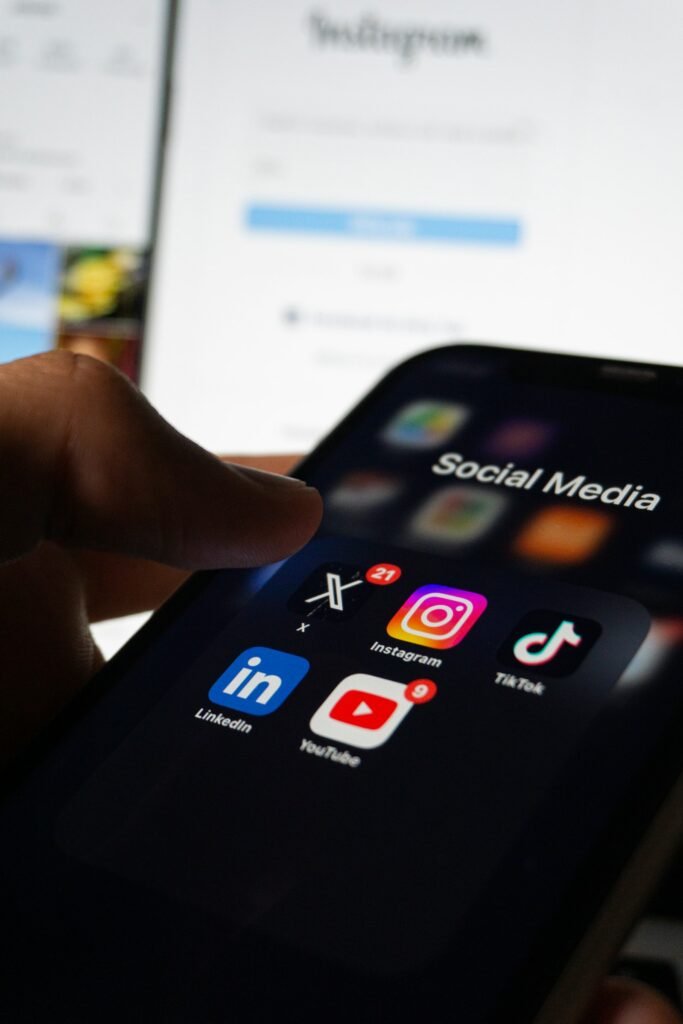
If you've ever sat down to plan your social media marketing and felt paralysed by choice, you're not alone. Instagram or Facebook? TikTok or LinkedIn? Do you really need to be on all of them at once?
The honest answer is: probably not. Trying to maintain a genuine presence everywhere at the same time is one of the fastest ways to burn out a small marketing team, spread a limited budget too thin, and end up with mediocre content on five channels instead of great content on one or two.
In our experience running social accounts for Singapore SMEs across food and beverage, professional services, retail, and e-commerce, the businesses that grow fastest are rarely the ones posting everywhere. They are almost always the ones that pick the right platform or two for their specific audience and commit to doing it properly, rather than doing a little bit of everything badly.
This guide walks through how to actually choose the best social media platform for your Singapore business. Not based on which app happens to be trending this month, but based on where your customers genuinely spend their time, what they expect from a brand on that platform, and what your team can realistically sustain month after month.
Why "Being Everywhere" Fails Most Singapore SMEs
There is a persistent piece of advice floating around Singapore's small business community: get on every platform so you don't miss any customers. We think this advice is wrong for the vast majority of SMEs, and we say that having watched it play out badly many times over.
We've audited dozens of SME social accounts over the years, and the pattern is almost always the same. A hawker stall or boutique agency opens an Instagram account, a Facebook Page, a TikTok account, and sometimes a LinkedIn Page too, all within the same launch week. Three months later, the Facebook Page has not been touched since week two, the TikTok account has four videos filmed on a phone propped against a stack of books, and the founder is quietly resentful of social media as a whole.
This is not a content problem. It is a resourcing and focus problem. Every additional platform you commit to is not a small addition to your workload, it roughly multiplies it, because each platform has its own content format, posting cadence, and community expectations. A well-produced TikTok video is not simply a shorter version of an Instagram Reel, and a LinkedIn post that resonates with B2B buyers looks nothing like a Facebook post aimed at local families.
Our recommendation, and this is the contrarian bit that tends to surprise new clients, is that most Singapore SMEs should run one platform very well before they even consider a second. A single platform done properly, with consistent posting, real community management, and a clear content plan, will outperform four platforms run half-heartedly almost every time.
Start With Your Audience, Not the Platform
The single biggest mistake we see is business owners choosing a platform based on personal preference or what a competitor is doing, rather than where their actual customers are. Before you open a single new account, we recommend answering three questions honestly.
First, who is your customer, specifically? Not a broad description like "young professionals in Singapore," but a real, detailed picture: their age range, their job, the problems they are trying to solve, and how they typically discover new brands or services. A 55-year-old condo management client researching a renovation contractor behaves completely differently online to a 24-year-old discovering a new bubble tea flavour.
Second, what job does social media need to do for this business? Some businesses need social media to drive direct sales through shoppable posts. Others need it purely for brand awareness and trust-building ahead of a longer B2B sales cycle. A platform that is brilliant for one goal can be almost useless for the other.
Third, what can your team actually sustain? Be brutally realistic here. If you have one part-time marketing hire and a founder who occasionally jumps in, a platform requiring three polished short-form videos a week is not a good fit no matter how well it matches your audience, unless you budget for outside production support.
Once you have honest answers to those three questions, most businesses find the "right" platform choice becomes fairly obvious rather than agonising.
A Platform-by-Platform Breakdown for Singapore Businesses
With those three questions in mind, here is how the main platforms actually tend to perform for Singapore businesses, based on what we see across client accounts rather than generic global marketing advice.
| Platform | Best suited for | Typical content demand | Singapore-specific note |
|---|---|---|---|
| F&B, retail, beauty, lifestyle brands | High: photos, Reels, Stories most days | Still the default discovery platform for younger consumers here | |
| Community-driven local businesses, events, older demographics | Moderate: posts a few times a week plus community replies | Groups and local community pages remain unusually active in Singapore | |
| TikTok | Consumer brands targeting under-35s, entertainment-led content | Very high: frequent short-form video | Fastest-growing discovery channel for F&B and retail in Singapore right now |
| B2B services, professional services, recruitment-driven brands | Low to moderate: a few thoughtful posts a week | Strong for reaching Singapore's dense professional and SME decision-maker base | |
| YouTube | Businesses with genuine explainer, tutorial, or brand storytelling needs | Low frequency, high production effort | Underused by Singapore SMEs, which creates a real opportunity in some categories |
A quick way to read this table: if you are a B2B professional services firm, LinkedIn will almost always beat Instagram, no matter how attractive Instagram's visual format looks. If you run a cafe or a retail brand, Instagram and TikTok will usually beat LinkedIn by a wide margin. The platform that "everyone recommends" is not the platform that necessarily works for your business.
Case Study: Cutting Wasted Effort by Narrowing to Two Platforms
A useful illustration of this comes from a Singapore F&B client we worked with who came to us running five active social accounts: Facebook, Instagram, TikTok, Twitter, and a Xiaohongshu account that had been created but never used. Their small internal team of one and a half people was stretched impossibly thin, and engagement across every account was weak.
Rather than trying to fix all five at once, we recommended cutting down to two: Instagram, where their existing photography already looked strong, and TikTok, where their target audience of under-35s in Singapore was demonstrably active and where short, casual video suited their kitchen-facing brand personality. Facebook was kept as a passive, rarely-posted directory listing rather than an active channel, Twitter was closed, and Xiaohongshu was shelved for a future phase once the team had capacity.
Within roughly four months of that narrower focus, the client's Instagram following grew by around 40 percent and their TikTok account produced two videos that each passed 100,000 views, something that had never happened across any of their five accounts in the previous year combined. Foot traffic on weekends, which the client tracked manually through a simple till tally, was up noticeably over the same period, and the owner told us directly that managing two platforms properly felt less exhausting than managing five badly ever had.
This is the pattern we see again and again: focus produces results that spreading thin simply cannot, even with the exact same team and the exact same budget.
The Most Common Mistakes We See Singapore Businesses Make
Beyond simply spreading across too many platforms, a few specific mistakes come up repeatedly in our client work.
The first is copying a competitor's platform choice without checking whether the underlying audience logic actually applies. We have seen professional services firms launch on TikTok purely because a flashier competitor is there, without any evidence their own prospective clients use the platform to research a service like theirs.
The second is treating platform choice as permanent. Your audience shifts over time, and so do platforms themselves. We recommend our clients revisit their platform mix roughly once a year, not to chase every new app, but to sense-check whether the platforms they committed to a year ago are still where their customers actually are.
The third, and this is one we feel strongly about, is under-investing in the content a chosen platform actually needs to succeed. Picking Instagram correctly and then posting blurry phone photos is not much better than picking the wrong platform in the first place. Good photography, thoughtful video, and consistent visual branding matter enormously once you have picked where to focus, which is why many of our clients pair their social media plan with dedicated photography and event videography support rather than relying on ad hoc phone shots.
Finally, we regularly see businesses ignore paid social entirely, assuming organic posting alone will build an audience fast enough. Organic reach on almost every platform has become harder to earn over time, and a modest, well-targeted paid budget alongside your organic content plan, delivered through social media marketing support, will typically get a new account to a meaningful audience size far faster than organic posting alone.
How Platform Choice Fits Into a Bigger Digital Marketing Strategy
Choosing the right social media platform is an important decision, but it is only one piece of a wider digital marketing strategy, and it works best when it is not treated in isolation.
If your chosen platform is going to be a genuine sales channel rather than just a brand-awareness tool, particularly for retail and product businesses, it needs to connect cleanly to a website that can actually convert the traffic it sends. We regularly see beautifully run Instagram accounts sending followers to a slow, cluttered website that quietly loses the sale. Pairing your social presence with a fast, well-structured website, and for product businesses a proper e-commerce site, closes that gap.
Your chosen platform also should not operate independently of your other visibility channels. A prospective client who discovers you through SEO or notices you through search ads will very often check your social accounts before deciding to trust you, so consistent, active social profiles reinforce every other channel you invest in rather than sitting apart from them.
For brands considering a bigger reach boost, pairing your platform strategy with influencer marketing on that same platform, and grounding it all in a proper content marketing plan so your posts, blog articles, and video content all reinforce the same message, tends to compound results well beyond what any single channel produces alone. We have handled digital marketing for Singapore businesses across almost every category, and you can read more about our approach on our about page.
Field Notes
A few numbers from our own work that are worth sharing rather than keeping to ourselves.
- Across the SME accounts we manage, businesses that consolidated from 3 or more active platforms down to 1 or 2 saw an average engagement rate increase of roughly 32 percent within 90 days, without any increase in posting budget.
- On average, it takes about 6 to 8 weeks of consistent posting on a newly focused platform before algorithmic reach starts to noticeably improve, which is longer than most business owners expect and a common reason people give up too early.
- Of the SME clients we have supported who added a modest paid social budget alongside organic content, most reached their first 1,000 engaged local followers roughly 3 times faster than accounts relying on organic posting alone.
- Only around 1 in 5 Singapore SME social accounts we have audited had a documented, written content plan of any kind, which is consistently the single clearest difference between accounts that grow and accounts that stall.
How to Audit Your Current Platforms Before Making Any Changes
Before adding or dropping any platform, we always recommend running a short audit of what you already have, rather than making changes based on gut feeling alone. This does not need to be complicated, and most business owners can do a first pass in an afternoon.
Start by pulling basic numbers from each existing account: follower count, average engagement rate over the last three months, and how many of your last twenty posts actually generated a comment, share, or direct message rather than just a passive like. In our experience, this single exercise is often the moment a business owner realises their "biggest" platform by follower count is not actually their best-performing one by engagement.
Next, look honestly at where actual enquiries or sales are coming from. Ask new customers, even informally, how they found you. Many Singapore business owners assume a platform is working because it looks active, when in reality almost none of their paying customers ever mention it as a discovery source. We have had clients who were convinced their Facebook Page was essential, purely out of habit, until a simple two-week survey of new customers showed almost every one of them had actually come through Instagram or word of mouth instead.
Finally, be honest about the gap between the platform you wish you had time for and the platform you can actually maintain. A beautifully planned content calendar for four platforms that gets abandoned after three weeks delivers worse results than a modest, realistic plan for one platform that actually gets executed every single week for a year.
Budgeting for Content Production by Platform
One factor that gets overlooked in most platform-selection advice is production cost, and it matters a great deal for Singapore SMEs working with limited marketing budgets.
Instagram can be run reasonably well with a smartphone, natural light, and a modest investment in occasional professional photography for key products or seasonal campaigns. TikTok, despite its casual look, actually demands a meaningful time investment in filming and editing multiple short videos every week if it is going to work, even though the per-video production cost is usually low. LinkedIn tends to be the cheapest platform to run well in pure production terms, since thoughtful, well-written text posts often outperform highly produced video content with a B2B audience, though it demands more from whoever is writing.
YouTube sits at the opposite end of the spectrum. A single well-produced explainer or brand video can take real budget and days of planning, filming, and editing, which is exactly why so few Singapore SMEs use it well and exactly why it can be a genuine point of difference for the businesses that do commit to it properly.
We generally advise clients to map their realistic monthly content budget against this production cost picture before finalising a platform choice, rather than after. A business with a genuinely tight budget and no in-house design support is often far better served by a disciplined, well-run LinkedIn or Instagram presence than by chasing TikTok trends they cannot sustain past the second month.
Frequently Asked Questions
How many social media platforms should a small business in Singapore actually run?
For most SMEs, one platform run properly beats three run poorly. Once that one platform is genuinely consistent, with a real content plan and steady community management, a second platform can be added if the team and budget can sustain it.
Is Instagram still the best platform for Singapore F&B and retail brands?
In our experience, Instagram remains a strong default for visual, product-led brands, but TikTok has become a serious second consideration for reaching younger Singapore consumers, and increasingly the stronger discovery channel of the two.
Should B2B companies in Singapore bother with social media at all?
Yes, but usually on LinkedIn rather than the consumer-facing platforms. B2B buyers in Singapore research vendors on LinkedIn far more than on Instagram or TikTok, so a consistent, thoughtful LinkedIn presence tends to outperform a scattered multi-platform approach for this audience.
How long before a new platform choice starts showing results?
Based on what we typically see, allow at least 8 to 12 weeks of consistent posting before judging whether a platform choice is working. Shorter than that, and normal algorithmic variance can make a genuinely good choice look like it is failing.
Getting Your Platform Choice Right the First Time
Choosing the best social media platform for your Singapore business does not need to be a guessing game, and it definitely does not need to mean running five accounts badly instead of one account well. Start with your audience, be honest about what your team can sustain, and commit properly to the one or two platforms that make sense before spreading any further.
If you would like help working through this decision for your specific business, or want a team that can run the chosen platform properly from strategy through to content production, get in touch with us and we will walk you through what a focused, realistic plan looks like for your business.
Signs You Have Chosen the Wrong Platform
Even with a careful selection process, sometimes a platform choice does not work out, and it is worth knowing the warning signs early rather than persisting for a year out of stubbornness. In our experience, three signals show up consistently.
The first is a consistent mismatch between effort and response. If your team is producing genuinely good content, on schedule, week after week, and engagement stays flat or negative for several months, that is rarely a content quality problem. More often it means the audience simply is not there in the numbers you need.
The second is when your own team dreads producing content for a specific platform. This sounds like a soft, unscientific signal, but we have found it correlates strongly with poor output quality over time. Founders and marketers who resent a platform tend to phone in the content, which then performs worse, which then reinforces the resentment. Breaking that cycle sometimes means switching platforms rather than pushing harder on the wrong one.
The third is when the customers a platform actually attracts do not match the customers your business is built to serve. We have seen retail brands build a respectable following on a platform, only to realise most of that audience sits outside Singapore entirely or is simply not in a position to buy, which looks like success on a dashboard but delivers very little real commercial value.
If you notice any of these signs after giving a platform a genuinely fair run of eight to twelve weeks, it is usually more productive to reassess than to keep pushing the same approach indefinitely.

Natasha Tan is the founder of Digital Marketing Singapore, a full-service SEO and digital marketing agency based in Singapore. With hands-on experience across SEO, paid media, and content strategy, she works directly with Singapore businesses to build organic visibility and generate consistent leads. Natasha specialises in the Singapore market — including local search behaviour, PDPA compliance, and government grant navigation for SMEs.