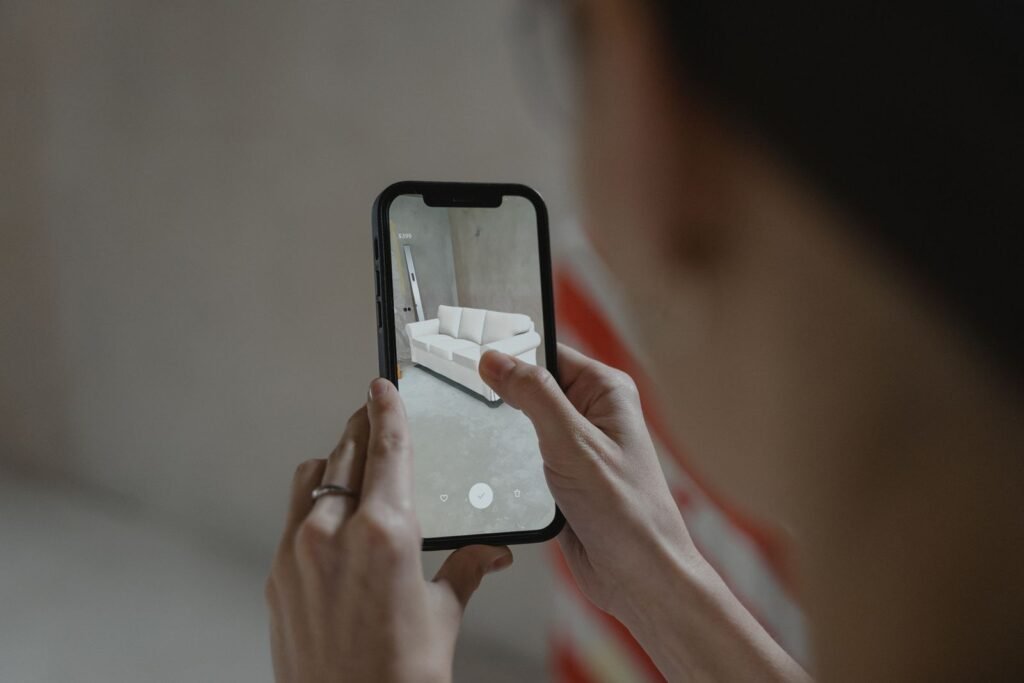
Branded augmented reality filters on Snapchat and Instagram can be worth the investment, but only when they are built around a clear user action rather than novelty alone. A filter that produces views and shares but no useful audience signal, store visit, product interaction or remarketing opportunity is expensive entertainment. In Singapore, where campaigns often target compact, highly connected audiences across retail, F&B, events and youth culture, the format can work well when the creative idea is locally relevant and distribution is planned before production.
The practical answer is not to ask whether AR filters are popular. Ask what the filter is supposed to achieve, who will use it, how they will discover it, and what happens after they do. A simple selfie effect may cost less than a more complex product try-on experience, but neither is automatically effective. This article explains when branded AR filters make commercial sense for Singapore businesses, how Snapchat and Instagram differ, what budgets should account for, and how to evaluate a campaign without relying on vanity metrics.
The Singapore market angle
Singapore is a useful market for branded AR because consumer attention is concentrated across a small physical and digital geography. A campaign can be designed around a mall, event, neighbourhood, outlet cluster or citywide cultural moment. That concentration creates opportunities for location-led concepts, but it also makes weak creative easier to notice. If an effect feels generic, Singapore users have little reason to use it when their feeds already contain global content from much larger brands.
Local context should influence both the idea and the measurement plan. A filter for a new F&B menu might be connected to an outlet launch, a limited-time promotion or a creator visit. A retail brand might use AR to help customers visualise a colour, accessory or styling concept. An event organiser could turn a venue feature into a shareable camera moment. For a B2B company, the format may be more useful for employer branding, trade events or product demonstrations than for direct lead generation.
Privacy also matters. Campaigns that collect personal data, run lead forms or connect usage to a customer database should be reviewed against the Personal Data Protection Act. The filter itself may not require personal information, but the surrounding activation might. A QR code, microsite, contest mechanic or lead form can change the compliance considerations. We recommend deciding what data is necessary before the concept is approved, not after the media campaign has started.
Funding and capability are additional considerations for SMEs. A business exploring support under the Productivity Solutions Grant or IMDA’s SMEs Go Digital initiatives should confirm current eligibility and approved solution requirements directly with the relevant scheme administrator. A branded AR filter is not automatically grant-supported simply because it is digital. Treat grant support as a possible funding question, not as the business case.
Singapore’s audience mix also affects platform choice. Instagram is often the more natural environment for lifestyle, retail, beauty, fashion, travel and creator-led campaigns. Snapchat can make sense when the target audience has a strong presence there, especially around youth culture, entertainment, campus activity or event experiences. Platform assumptions should be tested against the actual audience, not based on a general claim that one network is universally better.
What a branded AR filter actually does
A branded AR filter uses the camera and software effects to add an interactive layer to a user’s environment or appearance. The simplest versions may add graphics, colour treatment, facial effects or branded objects. More advanced experiences can respond to head movement, facial expression, hand gestures, body position, surroundings or product placement.
That technical range matters because production scope can expand quickly. A face effect with a small number of assets is a different project from an interactive game with sound, animation, scoring, multiple states and a supporting landing page. A product try-on experience may require 3D modelling, accurate material treatment, testing across device types and careful user interface decisions. The word "filter" can make a campaign sound inexpensive while concealing a substantial production requirement.
The strongest effects have three qualities. First, the user understands what to do within a few seconds. Second, the output looks good enough to share. Third, the experience gives the user a reason to participate that is stronger than helping the brand advertise. That reason might be humour, self-expression, utility, social participation, a reward or access to something limited.
This is why an AR filter should be treated as content and experience design, not simply as a media format. The effect needs a visual concept, an audience insight, platform specifications, a distribution plan, a moderation approach and a measurement framework. It should also sit within a wider campaign. Our team often sees businesses commission the effect first and only later ask how people will find it. That sequence reverses the commercial decision.
For brands without a strong concept, conventional social media marketing in Singapore may be the better investment. A well-made series of useful videos, creator collaborations or product demonstrations can create more sustained value than one interactive effect. AR is not a default upgrade from ordinary content.
Snapchat versus Instagram for branded AR
Snapchat and Instagram offer overlapping camera experiences, but the role each platform plays in a campaign can differ. Snapchat has a strong product association with camera-led communication and playful lenses. Its environment can suit effects that are inherently participatory, especially when the audience already uses lenses as part of everyday messaging.
Instagram benefits from its connection to public profiles, Reels, Stories, creators, product discovery and brand communities. An effect can support a wider content system, with creators demonstrating it, the brand reposting user content and paid media directing people towards the experience. This does not guarantee better performance. It means Instagram may offer more natural integration with a campaign that already lives across public brand content.
The choice should be evaluated against the campaign objective. If the objective is private peer-to-peer use among a defined audience, Snapchat may deserve serious consideration. If the objective depends on public sharing, creator distribution or a product discovery journey, Instagram may be easier to connect to the rest of the funnel. If the audience is mixed, a test on both platforms can be more informative than a platform argument based on habit.
| Decision factor | Snapchat | Practical implication for a Singapore campaign | |
|---|---|---|---|
| Core behaviour | Camera-led messaging and playful lenses | Public content, Stories, Reels and creator discovery | Choose the platform where the desired action already feels normal |
| Stronger fit | Youth culture, entertainment and event participation | Lifestyle, retail, beauty, F&B and creator-led discovery | Match the effect to the audience’s existing content behaviour |
| Distribution | Lens discovery, direct sharing and paid promotion | Reels, Stories, creators, profile content and paid promotion | Budget for distribution on either platform, not just production |
| Useful outcome | Lens use, shares and repeat interaction | Effect use, shares, saves, creator content and site actions | Define the next business signal before launch |
| Main risk | High usage without a clear path to commercial value | Strong reach without enough user participation | Separate exposure metrics from action metrics |
We found that platform selection becomes clearer when the brief describes a real user journey. "Get attention for our brand" is too broad. "Let prospective customers preview a product colour before visiting our outlet" or "give event attendees a way to identify and share their participation" gives the creative and media teams something testable.
When AR filters are commercially sensible
AR filters tend to make the most sense in four situations. The first is when the product or proposition is visual. Beauty, fashion, accessories, food presentation, interior products and consumer technology can all benefit from a camera-based demonstration, provided the experience represents the product honestly. If the product cannot be understood visually or interactively, AR may add friction without adding meaning.
The second is when there is a concentrated moment. A product launch, seasonal promotion, festival, store opening, campus activation, conference or sponsorship can give people a reason to participate now. A filter that depends on an event or cultural moment has a natural deadline. Without that moment, the campaign may struggle to generate urgency.
The third is when the brand has distribution. Existing social audiences, creators, paid media, retail staff, packaging, email lists and physical signage can all help users discover the effect. Discovery does not happen merely because a filter has been published. A QR code on a table tent, a creator demonstration or a paid Story can be more important than another round of visual polish.
The fourth is when the business can reuse the resulting content. User-generated content may support organic social posts, paid creative variations, event recaps or product education. Reuse requires permission and a clear rights process. A campaign should not assume that every user-created asset can be downloaded, edited and advertised.
AR is less suitable when the business has no distinctive creative idea, no media budget, no audience access and no measurement capability. It is also risky when the effect is designed to create a misleading representation of a product. A try-on that looks perfect on the camera but creates a different customer expectation can damage trust.
Our recommendation is to begin with the behaviour, not the feature. Decide whether you want users to try, share, visit, remember, compare, learn or submit information. Then decide whether AR is the most efficient way to produce that behaviour. If the answer is simply "make the campaign more engaging", the brief is not ready.
Budgeting and what to expect
A Singapore SME should budget for more than the build. Indicative costs can range from around SGD 5,000 to SGD 15,000 for a relatively simple branded effect, and from approximately SGD 15,000 to SGD 50,000 or more for advanced interactive work involving 3D assets, games, multiple environments, extensive testing or a supporting web experience. These are planning ranges, not quotations. Platform requirements, creative complexity, usage rights and production quality can move the figure materially.
Media distribution is separate. A business may spend SGD 3,000 to SGD 10,000 testing paid promotion for a focused local campaign, while larger launches may require a substantially higher media allocation. Creator fees, event staffing, photography, video, landing page development, moderation and reporting may also sit outside the filter production quote.
A useful budget discussion separates four cost groups: concept and strategy, design and technical production, distribution, and measurement or optimisation. This prevents the common mistake of spending the entire budget on the effect and leaving no money to help users discover it. Our team recommends agreeing on a minimum viable test before commissioning an elaborate build.
The process normally starts with an audience and objective workshop, followed by concept development and platform feasibility checks. The chosen concept then moves into design, asset preparation, development and device testing. The team should test facial tracking, lighting, different camera angles, text readability, load time and the experience on representative devices. After approval, the effect is submitted to the relevant platform, promoted through selected channels and monitored after launch.
A realistic timeline depends on scope. A simple concept may take several weeks from briefing to launch. An advanced experience can take considerably longer because modelling, interaction design, testing and approvals create dependencies. Build time should not be compressed by removing testing. A broken or confusing effect can spread negative reactions more quickly than a polished one spreads positive attention.
If the campaign needs a landing page, the page should be planned at the same time as the effect. It might explain the promotion, provide store information, capture an eligible entry or give users a product next step. Our website design services can be relevant when the AR activation forms part of a larger customer journey, rather than operating as an isolated social post.
Where the campaign depends heavily on visual assets, video production services or product photography may be needed to demonstrate the experience and create supporting advertisements. The filter itself is only one piece of the content system.
How to measure value beyond views
Reach and impressions tell you how many people may have encountered the campaign. They do not tell you whether the effect was useful, enjoyable or commercially relevant. Report at least three layers of performance.
The first layer is exposure: reach, impressions, frequency and the source of traffic. The second is interaction: effect opens, uses, plays, shares, saves, screenshots, video completions or repeat use, depending on platform reporting. The third is business action: website visits, product page views, promotion redemptions, store visits where measurement is reliable, event registrations, qualified enquiries or assisted conversions.
Do not force an immediate sale as the only valid outcome. An event filter may be judged on participation and content creation. A product try-on may be judged on product page engagement and assisted purchase behaviour. A brand experience may require a brand lift study or structured recall research. The right metric depends on the role the effect plays in the customer journey.
Set a baseline where possible. Compare the campaign against previous content with a similar audience, objective and paid support. Be careful with attribution. Someone may use a filter after seeing a creator video, then search the brand later, visit a store and purchase offline. Last-click reporting can undervalue the effect, but it should not be replaced with a vague claim that every later sale was caused by AR.
For campaigns that lead to a website, use consistent tracking and a clear naming convention. If personal data is collected, obtain the appropriate consent and document the purpose. If user-generated content will be reused in paid advertising, define the permission process before launch.
Businesses that need demand capture alongside awareness may combine AR with search engine marketing or Google Ads and PPC campaigns. Search can capture people who become interested after seeing the experience, while AR provides the earlier visual interaction. The two channels should have consistent messaging and landing pages.
Field Notes
- 3 seconds: This is a useful design test for whether a user can understand the first action quickly. If instructions take too long, paid traffic may generate exposure without meaningful use.
- 2 platforms: Testing Snapchat and Instagram can reveal whether the concept is platform-dependent. The result is more useful when the audience, media spend and creative treatment are comparable.
- 4 cost groups: Separating strategy, production, distribution and measurement exposes underfunded launches. A low build quote can still become an expensive campaign if paid discovery and supporting assets were ignored.
- 1 primary action: Choosing one main behaviour keeps the effect focused. Trying to drive awareness, data capture, sales, event attendance and user-generated content at once usually weakens the experience.
- 7 days: A first-week review is valuable for identifying tracking problems, confusing instructions and weak traffic sources before the campaign spends its full allocation. It is not a substitute for a longer evaluation period.
The uncomfortable truth about branded AR filters
The uncomfortable truth is that branded AR filters are usually a distribution problem disguised as a creative problem. Agencies and brands can spend weeks refining an effect that very few people encounter. The effect may be technically excellent, but users do not browse social platforms hoping to discover an advertisement in camera form.
This is why we do not recommend treating platform publication as a launch plan. Discovery requires media, creators, physical prompts, existing community activity or a compelling cultural reason to participate. A filter placed on a product page may reach people who already have intent, while a creator demonstration may generate curiosity among a colder audience. Those are different roles and should be budgeted and measured differently.
A second contrarian point is that a simpler effect can outperform a technically ambitious one. Complexity often adds development cost and user instructions. It can also make the result slower, harder to share or less recognisably connected to the product. A single visual transformation with a strong local idea may be more effective than an elaborate game that users do not understand.
AR is not the same as innovation. Innovation means solving a customer or business problem in a better way. If an Instagram Story, short video or interactive landing page can solve the same problem with less cost and less friction, choose that option. Our clients generally get a stronger decision framework when AR has to earn its place against other content formats, rather than being approved because it sounds new.
That does not make AR unimportant. It means the format should be held to a higher standard. The winning question is not whether people can use the filter. It is whether the experience gives them a reason to use it, a reason to share it and a reason to take the next useful action.
Client example: a Singapore retail launch
We worked with a Singapore retail business considering an AR filter for a new product launch. The initial idea was a generic branded face effect, chosen because it looked easy to produce. During planning, the team identified a more relevant customer behaviour: shoppers wanted to compare product variations before visiting the outlet.
The concept was adjusted to make the product choice the centre of the experience. Supporting content showed how to access the effect, while the campaign journey directed interested users to practical information about availability and outlet locations. The important change was not a more complicated filter. It was the connection between the camera interaction and a real decision customers were already making.
The example does not justify claiming that every retail campaign needs AR. It shows why the brief should begin with customer behaviour. The same business might have been better served by product photography, creator demonstrations or paid search if the objective had been immediate demand capture. We recommend making that comparison before production begins.
Frequently Asked Questions
Are branded AR filters worth it for a Singapore SME?
They can be, if the business has a visual proposition, a defined audience, a timely campaign moment and enough distribution budget. They are less likely to be worthwhile when the only objective is general awareness and there is no plan to measure or reuse the content. Start with a limited concept and test the audience response before committing to a complex build.
Should a brand choose Snapchat or Instagram?
Choose the platform where the target audience already performs the desired behaviour. Snapchat can suit camera-led participation, youth culture and event moments. Instagram may be more practical for lifestyle discovery, creators, Reels, Stories and connections to a wider brand campaign. If the audience is uncertain, a controlled test can provide better evidence than relying on platform reputation.
How much does a branded AR filter cost in Singapore?
A simple branded effect may require approximately SGD 5,000 to SGD 15,000, while an advanced interactive experience may cost around SGD 15,000 to SGD 50,000 or more. Media, creator fees, supporting video, landing pages, rights and reporting are usually additional. Request a scope that separates production from distribution so the total investment is clear.
How long does an AR filter campaign take to launch?
A simple effect may take several weeks, including concept approval, design, development, testing and platform submission. Advanced work can take longer because it may involve 3D modelling, multiple interactions, device testing and additional approvals. A rushed launch is risky if it removes usability testing or leaves no time to prepare the supporting distribution assets.
What should we measure if the filter does not directly sell a product?
Measure the interaction that reflects the campaign’s role. This might include effect uses, shares, repeat use, creator content, event participation, website engagement or branded search activity. If you need stronger evidence of brand impact, consider structured recall or brand lift research. Do not label views as conversions, and do not claim sales causation without a defensible attribution method.
Do we need a website or landing page?
Not always. A simple awareness effect may work without one. A landing page becomes more useful when the campaign includes product information, outlet details, event registration, a promotion, lead capture or tracking requirements. If personal data is collected, the page and consent process need careful review. The landing page should answer the user’s next question, not merely repeat the campaign slogan.
Should we invest in AR or influencer marketing first?
That depends on whether the campaign’s bottleneck is experience design or audience distribution. Influencers can help demonstrate and legitimise an effect, but creator activity without a strong experience may produce brief attention. AR without distribution may remain undiscovered. In some cases, a creator-led content test should come first, using audience response to refine the AR concept before a larger build.
Our recommendation
Branded AR filters on Snapchat and Instagram are worth considering when they make a specific customer behaviour easier, more entertaining or more shareable. They are not worth funding as a decorative layer on a weak campaign. For most Singapore businesses, the correct sequence is to define the audience, select one primary action, test the concept against simpler content formats, reserve budget for distribution and decide how success will be measured before production.
If the campaign needs a broader acquisition plan, consider how AR will connect with SEO services in Singapore, content marketing or conversion-focused copywriting. If the business sells online, ecommerce SEO may create more durable value than a one-off effect. If local discovery is central, local SEO services can support customers who search after seeing the campaign.
DMS takes a results-first view of emerging formats. We see AR as one possible part of a Singapore campaign, not as a replacement for strategy, media planning, content quality or measurement. Start with the commercial problem, make the user experience earn attention, and proceed only when the numbers and the customer journey support the decision.

Natasha Tan is the founder of Digital Marketing Singapore, a full-service SEO and digital marketing agency based in Singapore. With hands-on experience across SEO, paid media, and content strategy, she works directly with Singapore businesses to build organic visibility and generate consistent leads. Natasha specialises in the Singapore market — including local search behaviour, PDPA compliance, and government grant navigation for SMEs.



