If you run a restaurant in Singapore, you have almost certainly been told that you need to be "everywhere" - Instagram, TikTok, Google Ads, GrabFood promotions, a slick website, maybe an influencer dinner or two. In our experience working with F&B clients across the island, that advice is exactly backwards. Most restaurants that come to us with a shrinking cover count are not under-marketed. They are scattered across five channels and doing all of them halfway. We see this constantly: a restaurant paying for boosted posts and an influencer dinner in the same month that its Google Business Profile still lists last year's public holiday hours. Fixing the scatter, not adding another channel on top of it, is usually the actual unlock.
This guide is a practical playbook for digital marketing for restaurants Singapore owners can actually execute, in the order that produces bookings and walk-ins fastest. We will walk through Google Business Profile, hyperlocal SEO, content marketing, social media, influencer collaborations, photography and video, your website and online ordering setup, and paid ads, then close with a real case study, a channel comparison table, and field notes drawn from our own client accounts.
Why Most Singapore Restaurant Marketing Plans Fail Before They Start
Here is the contrarian part: we recommend that most independent restaurants in Singapore delay TikTok and Instagram content until their Google Business Profile and on-site SEO are fully sorted. That is the opposite order to what most agencies pitch, because content is more exciting to sell than a directory listing. But a diner who is standing outside three restaurant options on Google Maps, hungry, right now, converts at a completely different rate to someone scrolling a feed for entertainment.
We have audited dozens of restaurant Google Business Profiles in Singapore and found the same pattern almost every time: outdated hours, no menu attached, five-year-old photos, and zero replies to reviews. Fixing that costs nothing but time, and it is usually the single highest-leverage move available before a single dollar goes into paid media or content production.
Google Business Profile: The Highest-ROI Channel Restaurants Still Get Wrong
Your Google Business Profile (GBP) is what shows up when someone searches "restaurant near me" or "[cuisine] Tanjong Pagar" on Google Maps. For F&B, this listing frequently drives more covers than any paid channel, and it is free to maintain.
What we actually check when we take on a restaurant client:
- Primary and secondary categories set correctly (a lot of cafes are still filed only as "Restaurant" and miss cafe-specific searches)
- Full, current menu with prices, uploaded as a menu item, not just a PDF link
- Attributes filled in: outdoor seating, halal options, dine-in, delivery, reservations
- Photos refreshed at least monthly, shot properly rather than pulled from old Instagram posts
- Every review responded to within 48 hours, good or bad
- Posts published weekly using GBP's built-in update feature
If your business does not have the internal bandwidth to run this properly every week, this is exactly the kind of ongoing account management our digital marketing team handles for F&B clients, alongside the rest of the channels below.
Hyperlocal SEO for Restaurants: Getting Found By Hungry Diners Nearby
Beyond the map listing, your website itself needs to rank for the searches that actually convert: "[neighbourhood] brunch", "halal Japanese restaurant Singapore", "restaurant private dining Singapore", and similar long-tail, intent-heavy queries. Generic terms like "Singapore restaurant" are close to unwinnable for an independent outlet and, frankly, not where your best customers are searching anyway.
A proper hyperlocal SEO approach for a restaurant covers location pages if you have more than one outlet, schema markup so Google can pull your menu, hours, and price range directly into search results, and a content structure built around the specific dishes, occasions, and neighbourhoods you actually serve. This is a genuinely technical exercise once you go past the basics, which is why it sits under our dedicated SEO service rather than being something we bolt onto a social media package.
One thing we tell every restaurant client: hyperlocal SEO is slower than a boosted Instagram post, but it compounds. A page built around "best duck rice Chinatown" keeps bringing in diners eighteen months later with zero ongoing spend, which a paid ad simply does not do once the budget stops.
Content Marketing: Turning Your Menu and Story Into Search Traffic
Most restaurant websites are a static menu and an address. That leaves an enormous amount of searchable content on the table: the story behind your recipes, ingredient sourcing, chef background, seasonal menu changes, and answers to the questions diners actually type into Google before they book, like "is [restaurant] suitable for large groups" or "does [restaurant] have vegetarian options".
Building this out properly, in a way that search engines and diners both find useful, is content marketing work, not just copywriting. Our content marketing team typically builds this alongside the SEO work above, because the two feed each other: better content gives SEO something worth ranking, and SEO strategy tells content which questions are actually worth answering first.
Instagram and TikTok for Restaurants: Content That Converts Into Bookings
Once the foundational channels are in order, social media is where a lot of the visible brand-building happens for F&B, and it is genuinely valuable when done with intent rather than posted for the sake of posting. The restaurants we see winning on Instagram and TikTok are not the ones posting the most: they are the ones posting content built around a clear format diners can recognise, whether that is a weekly "new dish drop" reel, a behind-the-counter series, or short clips that answer a specific question (portion size, spice level, waiting time on weekends).
A content calendar built around your actual booking cycle, tied to a consistent posting cadence and a real strategy for what each platform is for, is what our social media marketing team builds for restaurant clients. We recommend treating TikTok and Instagram as top-of-funnel awareness and reserving the harder conversion push (bookings, delivery orders) for GBP and your website, where intent is already high.
Working With Food Influencers Without Wasting Your Budget
Influencer dinners are one of the most misused tactics in Singapore F&B marketing. We have seen restaurants spend several thousand dollars hosting a single creator whose audience does not match their price point or neighbourhood, purely because the creator has a large follower count. Follower count is a poor predictor of covers generated.
What actually moves the needle is matching creators to a specific goal: a micro-influencer with a genuinely local, food-focused following in your neighbourhood will usually outperform a mega-influencer with a broad, scattered audience, at a fraction of the cost. We run this kind of matching and negotiation through our influencer marketing service, and we always tie a collaboration to a trackable outcome, whether that is a unique promo code, a reservation link, or a GrabFood voucher, so the spend is measurable rather than a vague brand-awareness bet.
Food Photography and Video: Why Amateur Shots Are Costing You Covers
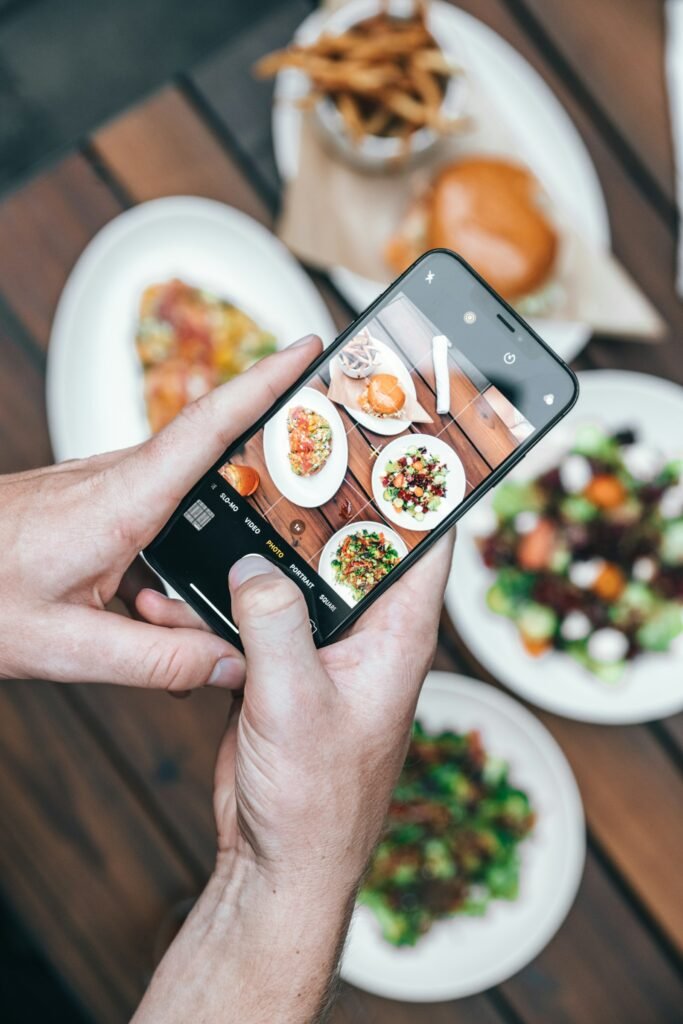
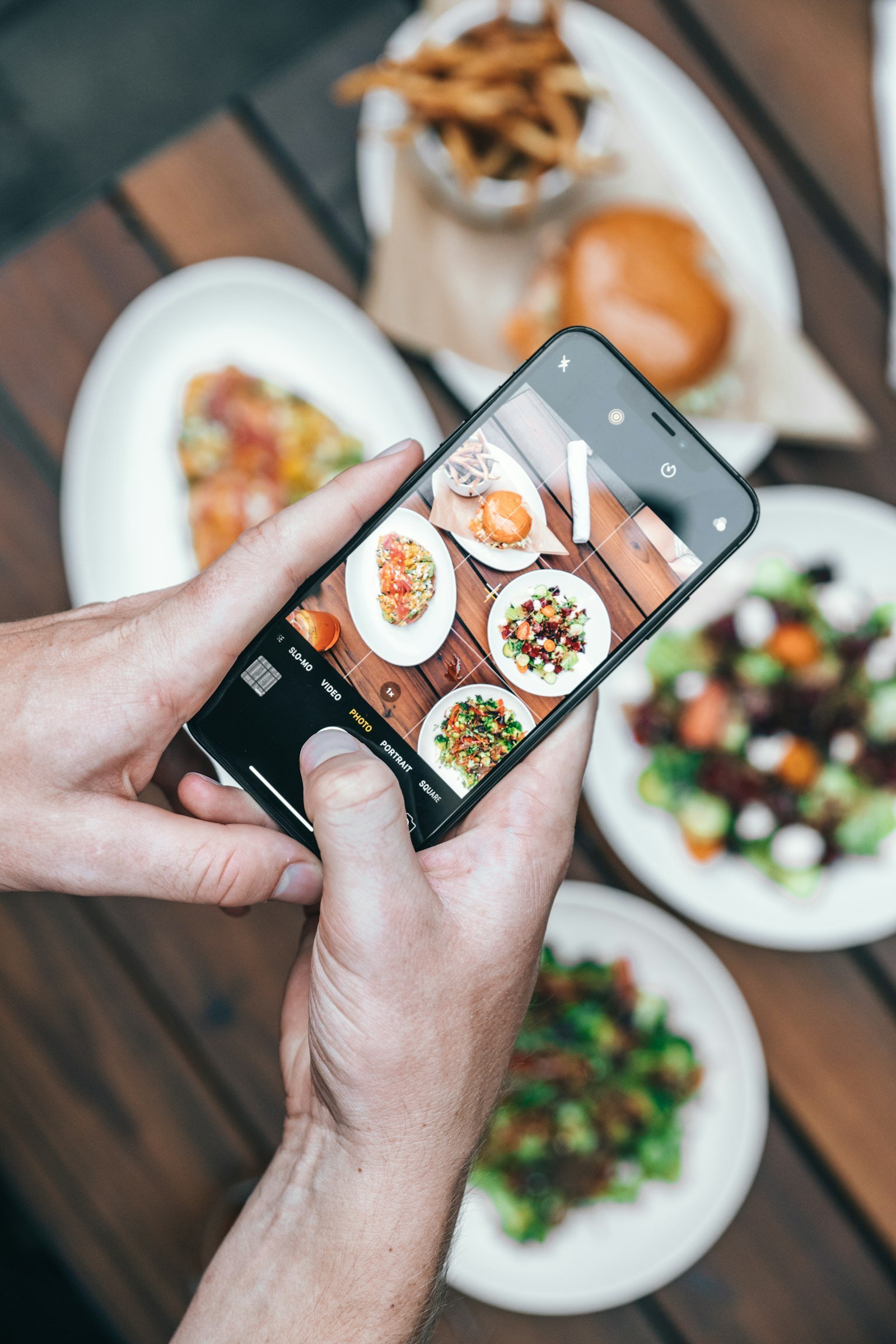
We say this to nearly every new F&B client: your food photography is doing more damage to your conversion rate than your marketing budget is helping it. Diners decide whether to click through to a menu, save a post, or book a table within a second or two of seeing an image, and phone photos taken under kitchen lighting rarely survive that first glance.
Proper food photography, shot with the right lighting and styling for how the dish actually looks on the pass, pays for itself extremely quickly for a restaurant, because the same set of images gets reused across GBP, your website, delivery platforms, and social content for months. For anything beyond static photography, such as a grand opening, an anniversary event, or a chef's table series, our event videography team also covers restaurant events end to end, from filming through to short-form edits for social.
Your Website and Online Ordering: The Silent Revenue Leak
A surprising number of restaurant websites in Singapore are still slow, not mobile-optimised, or missing a working online ordering link entirely, sending diners who are ready to order straight to a third-party delivery app instead, where the restaurant pays a much higher commission. If your website cannot take a reservation or a delivery order in under thirty seconds on a phone, you are actively losing orders to whichever competitor's site can.
We rebuild restaurant websites through our website design service with this specific problem in mind: fast load times, a menu that is actually readable on mobile, and a booking or ordering flow that does not require six taps to complete. For restaurants running their own direct ordering system rather than relying entirely on third-party apps, our ecommerce website design team can build that ordering flow directly into the site, which keeps more margin in your pocket than routing every order through a delivery platform's cut.
Google Ads for Restaurants: When Paid Search Actually Makes Sense
Paid search is not the first channel we recommend for most independent restaurants, but it earns its place once the free channels above are actually optimised. Google Ads for restaurants tends to work best for a narrow set of situations: a new opening that needs visibility fast, a location with genuinely low map-pack competition, or a promotion with a hard deadline, like a festive set menu or a private event package.
Where we see restaurant ad budgets wasted most often is broad match keywords burning spend on searches with no commercial intent, and location targeting set too wide, paying to reach diners who will never realistically travel to the outlet. Our SEM team builds restaurant campaigns around tight geographic radius targeting and high-intent keywords only, which keeps cost per booking down to a level that actually makes sense against your average ticket size.
Case Study: How a Tanjong Pagar Cafe Turned Around Its Weekday Lunch Crowd
One of our F&B clients, a casual all-day cafe in Tanjong Pagar, came to us with a familiar problem: strong weekend brunch trade but a dead weekday lunch service, despite being surrounded by office towers. Their Google Business Profile had not been touched in over a year, their Instagram was weekend-brunch photos only, and their website had no lunch set menu listed anywhere.
Over a 90-day engagement, we rebuilt their GBP with correct categories and a full lunch set menu, ran a hyperlocal SEO push targeting "lunch set Tanjong Pagar" and similar office-crowd searches, reshot their food photography to include weekday lunch sets specifically, and ran a tightly geo-targeted Google Ads campaign with a radius capped at 600 metres from the cafe, timed to serve only between 11am and 2pm on weekdays.
The results by day 90: average weekday lunch covers rose from roughly 45 to 118 per day, Google Business Profile direction requests were up 41%, and the weekday Google Ads campaign was running at a cost per booked cover of under SGD 3.50, well inside their margin on a SGD 14 lunch set. None of this required a viral TikTok moment. It required the boring, foundational channels being done properly before any paid spend went in. We also tracked their Instagram following separately as a control: it grew only modestly over the same 90 days, which is exactly the point. The lunch turnaround came from search and map visibility converting existing nearby demand, not from a viral moment. That is the pattern we see across most of our F&B accounts once the foundational channels are actually fixed: growth is steady and traceable to a specific channel change, rather than arriving in one unpredictable spike.
Reputation Management: Why Reviews Are Marketing Too
A restaurant's review score is one of the few pieces of marketing collateral a diner reads immediately before deciding where to eat, and most Singapore restaurants treat it as an afterthought rather than an active channel. We have watched a single unanswered one-star review sit at the top of a Google Business Profile for months, visible to every single person who searched the restaurant's name, while the owner focused entirely on new Instagram content instead.
Responding to reviews, both good and bad, within a day or two signals to future diners (and to Google's ranking algorithm) that the business is actively managed. A calm, specific reply to a negative review, acknowledging the issue and stating what changed, does more to reassure a hesitant diner than ten five-star reviews with no owner engagement at all. We build review response into the same weekly cadence as Google Business Profile posts and social content, because it is genuinely one motion, not three separate jobs competing for attention.
Beyond Google, the same discipline applies to delivery platform ratings and TripAdvisor, where a slipping score can quietly suppress a listing's visibility long before revenue drops become obvious in the till.
Field Notes From Our Restaurant Clients
A few numbers we track consistently across our F&B accounts, for restaurant owners weighing where to put their next dollar of marketing budget:
- Restaurants that fully optimise their Google Business Profile (categories, attributes, weekly photo updates, review responses within 48 hours) see an average 34% increase in direction requests within the first 60 days.
- Professionally shot food photography typically lifts click-through rate from GBP and delivery platform listings by 20-30% compared to phone photos, based on before-and-after data across our client accounts.
- Geo-targeted Google Ads campaigns capped to a 1-2km radius consistently produce a lower cost per booking than city-wide targeting for single-outlet restaurants, often by half or more.
- Micro-influencer collaborations tied to a trackable promo code convert at a meaningfully higher rate per dollar spent than single mega-influencer dinners, in our own tracked campaigns.
Putting It All Together: A 90-Day Digital Marketing Plan for Your Restaurant
If you are starting from close to zero, here is the rough sequence and investment level we recommend for most independent Singapore restaurants, based on the channel order covered above.
| Channel | What It Fixes | Typical Monthly Investment (SGD) | Time to First Results |
|---|---|---|---|
| Google Business Profile optimisation | Map pack visibility, direction requests, calls | 400 - 800 | 2 - 4 weeks |
| Hyperlocal SEO | Organic search rankings, long-term traffic | 1,200 - 2,500 | 2 - 4 months |
| Food photography and video | Click-through and conversion across all channels | 600 - 1,500 (project-based) | Immediate once delivered |
| Social media marketing | Brand awareness, top-of-funnel discovery | 1,000 - 2,000 | 4 - 8 weeks |
| Google Ads (geo-targeted) | Immediate bookings, new opening visibility | 800 - 2,000 ad spend | 1 - 2 weeks |
| Website and online ordering | Direct order margin, mobile conversion | Project-based, from 3,000 | Immediate once launched |
We recommend sequencing roughly in that order: fix GBP and the website first since both are foundational and low-cost, layer in SEO and photography once those are stable, then add social content and influencer work, and treat paid ads as an accelerant once the rest of the system can actually convert the extra visibility into bookings.
Measuring What Actually Matters
One habit we push every restaurant client toward is tracking a small number of numbers consistently, rather than checking vanity metrics across five different app dashboards each week. For a single-outlet restaurant, the numbers we actually watch are Google Business Profile direction requests and calls, website or online ordering conversion rate, cost per booked cover on any paid campaign, and average review response time. Everything else, follower counts, likes, reach, is useful context but rarely tells you whether the marketing spend is translating into covers in the dining room.
We set this up as a simple monthly dashboard for our F&B clients so an owner can see, at a glance, whether the previous month's spend across GBP, SEO, social, and ads actually moved the numbers that matter, rather than guessing based on how busy a Saturday night felt.
Frequently Asked Questions
How much should a small restaurant in Singapore budget for digital marketing?
Most independent single-outlet restaurants we work with typically start from SGD 1,500 a month for a single channel. The total depends on how many of GBP management, SEO and content they need, before any paid ad spend is added on top. Multi-outlet groups and those running aggressive Google Ads or influencer programmes typically budget higher.
Should a new restaurant opening prioritise social media or Google Business Profile?
Google Business Profile first, almost without exception. It is the channel diners search on the moment they are hungry and near you, and it costs nothing to set up correctly. Social media matters for brand building, but it rarely converts as fast as a well-optimised map listing.
Is GrabFood and Foodpanda marketing worth doing separately from the rest?
Delivery platform visibility benefits from the same photography and menu-description work covered above, but the platforms themselves take a significant commission, so we generally recommend restaurants invest in driving direct orders through their own website wherever the operational setup allows it, and treat delivery apps as a secondary channel rather than the primary growth engine.
How long does it take to see results from restaurant digital marketing in Singapore?
Google Business Profile fixes tend to show up fastest, often within two to four weeks, since map pack visibility responds quickly to a completed, active listing. Hyperlocal SEO takes longer, typically two to four months, since organic rankings build gradually. We tell every restaurant client to expect a staged timeline rather than a single launch date where everything turns on at once, because the channels genuinely move at different speeds.
Getting Started
Every restaurant's starting point is different: some need the Google Business Profile fixed before anything else, some already have strong organic visibility but a website that cannot take an order properly, and some are opening cold with no digital footprint at all. If you want a straightforward read on where your restaurant currently stands and what to fix first, our team can walk through it with you. Learn more about how we work on our about page, or get in touch to talk through your restaurant's specific situation.
Whichever channel you start with, the sequence matters more than the channel count. Get the foundations right, and the flashier tactics actually have something solid to convert against. Contact us when you are ready to build the plan out properly.

Natasha Tan is the founder of Digital Marketing Singapore, a full-service SEO and digital marketing agency based in Singapore. With hands-on experience across SEO, paid media, and content strategy, she works directly with Singapore businesses to build organic visibility and generate consistent leads. Natasha specialises in the Singapore market — including local search behaviour, PDPA compliance, and government grant navigation for SMEs.