Most Singapore restaurant owners assume digital marketing means picking one channel, usually Instagram, and posting food photos until customers show up. That assumption is actually wrong. In our experience, the restaurants that consistently fill tables are the ones treating digital marketing as a system: a Google Business Profile that wins the "near me" search, a website that loads fast enough for a hungry customer to actually book, and a content rhythm that keeps the brand visible between visits. This guide sets out a practical, do-it-this-week approach to local SEO and social marketing built specifically for Singapore's F&B scene.
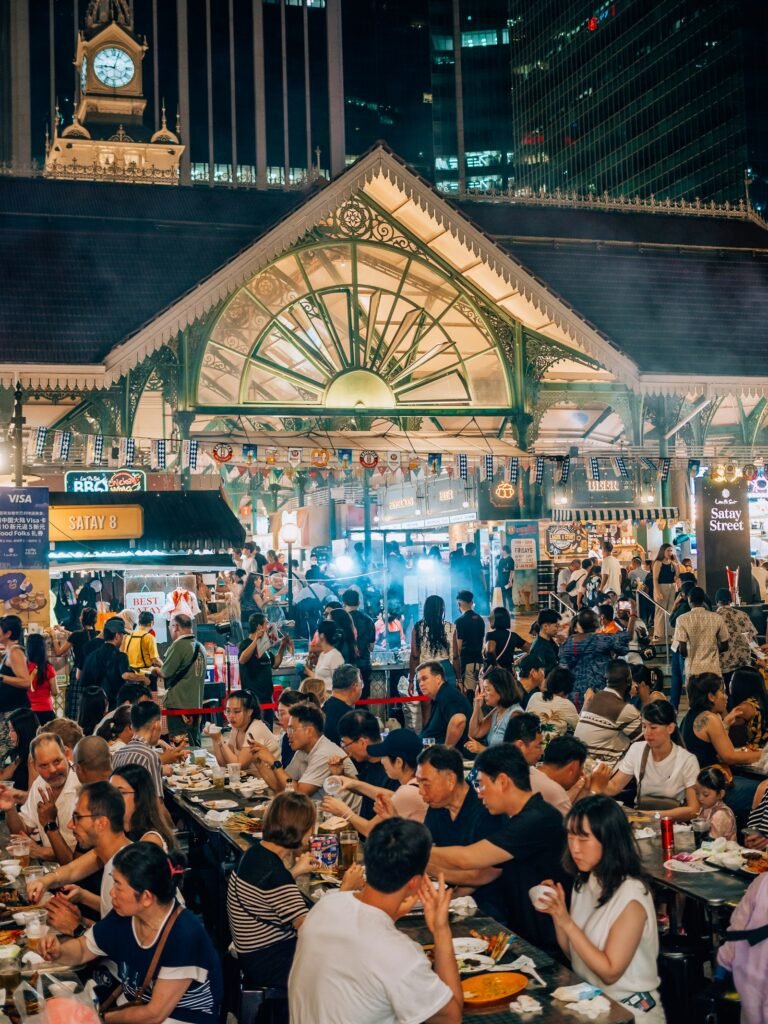
Restaurant marketing in Singapore has a few quirks that generic digital marketing advice ignores: intense competition within a single mall or hawker cluster, a customer base that decides where to eat within minutes of getting hungry, and review platforms that carry outsized weight compared to almost any other local business category. Building a marketing plan around these realities, rather than around a one-size-fits-all playbook, is what separates restaurants that stay full from ones that rely entirely on delivery app commissions.
Where Restaurant Marketing Budgets Actually Move the Needle
| Channel | What It Does Best | Common Mistake |
|---|---|---|
| Google Business Profile | Captures high-intent "near me" and "open now" searches | Left unclaimed or rarely updated |
| Instagram and TikTok | Builds visual appetite appeal and word of mouth | Posting only promotions, no story or personality |
| Website and ordering page | Converts intent into bookings or orders | Slow load times losing hungry customers |
| Review management | Builds trust before a customer ever visits | Ignoring negative reviews instead of responding |
| Email and loyalty | Brings existing customers back more often | No system for capturing customer contact details |
Priority One: Fix Your Google Business Profile First
Before spending a single dollar on ads, claim and fully optimise your Google Business Profile, since this is where the majority of "restaurants near me" searches convert into actual footfall. We typically see restaurants leaving basic fields blank: no updated hours, no menu link, no recent photos, which quietly pushes them below competitors who kept their profile current. A complete profile with accurate hours, a linked menu, and photos updated within the last month consistently outperforms an older, neglected listing even when the underlying restaurant is just as good.
Beyond the basics, actively encourage and respond to reviews through the profile, since review volume and recency are ranking factors Google weighs directly, not just trust signals for customers. A steady stream of new reviews, even three or four a month, tends to outperform a profile with two hundred reviews that stopped growing a year ago.
Priority Two: Build a Steady Social Content Habit, Not a Campaign
Restaurants that treat social media as an occasional campaign, heavy posting before a launch, then silence for months, build far less brand recall than restaurants that post consistently even at a lower volume. A simple habit of three posts a week, mixing food shots, behind-the-scenes content, and customer moments, builds algorithm favour and audience trust in a way that sporadic bursts never do.
Contrary to the common assumption that TikTok only suits younger, trend-driven brands, we have seen TikTok content work well for traditional Singapore eateries too, particularly short clips showing food preparation or a signature dish being plated, since the platform rewards authentic process content regardless of how established the brand is. Pairing this with a lighter Instagram ads budget to boost the best-performing organic posts extends reach without requiring a large standalone ad campaign.
Priority Three: Make Your Website Fast Enough for a Hungry Customer
A customer deciding between three nearby restaurants rarely waits more than a few seconds for a website to load before giving up and choosing a competitor. Website speed optimisation is one of the highest-leverage, lowest-cost fixes available to a restaurant, since it directly affects whether an interested customer actually completes a booking or order rather than bouncing to a delivery app instead.
One client we worked with, a mid-sized Chinese restaurant chain with three outlets, had a website that took nearly nine seconds to load its menu page on mobile. After a speed optimisation pass, load time dropped to under two seconds, and online reservation completions rose noticeably within the following month, simply because fewer customers abandoned the page before it finished loading.
Priority Four: Turn Reviews Into a Trust Engine, Not an Afterthought
Review platforms carry more weight for restaurants than almost any other business category, since eating out is a low-trust, high-frequency decision customers make multiple times a week. Responding to every review, positive and negative, signals active management to anyone browsing, while ignoring negative reviews leaves the impression that concerns raised were never addressed.
A short, specific response to a negative review, acknowledging what went wrong and stating what changed, does more to reassure a prospective customer than a generic apology. We generally recommend a standing weekly habit of checking and responding across all review platforms rather than treating it as an occasional task.
Where Restaurant Marketing Budgets Commonly Go to Waste
Relying entirely on delivery app visibility. Delivery platforms take a meaningful commission on every order and control the customer relationship, leaving the restaurant with no owned audience to market to directly.
Posting food photos with no context or story. A dish shot with no caption about what makes it distinctive blends into an endless feed of similar-looking food photography.
Running ads without a clear conversion path. Paid Facebook marketing spend sending traffic to a slow website or a page without a clear booking button wastes budget regardless of how well-targeted the audience is.
Neglecting email and loyalty programmes. Repeat customers are cheaper to retain than new customers are to acquire, yet many restaurants have no system for capturing contact details from diners at all.
Ignoring seasonal moments. Festive periods like Chinese New Year, Hari Raya, and Christmas drive outsized demand for Singapore F&B, and restaurants that plan content and promotions around these dates consistently outperform those treating every month the same.
Inconsistent branding across platforms. A different logo, tone, or menu photo style across Google, Instagram, and the website makes a restaurant feel less established than it actually is.
How Marketing Priorities Shift by Restaurant Type
A hawker-style or casual eatery benefits most from aggressive local SEO and Google Business Profile optimisation, since customers in this segment decide quickly and locally rather than researching extensively. A mid-tier casual dining restaurant benefits from a balance of visual social content and review management, since customers in this segment often check both Instagram and reviews before deciding. A fine dining or destination restaurant benefits more from a polished website, strong content strategy, and influencer partnerships, since customers in this segment are willing to travel further and plan visits in advance based on brand perception.
A Real Example: Turning Around a Quiet Mid-Week Period
One client, a Japanese casual dining restaurant in a suburban mall, came to us with a consistent problem: strong weekend traffic but nearly empty tables Monday through Wednesday. We rebuilt their Google Business Profile with updated hours and fresh weekly photos, launched a simple three-post-a-week Instagram habit highlighting a different menu item each week, and set up a small email list capturing customers who dined in on weekends with a mid-week discount offer. Within two months, mid-week covers had increased meaningfully, driven mostly by the email offer and improved local search visibility rather than any large paid campaign. The client did not need a bigger marketing budget, they needed the existing channels working properly and consistently.
Building a Simple Content Calendar for a Restaurant
A sustainable restaurant content calendar does not need to be complex. A useful starting structure includes one post showcasing a signature dish, one behind-the-scenes or team moment, and one customer or community-focused post each week, rotated across Instagram, TikTok, and Facebook depending on which format suits each piece of content best. Planning a month of content in advance, rather than deciding what to post each morning, produces noticeably more consistent quality and frees up time during service hours when attention is needed elsewhere.
Email and Loyalty: The Underused Retention Channel
Very few Singapore restaurants have any system for capturing customer email addresses, despite email marketing being one of the most cost-effective ways to bring past diners back. A simple sign-up incentive at the point of payment, a discount on the next visit in exchange for an email address, builds a list that can be used for slow-period promotions, new menu launches, and festive offers without any ongoing ad spend.
Frequently Asked Questions
How much should a Singapore restaurant budget for digital marketing? This varies by restaurant size and ambition, but a useful starting principle is treating Google Business Profile and review management as a near-zero-cost baseline, then layering paid social or ads spend once organic channels are properly optimised.
Is TikTok worth it for a traditional or heritage restaurant? Yes, provided the content shows genuine process or story rather than forcing unrelated trends, since authenticity tends to matter more on the platform than production quality.
Should a restaurant manage social media in-house or outsource it? Either can work, but consistency matters more than who is doing the posting, so choose whichever option is more likely to sustain a regular schedule over months, not just weeks.
What is the single highest-priority fix for most restaurants? An incomplete or outdated Google Business Profile, since it is free to fix and directly affects the highest-intent searches a hungry customer makes.
Field Notes
Across the restaurant clients we have supported, those that implemented a complete Google Business Profile refresh alongside a consistent three-post-a-week social habit saw meaningful upticks in foot traffic within 4 to 6 weeks, generally before any paid advertising was introduced. That 4 to 6 week window is a reasonable benchmark for when to expect early signs of movement from organic-first restaurant marketing.
Getting the Booking Page and Menu Right
A dedicated, fast-loading landing page for reservations or online ordering, separate from a cluttered homepage, consistently converts better than sending paid traffic to a generic site. The page should load the menu clearly, state wait times or booking availability honestly, and make the next action, book, order, or call, obvious without scrolling.
Keeping the Content Engine Fed With a Blog
A restaurant blog is not a common tactic in Singapore's F&B scene, but a small amount of blog content, seasonal menu explainers, ingredient sourcing stories, or event recaps, gives search engines more indexed pages to rank and gives social content a home to link back to. This does not need to be a heavy commitment, even one well-written post a month adds up over a year.
Measuring What Actually Matters
Restaurants often track vanity metrics like follower counts without connecting them to covers or revenue. A more useful set of measures includes Google Business Profile views and direction requests, website reservation or order completions, and repeat visit rate among email subscribers, since these tie directly to the outcome that matters: tables filled and orders placed, not just impressions generated.
Working With an SEO Consultant When You Are Ready to Scale
For multi-outlet restaurant groups or brands expanding across several locations, working with an SEO consultant to manage location pages, local citations, and cross-outlet content becomes worthwhile once single-location tactics have been implemented consistently. Scaling digital marketing before the fundamentals are solid at one outlet usually just multiplies the same underlying problems across more locations.
Handling Delivery Platforms Without Losing the Customer Relationship
Delivery apps bring real order volume, but they also stand between a restaurant and its own customers, taking a meaningful commission on every order while keeping contact details, ordering history, and even the branding experience largely within their own app rather than the restaurant's. Treating delivery platforms as one acquisition channel among several, rather than the primary sales channel, protects margin and keeps the restaurant in control of its own customer relationships.
A practical middle ground many Singapore restaurants use is including a small insert or QR code in delivery packaging that invites the customer to order directly next time for a discount, gradually shifting repeat orders away from platform commissions and onto owned channels like a direct ordering page or WhatsApp ordering line. This does not need to replace delivery platforms entirely, it simply reduces dependence on them over time.
Staff as an Underused Marketing Asset
Front-of-house staff and chefs are often a restaurant's most authentic marketing asset, yet rarely feature in content beyond an occasional team photo. Short videos of a chef explaining a dish, or a server sharing a genuine recommendation, tend to perform well precisely because they read as unscripted and specific rather than polished advertising. Involving staff in content creation also tends to increase buy-in internally, since the team sees itself represented in the brand rather than treated as background to the food.
This does require light coordination, briefing staff on what topics are fine to discuss on camera and keeping clips short, but it does not require significant production budget. A phone camera and natural lighting during a quiet service period is generally sufficient for this kind of content.
Managing Multiple Outlets Without Diluting the Brand
Restaurant groups running several outlets face a specific challenge: maintaining a consistent brand voice and visual identity across locations while still allowing each outlet's Google Business Profile and social presence to reflect its own neighbourhood and regular customers. A shared content calendar and brand guideline document, covering tone, approved hashtags, and photography style, keeps outlets aligned without requiring every post to be centrally approved before publishing.
Each outlet should still maintain its own Google Business Profile with location-specific hours, photos, and review responses, since a single shared profile across multiple physical locations performs poorly in local search and confuses customers trying to find directions to their nearest branch.
Seasonal Planning Worth Doing Months in Advance
Singapore's festive calendar, Chinese New Year, Hari Raya, Deepavali, Christmas, and year-end celebrations, drives some of the highest-value periods for F&B businesses, yet many restaurants only begin planning festive menus and promotions a few weeks out. Building festive content, set menu photography, and promotional copy at least two months ahead gives enough runway to properly test paid social campaigns and secure any influencer or media coverage before the period actually arrives.
Restaurants that treat each festive season as a repeatable annual project, refining what worked the previous year rather than starting from scratch, consistently produce stronger campaigns with less last-minute scrambling than those planning reactively each time.
Keeping Restaurant Marketing Working Over Time
Digital marketing for a restaurant is not a project with an end date, it is an ongoing operating habit alongside service and kitchen operations. Revisiting your Google Business Profile, content calendar, and review response process on a monthly basis keeps the system working rather than slowly decaying until foot traffic drops and the cause is unclear. If your restaurant needs a full marketing plan built from scratch, our case studies show how this has worked for other Singapore F&B brands, or get in touch to build a plan around your specific outlet and cuisine.

Natasha Tan is the founder of Digital Marketing Singapore, a full-service SEO and digital marketing agency based in Singapore. With hands-on experience across SEO, paid media, and content strategy, she works directly with Singapore businesses to build organic visibility and generate consistent leads. Natasha specialises in the Singapore market — including local search behaviour, PDPA compliance, and government grant navigation for SMEs.