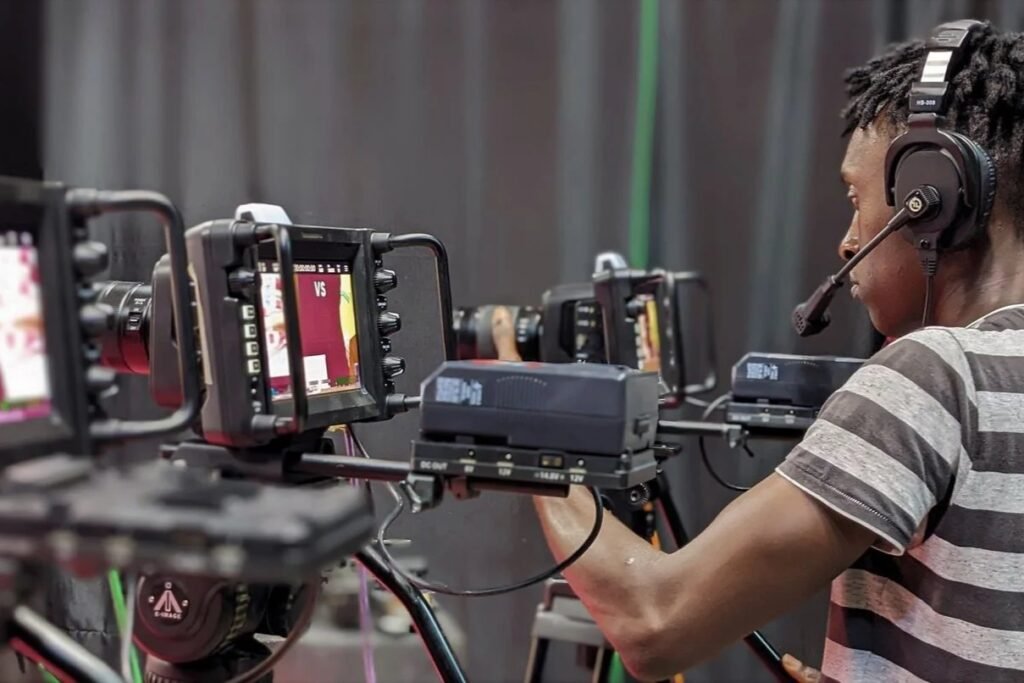
A music video in Singapore can cost anywhere from several thousand dollars for a focused performance video to tens of thousands for a multi-location production with choreography, set construction, visual effects and a larger crew. The right budget depends less on the length of the song than on the number of production variables you introduce.
The practical answer is to start with the release objective, then build a treatment, schedule and budget around it. A video intended to launch a new artist needs a different production plan from one made to support an established act, a brand collaboration or a live event. Singapore’s compact geography helps with logistics, but permits, location restrictions, weather, crew availability and post-production time still affect the final result.
This guide explains how music video production works in Singapore, what different budget levels can realistically cover, where costs are often underestimated and how to decide whether a production company is a suitable partner for your project.
The Singapore market angle
Singapore is a useful market for music video production because a large variety of visual environments can be reached within a relatively small area. A production may move from a studio in Kallang to an industrial space in the west, a central business district location or a residential neighbourhood without the travel distances common in larger countries. That does not make every location simple to use. Access, parking, building management approval, public activity and filming permissions still need to be checked before the shoot is confirmed.
The local audience is also fragmented across YouTube, TikTok, Instagram, streaming platforms and messaging channels. A music video may be the primary long-form asset, but it is rarely the only deliverable that matters. A sensible production plan usually considers vertical excerpts, teaser clips, behind-the-scenes footage, thumbnail frames and short performance edits at the treatment stage rather than trying to manufacture them from leftover footage.
Singapore’s multilingual and multicultural audience can influence casting, styling, lyrics, subtitles and distribution. A local pop release, an English-language indie track, a Malay music project and a Mandarin commercial collaboration may each require different decisions around talent, locations and visual references. The video should feel specific to the artist and audience, not like a generic overseas concept transplanted into Singapore.
There are also regulatory and commercial considerations. If filming involves identifiable individuals, personal data or promotional use, the production should consider obligations under the Personal Data Protection Act. Location owners may impose their own conditions on filming, signage, crew movement and use of footage. A production company should clarify who is responsible for permissions, releases and insurance instead of assuming these tasks are automatically included.
For companies exploring support schemes, the Productivity Solutions Grant and IMDA’s SMEs Go Digital initiatives may be relevant in some business circumstances, but they should not be treated as automatic subsidies for every music video. Eligibility depends on the business, service category and current scheme requirements. Confirm the position with the relevant agency or adviser before building a production budget around grant support.
What a Singapore music video production actually includes
Music video production is often described as one service, but it is a chain of decisions and deliverables. A quotation that looks affordable may exclude several items that become necessary later. The first step is to separate the work into development, pre-production, production and post-production.
Development turns the song into a visual direction. This may include a creative treatment, visual references, narrative structure, moodboard, shot concepts and a rough approach to performance coverage. If the artist or label already has a strong concept, development can be relatively light. If the brief is still vague, more time is needed to shape an idea that can be scheduled and filmed within budget.
Pre-production converts the concept into an executable plan. It covers location research, recce visits, casting, crew booking, wardrobe, props, choreography, call sheets, risk planning, equipment planning and permits. This is where many budget problems should be solved. A production that has not confirmed the location, artist availability and required set pieces is not ready to shoot, even if a shoot date has been placed in the calendar.
Production is the filming period. It may include performance playback, narrative scenes, multiple camera setups, tracking shots, lighting changes, drone work, choreography and location moves. Every additional setup consumes time. A director who wants extensive lighting changes and many camera angles needs to ensure that the schedule leaves room to execute them properly.
Post-production includes ingesting and backing up footage, editing, colour correction, visual effects, motion graphics, subtitles, mastering and revisions. Music videos are cut to rhythm, which can make the editing process more detailed than a simple corporate interview. If the client needs multiple aspect ratios and short-form versions, those should be defined before the edit begins.
Our team recommends confirming the following before approving a quotation: the number of shoot days, total working hours, crew roles, equipment, locations, permits, talent, wardrobe, props, post-production rounds, final formats and ownership or licensing terms. The more precise the scope, the less likely the project is to suffer from change requests disguised as small adjustments.
Music video production costs in Singapore
There is no useful single price for music video production in Singapore. A simple one-location performance shoot can be produced at a modest level, while a scripted video with art direction and several locations can become a substantial project. The ranges below are indicative planning ranges, not fixed market rates. The final quote depends on the treatment, crew, equipment, locations, post-production requirements and licensing.
| Production approach | Indicative budget in SGD | Usually suitable for | Main limitations or risks |
|---|---|---|---|
| Lean performance video | $3,000 to $8,000 | One artist, one main location, limited setups and a short shoot | Less time for lighting changes, art direction and complex coverage |
| Structured independent production | $8,000 to $20,000 | Performance-led concept with selected narrative scenes, a small professional crew and planned post-production | Several locations or major choreography may require trade-offs |
| High-concept local production | $20,000 to $50,000 | Strong art direction, multiple locations, larger crew, dancers, specialist equipment and polished post-production | Scheduling and approvals become more complex |
| Premium commercial-style production | $50,000 and above | Major release, label campaign, brand collaboration or highly controlled visual world | Requires detailed pre-production, legal clearance and disciplined production management |
The cheapest option is not always the most efficient. A low quote may exclude location fees, equipment upgrades, assistant editors, colour grading, visual effects, transport, meals, insurance, permit work or additional deliverables. When comparing proposals, compare the scope line by line rather than comparing the headline total.
Location is a particularly variable cost. A controlled studio can provide predictable lighting and access, but the hire fee and art direction may be significant. A public or commercial location may appear cheaper, but permissions, crowd control, restricted hours and building management conditions can increase the production effort. Singapore’s weather is another factor. Outdoor concepts should include a contingency plan, not merely a hopeful assumption that the forecast will remain favourable.
Crew size also affects both cost and execution. A small crew can be appropriate for a stripped-back performance video. A complex shoot may need a producer, director, director of photography, camera assistants, gaffer, grip, sound or playback support, stylist, make-up artist, art department, production assistants and an editor. Reducing roles without reducing the creative ambition often creates bottlenecks rather than savings.
If the video is connected to a commercial campaign, the budget may also need to cover talent usage, music rights, location licensing, stock footage, artwork, brand approvals and paid cutdowns. These rights should be agreed in writing. A video that is cleared for an artist’s own YouTube channel may not automatically be cleared for paid advertising or a brand’s social accounts.
How to choose the right production model
The appropriate production model depends on what the video must achieve. A visually ambitious concept can be worthwhile if it supports the song, gives the artist a memorable identity and produces reusable content. It is less worthwhile when the visual complexity exists only because a reference video looked impressive.
A performance-led production focuses on the artist, camera movement, lighting and choreography. It can work well for tracks with a strong performer and a clear visual identity. A narrative production depends on story, casting, locations and art direction. It may create a stronger emotional connection, but it also introduces more continuity and scheduling risks.
A hybrid model combines performance coverage with a simple narrative device. This is often a practical choice for Singapore artists because it allows the final edit to retain energy while still giving the audience a reason to watch beyond a series of performance shots. The treatment should identify which scenes are essential and which are optional if time is lost on the day.
Some artists are tempted to spend most of the budget on camera equipment. In our experience, the difference between an average and effective music video is often driven more by concept clarity, lighting, art direction, performance direction and editing than by owning the newest camera body. Equipment matters, but it cannot repair an underdeveloped idea or an unrealistic schedule.
For businesses that need a broader campaign around the release, production can sit alongside digital marketing services in Singapore, paid distribution, social content and landing page work. This is especially relevant when the music video promotes an event, product collaboration, venue or commercial partnership rather than functioning only as an artist release.
The production process, from brief to final master
1. Establish the release objective
The brief should state what the video is expected to do. Is it designed to introduce an artist, support a single release, generate social shares, announce a tour, attract media attention or fulfil a brand partnership? The objective influences the creative treatment, format requirements, call to action and media plan.
We see projects become difficult when the brief says the video should be cinematic, viral and inexpensive without defining what success means. A production company can help shape a concept, but it cannot make three incompatible requirements become compatible through better wording.
2. Build a treatment and production plan
The treatment should describe the visual world, narrative or performance approach, locations, palette, camera language, references and intended audience response. It should then be tested against a production plan. If the concept requires six locations, a large cast, night filming and complex choreography, the budget and schedule need to reflect that from the start.
This is also the stage to decide whether the project needs a specialist creative director, choreographer, production designer or visual effects artist. Bringing specialists in late can result in rushed work or expensive re-planning.
3. Confirm locations, people and rights
Location agreements, talent releases, music rights, artwork permissions and brand approvals should be documented. For outdoor or public filming, the producer should check whether permits, security or crowd management are required. For private venues, written approval should state the date, time, areas available and permitted use of the footage.
If children, members of the public or identifiable staff appear in the video, consent and usage arrangements need particular care. The production should also address personal data handling for contact lists, audition footage and behind-the-scenes content where relevant.
4. Prepare the call sheet and contingencies
A call sheet should identify arrival times, locations, contacts, scene order, wardrobe, transport, meal arrangements, safety notes and emergency contacts. The schedule should distinguish between setup time, rehearsal, filming and company moves. A ten-hour shoot does not provide ten hours of usable filming time.
Weather, traffic, artist illness, equipment failure and location delays are normal production risks. A contingency may involve an indoor backup location, flexible scene order, duplicate props or a reduced version of the treatment that can be filmed if the schedule is compressed.
5. Shoot for the edit and for distribution
The director and director of photography should know which shots are required for the main edit and which are intended for short-form distribution. If vertical content is important, filming a horizontal master and cropping everything later may not produce strong results. Some moments should be composed specifically for vertical viewing.
Playback must also be managed carefully. The artist needs to perform to the final track or an approved playback version, and the team should maintain sync throughout the shoot. Poor playback discipline can create avoidable post-production problems.
6. Edit, review and finish
The first edit should answer structural questions: does the story make sense, does the performance carry the song, and does the pace support the music? Colour grading, effects and graphics should follow after the edit has a clear foundation. Otherwise, time can be spent polishing shots that are later removed.
We recommend agreeing the number of revision rounds before editing starts. Feedback should be consolidated through one decision-maker where possible. A long chain of conflicting comments can extend the schedule without improving the final video.
Final delivery should cover the agreed master, platform versions, subtitles if needed, thumbnail frames and short-form cutdowns. The project file and raw footage should only be included if the contract says so. Confirming this early avoids disputes after delivery.
Comparison: production company, freelancer or in-house team
The right supplier is not determined by company size alone. A freelancer may be a strong fit for a small, clearly defined shoot. A production company may be better suited to a multi-location project requiring producers, specialist crew and formal risk management. An in-house team may understand the artist or brand deeply but need external production capacity.
| Decision factor | Freelancer or small crew | Production company | In-house team with external crew |
|---|---|---|---|
| Best for | Lean concepts and limited locations | Complex shoots with multiple departments | Brands or labels with internal creative direction |
| Budget control | Often flexible, but scope exclusions must be checked | More structured, with clearer department costing | Internal time can be underestimated |
| Creative continuity | Direct access to the main creative lead | Several specialists under a producer | Strong brand or artist familiarity |
| Production risk | May depend heavily on a few people | Better capacity for backup planning | Responsibility may be split across teams |
| Suitable when | The treatment is simple and the decision-maker is available | The shoot has locations, cast, effects or tight delivery needs | The brief is already developed and external execution is required |
A supplier should be able to explain what happens when the weather changes, a location becomes unavailable or the artist needs another performance take. They should also be comfortable discussing limitations. In our experience, a realistic production conversation is a better signal than a dramatic reel alone.
If the project needs supporting assets, evaluate whether the same team can provide them efficiently. A company may need corporate photography, product photography or event videography around the main release. Using one supplier can reduce briefing overhead, but only if the team has relevant experience in each format.
Contrarian view: a bigger music video is not automatically a better investment
The uncomfortable truth about music video production is that scale often gets mistaken for quality. More locations, dancers, vehicles, visual effects and expensive equipment can make a production look busy without making it more memorable. A video with a clear visual idea and a compelling artist performance can outperform a more expensive production that has no central point of view.
This matters in Singapore because budget pressure is real and distribution is fragmented. A project may need to compete for attention in a feed where the audience sees only a short excerpt before deciding whether to continue. Spending the entire budget on a single long-form film can leave no resources for teasers, vertical edits, artwork, media outreach or paid distribution.
We recommend protecting the elements that the audience will notice first: the hook, the artist’s performance, the opening seconds, the visual identity and the edit rhythm. If those are strong, production design can be selective. One distinctive location may be more valuable than four ordinary ones. One well-choreographed sequence may be more useful than a large group that has not had enough rehearsal time.
This does not mean every project should be minimal. Ambition is justified when the scale is part of the artist’s positioning, the song supports it and the distribution plan can use the resulting assets. The point is to spend on the creative constraint that makes the video recognisable, not on complexity for its own sake.
Client example: simplifying a Singapore release concept
We worked with a Singapore music project whose initial concept combined several locations, a large cast and a narrative that required complicated continuity. The production risk was not the creative ambition itself. It was the amount of coordination required relative to the available schedule.
Our team helped separate the treatment into essential and optional elements. The core idea was retained, but the number of locations was reduced and the performance section was given more deliberate visual treatment. The revised plan also identified short clips that could be captured during the main shoot instead of requiring a separate content day.
The lesson was not that smaller productions are always better. It was that a concept becomes more useful when the production plan protects its most important moments. The artist still had a distinctive release asset, while the team had a clearer schedule and fewer dependencies to manage.
Field Notes
- 1 treatment: We recommend creating one approved treatment before requesting detailed supplier quotes, because competing quotations are difficult to compare when each supplier is pricing a different idea.
- 2 versions minimum: Most releases should consider at least a horizontal master and a vertical social edit, because a single crop rarely serves YouTube, Instagram and TikTok equally well.
- 3 production stages: Development, production and post-production need separate approval points, because creative changes during filming cost more than changes made before the call sheet is issued.
- 4 key rights checks: Confirm music, talent, location and artwork permissions, because a technically excellent video can still face distribution restrictions if usage rights are unclear.
- 10 hours is not 10 filming hours: A standard shoot day includes setup, breaks, rehearsals, moves and resets, so the schedule must protect time for the shots that carry the concept.
Supporting the release after production
A finished video is an asset, not a distribution strategy. The release plan should define where the video will appear, when teasers will be published, which audiences should receive paid promotion and how viewers can take the next step. For an artist, that next step may be streaming, ticket purchase, playlist discovery, merchandise or a follow. For a brand collaboration, it may be a product page, event registration or enquiry.
Search is not always the primary channel for a music video, but it can matter for artist names, song titles, venue searches and branded collaborations. A wider SEO strategy can ensure that supporting pages, release information and relevant brand searches are not disconnected from the video campaign.
Paid search may be useful when the video supports a commercial intent, while social distribution may be more appropriate for discovery and engagement. The channel choice should follow the release objective. Our clients often get better clarity when production and media planning are discussed together rather than treated as separate supplier conversations.
If the release needs a dedicated destination, a website design service or focused campaign page can give the audience somewhere useful to go. For an online store or merchandise launch, ecommerce website design in Singapore may be more relevant than sending every viewer to a general homepage.
Social content should be planned with realistic production capacity. Social media marketing can support a release calendar, while influencer activity may be suitable if the audience and artist positioning genuinely align. We found that creator distribution works best when the content gives people a natural reason to participate, rather than asking them to repeat a generic promotional message.
For teams that need the broader campaign coordinated, a content marketing agency can help organise the release narrative across articles, social posts, landing pages and email. The video remains the central asset, but the surrounding content gives it more opportunities to be discovered.
Frequently Asked Questions
How much does music video production cost in Singapore?
A lean performance-led video may cost approximately $3,000 to $8,000, while a more structured independent production may fall between $8,000 and $20,000. High-concept projects commonly require $20,000 to $50,000 or more. These are planning ranges in SGD, not guaranteed quotes. Ask whether the price includes locations, crew, equipment, permits, post-production, revisions, usage rights and social cutdowns.
How long does a music video take to produce?
A straightforward project may take several weeks from briefing to final delivery. More complex productions can take longer because treatment development, location approvals, casting, choreography, filming and post-production each require time. The shoot itself may be one or more days, but that is only one part of the schedule. A fixed release date should be shared before the concept is finalised.
Should we spend more on locations or equipment?
Choose based on what the audience needs to notice. A distinctive location can establish the visual world quickly, while appropriate lighting and camera movement can make a controlled space look more considered. Equipment upgrades are useful when they enable a specific shot or look. We recommend prioritising concept, performance direction, lighting and editing before spending heavily on technical specifications that do not change the final viewing experience.
Do we need permits to film in Singapore?
It depends on the location, ownership, public access, crew size, equipment and activity being filmed. Private venues may require written management approval, while public areas may involve agency or site-specific requirements. Drone filming has separate operational and regulatory considerations. The producer should identify the approvals required and state clearly which party will secure them.
How do we choose between a production company and a freelancer?
Choose a freelancer or small crew when the concept is simple, the location count is limited and one person can manage the required creative and production responsibilities. Choose a production company when the project needs multiple departments, complex scheduling, specialist equipment, formal risk planning or several deliverables. Review relevant work, ask how the team handles contingencies and compare the actual scope rather than the supplier’s label.
Should short-form edits be filmed separately?
Not necessarily. A good production plan can capture material for vertical edits during the main shoot, but the director needs to compose and perform for those formats deliberately. Cropping a horizontal master may lose the artist, important action or visual context. Confirm the required platforms and aspect ratios before filming so the crew can capture useful coverage without disrupting the main video.
Can a music video production agency also help with marketing?
Some production teams can support campaign assets, while others focus strictly on filming and post-production. Ask what the team can manage across social content, paid media, search, landing pages and release planning. If marketing is included, confirm whether it covers strategy, creative assets, media spend, reporting or only account management. A clear division of responsibility prevents the video from being delivered without a practical distribution plan.
Final recommendation
Treat music video production in Singapore as a commercial and creative planning exercise, not simply a shoot day. Start with the song’s audience and release objective, approve a treatment that fits the available resources, confirm rights and locations early, and protect time for the performance and edit. Then create the short-form and distribution plan before production begins.
If you are comparing production approaches, our team can help assess the concept, scope and supporting campaign requirements through Digital Marketing Singapore. The most productive next step is to share the track, intended release date, reference videos, target audience and provisional budget so the production can be designed around decisions rather than assumptions.

Natasha Tan is the founder of Digital Marketing Singapore, a full-service SEO and digital marketing agency based in Singapore. With hands-on experience across SEO, paid media, and content strategy, she works directly with Singapore businesses to build organic visibility and generate consistent leads. Natasha specialises in the Singapore market — including local search behaviour, PDPA compliance, and government grant navigation for SMEs.



