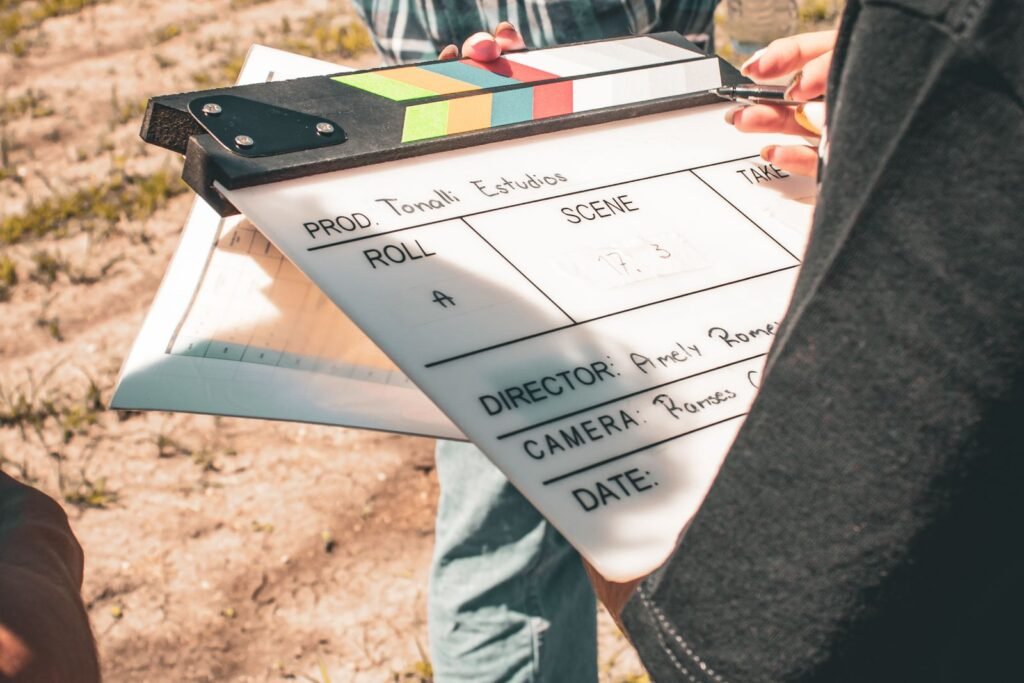
The gap between a corporate film company and a social media video agency is not equipment or talent. It is arithmetic. A film company is optimised to produce one excellent thing. A social agency is optimised to produce forty adequate-to-good things from the same day of shooting, because that is what a feed consumes. Businesses that hire the first when they needed the second end up with a beautiful three minute brand film, no posting cadence, and a quarter of their annual video budget gone.
This post is about the maths. How much footage a social programme actually needs, how a single shoot day becomes a month of content, where repurposing genuinely saves money and where it does not, and at what point always-on video stops making commercial sense.
What the Feed Actually Consumes
Start with the demand side, because it determines everything else.
A business posting video three times a week across two platforms needs roughly 24 to 30 distinct pieces a month once you account for platform-specific cuts. If any of it is going behind paid spend, add creative rotation on top, because paid creative decays and needs replacing every four to six weeks. A modest paid social programme with three concepts in rotation consumes another eight to twelve assets a month.
Call it 30 to 40 finished video assets a month for a business that is committed to video as a channel. Now compare that to how most SMEs buy video: one production, two or three deliverables, once or twice a year. The mismatch is roughly an order of magnitude, and it is the reason so many businesses conclude that video does not work for them. It was never given enough volume to work.
The volume requirement is not about spamming the feed. It is about how distribution works now. Reach on any given post is a fraction of your following, the fraction varies wildly, and the only reliable way to accumulate meaningful reach is repetition across many attempts. A single excellent video reaches the people the platform decides to show it to that day. Thirty decent videos across a month get thirty chances.
The Shoot Day Maths
Here is the core mechanic that makes the volume affordable.
A well-planned shoot day produces between 20 and 40 usable finished assets. Not 20 to 40 hours of footage. Between 20 and 40 things you can actually post. That output comes from three sources on the day: talking-head or interview material, demonstration or process footage, and b-roll of the space, product and people.
The talking-head material is the engine. An hour of structured interview, shot properly in vertical, with the subject answering fifteen prepared questions in complete sentences, yields fifteen standalone pieces before any editing creativity is applied. Each answer becomes a post. Some become two, because a good ninety second answer often contains a thirty second hook that stands alone.
Demonstration footage yields differently. A process filmed from four angles gives you one full explainer, three short excerpts, and a satisfying loop. B-roll is the connective tissue that makes everything else watchable and is also the cheapest thing on the day to capture.
| Shoot day component | Time on the day | Finished assets | Typical shelf life |
|---|---|---|---|
| Structured interview, 15 questions | 90 minutes | 15 to 20 | 6 to 12 months |
| Process or demonstration, 3 setups | 2 hours | 6 to 9 | 12 months plus |
| Customer or staff vox pops, 4 people | 60 minutes | 4 to 8 | 6 months |
| B-roll of space, product, hands, details | 60 minutes | Feeds everything else | Years |
| Deliberate paid-creative variants | 45 minutes | 4 to 6 | 4 to 6 weeks each |
The reason most shoots do not produce this is planning, not capability. A shoot that arrives with a mood board and a vague intention produces footage. A shoot that arrives with a written question list, a shot list keyed to specific planned posts, and a decision about aspect ratio made in advance produces assets. The difference in cost on the day is zero. The difference in output is a factor of five.
In our experience the single highest-leverage hour in any video programme is the planning call where someone writes the fifteen questions. It is also the hour clients most want to skip.
Vertical Is a Production Decision, Not a Crop
A common mistake we see is shooting in landscape and cropping to vertical in the edit. It technically works and it is visibly worse. Composition, framing, where the subject looks, how much headroom you leave, whether a second person fits in frame at all: these are decisions made at the camera, and a crop cannot retroactively make them.
If the primary destination is a vertical feed, frame vertical and capture a landscape version separately if you need one. It costs a little more setup time and it removes the dominant reason social video looks amateurish. Teams commissioning video production for social should have aspect ratio, subtitle style and safe-zone margins agreed in the brief, not discovered in the edit.
Repurposing: Where It Saves Money and Where It Does Not
Repurposing is oversold. It is powerful and it is not free, and the distinction between the two kinds of repurposing matters commercially.
Recutting is cheap. Taking a five minute interview and producing twelve short pieces from it is editing time against footage you already own. It scales well. The marginal cost of the twelfth cut is small. This is where the economics of social video actually live.
Reformatting is moderately cheap. Taking a finished vertical piece and producing a square version, a landscape version and a subtitled-for-silent version is mechanical work. Worth doing, rarely worth agonising over.
Reconceiving is expensive. Taking footage shot for one purpose and trying to make it serve a different message is where budgets disappear. If the interview was about craftsmanship and you now need something about pricing, no amount of editing will get you there. You need a new question, which means a new shoot or at least a new recording session.
The practical implication is that the value of repurposing is decided before the camera rolls. A shoot planned against a content calendar that already knows it needs pieces about price, proof, process and people will repurpose beautifully. A shoot planned around a general desire for content will produce footage that is expensive to repurpose because every cut requires forcing material to do a job it was not captured for.
This is why we treat video content planning as a content-strategy exercise rather than a production one. The production part is comparatively easy once the list of required pieces exists.
A Realistic Cost Picture
Rough figures for the Singapore market, for a business producing social video at genuine volume rather than one-off films.
A single well-planned shoot day with a small crew, producing 25 to 35 finished social assets, typically lands somewhere between SGD 4,500 and SGD 9,000 depending on crew size, locations, talent and post-production depth. Divide that by the asset count and the cost per finished piece sits somewhere between SGD 150 and SGD 300.
Compare to a bespoke single production. A three minute brand film with a proper treatment, a two day shoot, custom music and colour grading runs from SGD 15,000 upward and produces, realistically, one film and perhaps four cutdowns. Cost per finished asset: SGD 3,000.
Both numbers are correct and both jobs are legitimate. They are simply not the same job. A brand film earns its cost through where it sits, usually a homepage, a sales deck, a trade show loop, and it can last three years. Social assets earn their cost through volume and iteration. The error is buying the first and expecting it to do the second's job. Businesses that need both should budget for both explicitly rather than hoping one production covers everything, which is the conversation we usually end up having with clients commissioning corporate video production alongside a social programme.
Shoot less often than you think, and plan more
Conventional advice for social video is to shoot constantly. Keep a camera around, capture everything, stay authentic, post daily. There is a version of this that works, usually when the founder is comfortable on camera and has something to say every week.
For everyone else, in reality, constant capture produces a hard drive full of unusable material and a team that dreads filming. The footage has no through-line, the audio is inconsistent, half of it is unusable because someone walked through frame, and nobody has the time to sift it. The apparent saving on production cost is paid back several times over in editing hours and in the opportunity cost of posting weak content.
With always-on video, always-on refers to the posting, not the shooting. The most efficient programmes we run shoot in concentrated blocks, once every six to eight weeks, and post continuously from the resulting bank. The bank runs down predictably, which means the next shoot is scheduled rather than panicked, which means it is planned, which means it produces more.
There is a second heresy attached to this. Not every business should be doing always-on video at all. The honest test is whether video is doing something that a photograph and a well-written caption could not. For a restaurant, a gym, a salon, a contractor, a school, anything where motion, process or personality is the product, video earns its place easily. For a professional services firm selling on credentials to a small number of buyers a year, thirty videos a month is an expensive way to be ignored, and the same budget in photography plus serious written content will often do more. We have told clients this and lost the video budget as a result, and it was still the right advice.
When Always-On Video Stops Paying
Three signals tell you the programme has stopped earning its cost, and all three are visible within a quarter.
The bank is empty and the cadence is being maintained by filler. Once posts are going out because it is Tuesday rather than because the piece is good, the average quality of the account falls and reach follows it down. The fix is to shoot, or to reduce cadence until you can.
Paid creative is not being refreshed. If the same three assets have been running for ten weeks, frequency has climbed, cost per result has drifted up, and nobody has noticed because the weekly report shows spend rather than efficiency. This is the most expensive of the three because you are actively paying to show tired creative to people who have already seen it.
View metrics are stable but nothing downstream moves. Views, three second plays and completion rates can all look healthy while enquiries, bookings and revenue do not move at all. Video that gets watched is not automatically video that sells. If this persists for two months, the problem is usually the content of the message rather than the production of it, and more shooting will not fix it.
That third signal is worth dwelling on. Social video has an unusually wide gap between activity metrics and commercial ones, wider than search or email. It is very easy to run a programme that produces good engagement numbers and no business. When we audit that situation, the cause is almost always that the videos never ask anyone to do anything, or ask for something too large. A piece of content that gets 40,000 views and offers no next step is entertainment you paid for.
One shoot day, and what came out of it
One Singapore home renovation firm we worked with had been buying video the old way: two productions a year, around SGD 12,000 each, producing a company profile film and a project showcase. Both were well made. Neither had any measurable effect on enquiries, and the team had concluded that video did not work for their category, which is an odd conclusion for a business whose product is a visible physical transformation.
We restructured the whole thing around shoot blocks. Same annual budget, roughly SGD 24,000, spent as five shoot days across the year rather than two productions.
Each shoot day was built around one completed project handover. The crew was small: one operator, one sound and lighting assistant, one producer who ran the question list. The day captured a walkthrough of the finished space, a structured interview with the project lead covering fifteen prepared questions, a short homeowner conversation where the client agreed, process footage from the site archive, and a set of deliberate paid-creative variants built around four different opening hooks.
Output per day averaged 31 finished assets. Across five days that is roughly 155 pieces, against a previous annual output of two films and a handful of cutdowns. Cost per finished asset fell from something like SGD 4,000 to under SGD 160.
The interesting result was not volume. It was what the volume taught them. With that many pieces running they could see clearly which openings held attention: the before-and-after reveal outperformed everything, the design rationale pieces performed poorly organically but converted unusually well when used for retargeting, and the homeowner conversations were the only assets that reliably produced direct messages. That last finding changed their shoot planning permanently. They now film a homeowner conversation on every project where the client agrees, and treat it as the priority item rather than a nice-to-have.
Two things nearly derailed it. The first was approvals. With 31 assets coming out of each shoot, a review process built for approving two films a year collapsed immediately. They moved to approving the shoot plan and the first three cuts, then delegating the rest, which felt risky and was not. The second was storage and asset management. By month four nobody could find anything, and a simple naming convention plus a shared drive structure, which took an afternoon to set up, recovered a surprising number of hours.
What to Ask a Production Partner
If you are evaluating who does this work, the questions that separate a social-native operation from a film company doing social as a sideline are specific.
- How many finished assets do you plan per shoot day, and can I see a shot list from a comparable job?
- Do you shoot vertical natively or crop in post?
- Who writes the question list, and when?
- What is the turnaround from shoot to first delivery, and to full delivery?
- Are subtitles burned in, and who quality-checks them?
- Do we receive the raw footage, and in what timeframe?
- How do you structure paid-creative variants differently from organic pieces?
That raw footage question matters more than people expect. Footage you own can be recut in a year for a purpose that does not exist yet. Footage the agency holds cannot. It is the same ownership principle that applies to a website, applied to media.
Turnaround matters too, in a specific way. A programme that receives everything from a shoot six weeks later has lost the ability to respond to what is performing. Staged delivery, hero pieces within a week and the long tail across the following fortnight, keeps the calendar fed and lets you commission additional cuts based on early performance rather than guesswork. Any competent videography partner can work this way if you ask for it in the brief.
Field Notes
Across the social video shoot days we planned for Singapore clients this year, the average number of finished assets delivered per day was 29. The lowest was 11, and that shoot had no written question list, which we should have insisted on and did not. The highest was 44, from a day where the client had pre-written the content calendar for the following two months and we shot directly against it.
A related observation. On the shoots where a producer ran a prepared question list, interview material accounted for just over half of all finished assets. On the shoots without one, interview material accounted for roughly a fifth, because unstructured answers rarely survive as standalone pieces. The cost difference between the two approaches is about two hours of preparation.
Third figure worth recording: across the paid social programmes we ran this year, creative sets that were refreshed on a four to six week cycle held their cost per result substantially better than those left running past eight weeks. Nothing in that finding is surprising. What is surprising is how often the refresh does not happen, usually because the production pipeline ran dry rather than because anyone decided against it.
Putting It Together
The economics of social video are straightforward once you stop thinking in productions and start thinking in banks. Plan the content calendar first. Derive the asset list from it. Book concentrated shoot days sized to fill the bank for six to eight weeks. Shoot vertical, run a written question list, capture deliberate paid variants alongside organic pieces. Deliver in stages. Refresh paid creative on a calendar rather than when someone notices. Keep your raw footage.
Done that way, a business spending SGD 25,000 a year on video gets well over a hundred usable pieces instead of two films. Done the old way, it gets two films and a persistent suspicion that video does not work in its category.
The connective work is where most of the value sits: tying the shoot plan to the social media marketing calendar, deciding which pieces get paid support and which stay organic, and making sure what performs on the feed also feeds the other channels. Longer cuts from the same shoot days work hard as YouTube ads creative and on product pages, short native edits carry the discovery work on TikTok, and the same footage strengthens the written content that does the search heavy lifting, which is a point we make at more length in our notes on choosing a content marketing partner. If you want a view on what your current budget could realistically produce, or a look at how we scope production days, come and ask us.

Natasha Tan is the founder of Digital Marketing Singapore, a full-service SEO and digital marketing agency based in Singapore. With hands-on experience across SEO, paid media, and content strategy, she works directly with Singapore businesses to build organic visibility and generate consistent leads. Natasha specialises in the Singapore market — including local search behaviour, PDPA compliance, and government grant navigation for SMEs.