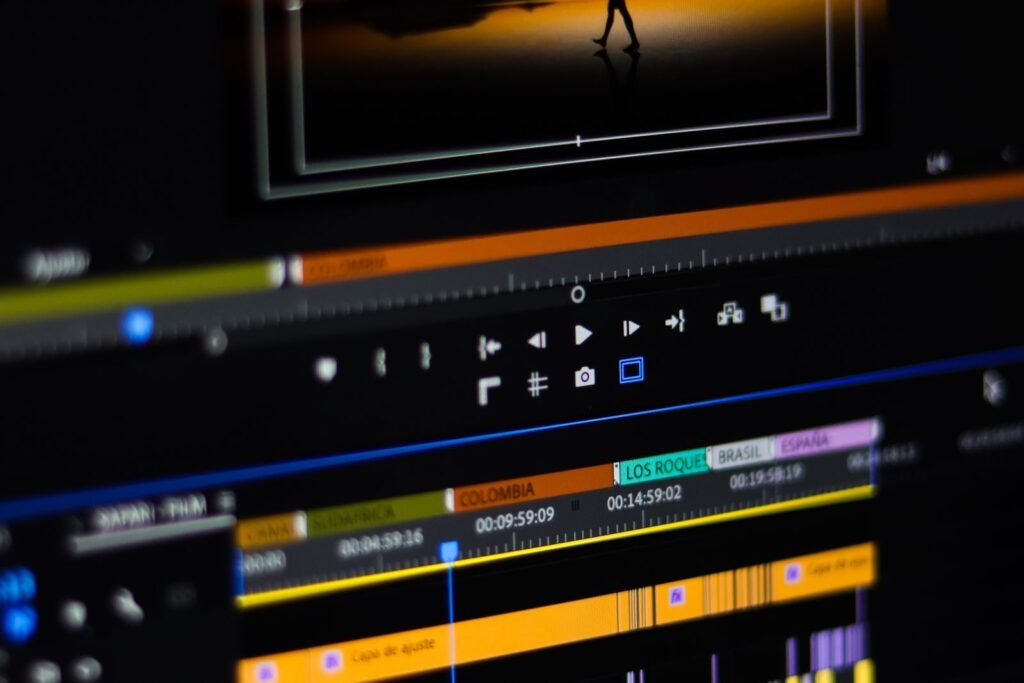
Ask any video editing company Singapore businesses have worked with repeatedly, and they will tell you the same thing: the shoot is rarely what kills a project. The edit is. Not because editing is inherently difficult, but because it is the stage where every unresolved decision from the previous months finally has to be settled, usually by the person with the least authority to settle it, under the tightest deadline in the schedule.
This post is about what actually happens after the camera is packed away. What an editor is doing with your footage, why revision rounds cost what they cost, and the specific briefing habits that separate projects which land on time from projects that go four rounds over and arrive as a compromise nobody likes.
What the edit actually involves
Clients often picture editing as assembly: pick the good bits, put them in order, add music. That is the first ten percent. Here is the rest, roughly in sequence.
Ingest and organisation. Footage is transcoded, backed up in at least two places, synced with separate audio, and labelled. On a two-camera interview shoot this alone can run half a day. Skipping it feels efficient and costs three times as long later.
Selects and stringout. The editor watches everything and pulls the usable material into a long assembly. On a corporate piece this might be 40 minutes of selects from 4 hours of rushes. This is where the real judgement happens, and it happens before you see a single frame.
Rough cut. Structure, pacing, the spine of the piece. Usually no colour, no proper sound, temp music. The rough cut is the version where changes are cheap, which is exactly why it is the version clients most often skip reviewing properly.
Fine cut. Frame-accurate trimming, rhythm, the small decisions that make a piece feel finished. By this stage structural changes are expensive because everything downstream is keyed to the current timeline.
Sound design and mix. Dialogue cleanup, levels, room tone, ambience, music balance, loudness normalisation to platform standards. Poor audio is the fastest way to make competent footage look cheap, and it is the stage most often compressed when the schedule slips.
Colour grade. Matching shots across cameras and times of day, then applying a look. On a multi-location shoot this is genuinely skilled work and not a filter.
Graphics and titles. Lower thirds, subtitles, animated elements, end frames, logo treatments. Every one of these has to be built once and then adapted per deliverable.
Versioning and delivery. Aspect ratios, lengths, caption burn-ins, platform-specific encodes. As with social video work, this is a multiplier, not a step.
The reason this list matters is that it tells you where your feedback lands. A note given at rough cut stage is a conversation. The same note given after the grade means reopening sound, graphics and every delivered version.
Why revision rounds cost what they cost
Almost every quote you receive will specify a number of revision rounds, commonly two or three. Clients tend to read this as a courtesy limit. It is not. It is the single biggest variable in whether the project is profitable for the editor and on time for you.
Here is why. A revision round is not a list of changes, it is a full pass through the timeline plus a re-export plus a re-review. The export and review cycle alone on a multi-version deliverable can consume several hours. Three rounds of consolidated feedback is a normal, healthy project. Nine rounds of drip-fed individual notes is the same amount of change with triple the overhead, and the overhead is where the budget goes.
| Stage the note arrives | What it costs to action | Example |
|---|---|---|
| Script or storyboard | Minutes | Change the order of the three benefits |
| Rough cut | Low, hours at most | Cut the second case study entirely |
| Fine cut | Moderate, reopens pacing | Shorten the opening by 8 seconds |
| After sound mix | High, mix must be redone | Swap the music track |
| After grade | High, grade must be rematched | Replace a shot with an alternate take |
| After versioning | Very high, all versions rebuilt | Change a word in the on-screen text |
That last row is not exaggerated. A one word change in a burned-in caption, on a project with nine deliverables, means nine re-exports, nine QC passes and nine re-uploads. It is a trivial edit and a non-trivial afternoon.
The practical conclusion we push with every client: front-load your scrutiny. Be demanding at rough cut, where change is cheap, and be disciplined after fine cut, where it is not. The instinct runs the other way, because rough cuts look unfinished and are uncomfortable to review, so people wave them through and then react to the polished version. That single behavioural pattern accounts for most of the budget overruns we see in post.
What clients get wrong when briefing an editor
These are the recurring ones, in rough order of how much damage they do.
Briefing a feeling instead of a function. "Make it feel premium" gives an editor nothing to act on, and worse, it gives them something to be wrong about. What does the video need to do, to whom, and where will they watch it? An editor who knows it is a 45 second piece for the top of a LinkedIn feed aimed at operations directors will make a hundred small decisions correctly without being told.
Reviewing alone and relaying. A marketing manager watches the cut, then collects notes from three colleagues by email, then rewrites them into a list. Meaning is lost at every hop. We ask for notes in a single shared document with timecodes, written by the people who actually have the opinion.
Giving solutions rather than problems. "Cut this shot" is a solution. "The middle feels slow" is a problem. The second is more useful, because the editor can see six ways to fix pacing and you can see one. Give the problem, let them propose the fix, then judge the result.
Notes without timecodes. "The bit near the start with the music" costs ten minutes of hunting. "00:14, music feels too loud under the VO" costs ten seconds. This is the cheapest improvement any client can make to their own turnaround.
Changing the objective mid-project. The most expensive thing that happens in post. A piece briefed as a recruitment film that becomes a sales film at fine cut is not a revision, it is a new project using existing footage, and it should be rescoped honestly by both sides rather than absorbed. This is more common on corporate video projects than on social batches, because the audiences are less clearly defined at the outset.
Assuming the footage contains something it does not. If nobody said the line on the day, no editor can create it. We recommend a shot list review before wrap for exactly this reason, and it is worth the fifteen minutes.
Supplying assets late. Logos, brand fonts, product shots, legal disclaimers, the correct company registration line for the end frame. These arrive in the final hour on a surprising number of projects, and they hold up delivery on work that was otherwise finished.
Turnaround: what is realistic
A rough guide for planning, assuming the footage is in hand and the brief is settled.
A simple social cutdown from supplied footage: 2 to 4 working days to first cut. A corporate piece of 2 to 3 minutes from a single shoot day: 5 to 10 working days to first cut, plus a round of revisions at 2 to 3 days each. A multi-location brand film with graphics and original music: 3 to 6 weeks end to end. A batch of 15 social pieces from one shoot: 2 to 3 weeks for the full set, though the first few can be prioritised.
Two things compress these timelines legitimately: a locked script and a single decision-maker. Two things that do not: paying a rush fee on a project whose brief is still unsettled, and asking for the grade to start before the cut is approved. We have taken rush work and delivered it, and in our experience the projects that go badly are never the ones with short timelines. They are the ones with unresolved decisions and short timelines.
A common mistake: treating the editor as a technician
The prevailing assumption is that the creative work happens in pre-production and on the shoot, and post is execution. Book a competent editor, hand over the footage and the brief, receive the video.
In reality the editor is making more narrative decisions than anyone else on the project. Which take carries the emotion. Where the argument turns. What to cut so the point lands. Whether the piece is 90 seconds or 60 and what dies to get there. An experienced editor working from good rushes will routinely find a better structure than the one on the storyboard, because they are the first person to see how the material actually behaves rather than how it was imagined.
Which leads to the real problem with cheap editing. Rates in the market vary enormously, and the temptation when footage already exists is to treat the edit as a commodity and buy on price. Sometimes that is correct: for straightforward versioning of an approved master, a low rate is fine and paying more buys nothing. But for anything where the structure is not already solved, the difference between a competent assembler and a strong editor is not a matter of polish. It is whether the video works at all. We have inherited projects where the footage was excellent and the first edit was unusable, and the second edit, from the same rushes, was the one the client had been trying to get for three months.
The corollary cuts against our own interests to say: if you have good footage sitting unused, a strong editor is frequently a better investment than another shoot day. Businesses underestimate how much usable material is already on their drives.
A Singapore case-study scenario
One Singapore professional services firm we worked with had a difficult post-production problem, though they described it as a simple one. They had commissioned a video the previous year, been through six revision rounds with their original supplier, and ended with a four minute film that nobody in the business liked and which had been posted once.
When we looked at the rushes it was clear the shoot had gone well. Eleven interviews, good audio, competent coverage, and several strong unscripted moments buried in the middle of long answers. The finished film had used almost none of them. It had instead followed the storyboard precisely, which meant every interviewee said a version of the same three approved messages in sequence, for four minutes.
The revision history told the rest of the story. Notes had been collected from seven people across two departments, relayed through a marketing executive, and applied literally. Each round had made the film a little more accurate and a little less watchable. Nobody had authority to say no to a note, so no note was ever refused.
We rebuilt it from the original rushes with two rules. One approver, named in writing. Two revision rounds, with feedback consolidated in a single timecoded document. The rebuilt version came in at 1 minute 50, used four of the eleven interviews properly instead of all eleven briefly, and led with an unscripted forty word answer that had been sitting at timecode 00:22:14 of an unused card. Total post time was under two weeks. The firm has since used it on the homepage, in pitch decks and as the basis for six short social cuts.
Nothing about that project required new footage, a bigger budget or better equipment. It required a decision structure. That is usually what a stalled edit is actually missing.
What to send an editor, and in what state
A surprising share of post-production delay is logistics rather than craft. Getting the handover right removes most of it.
Send the footage in its original format, not a compressed export. Editors lose quality and flexibility working from an H.264 proxy someone made to fit a file transfer limit, and the grade suffers visibly. If file size is the obstacle, use a transfer service or a physical drive rather than degrading the source.
Send everything, including the takes you think are unusable. The unscripted moment at the end of a take, after the subject relaxes, is frequently the best material on the card, and clients who pre-filter rushes tend to cut exactly that.
Send the audio separately if it was recorded separately, with the sync claps intact. Send any existing brand assets in vector format with fonts named. Send the script as shot, not as written, if they diverged. Send a list of anything legally required in the final frame, because retrofitting a disclaimer after versioning is the exact scenario in the table above.
And send one line saying what the video needs to achieve and where it will be seen. Our editors ask for this before anything else, and the projects that supply it need fewer rounds. That is not a coincidence, it is the whole mechanism: an editor who understands the job makes the right call on the hundred decisions nobody will ever brief.
Choosing who does the edit
Some practical questions worth asking, whether you are engaging a post house, a full-service production team, or a freelancer.
Ask what happens to your project files and rushes after delivery, and for how long they are retained. Ask whether the person you are briefing is the person cutting. Ask how they want feedback, because an editor with a clear answer has been through enough projects to have a system. Ask to see a before-and-after, or a piece they cut from someone else's footage, which tells you far more about editorial skill than a showreel of work they also shot. And ask what they would need from you to hit the deadline, then actually supply it.
Storage and archive are worth a specific mention. Rushes from a single shoot day can run to several terabytes, and the default in this industry is that nobody keeps them forever. If your footage has long term value, and it usually does, agree an archive arrangement in writing rather than discovering in year two that the drive has been wiped.
Where the edit connects to everything else
The finished video is rarely the end of the work. Cuts feed paid social placements, stills pulled from the timeline feed the content calendar, and the same rushes often yield product photography style frames that save a separate shoot. Longer assemblies live on site pages, where the file weight interacts directly with page speed, so delivery specs and hosting choices are a marketing decision, not just a technical one.
Editing also feeds the wider content programme. Transcripts from interview footage are a good raw material for written work, and we have built article series off the back of a single day of interviews more than once. The video content and written sides of a content plan work better when they are sourced from the same material, a point we expand on in our piece on content marketing for SEO.
Field Notes
Across the post-production projects we handled this year, the average number of revision rounds on projects with a single named approver was 2.1. On projects where feedback was collected from a committee, the average was 5.4, and the two worst ran to 8 and 9. The volume of actual change was not meaningfully different between the two groups. What differed was how many times the same material was reopened, re-exported and re-reviewed.
One more observation from the same set. On projects where clients supplied timecoded written notes, the turnaround from feedback to revised cut averaged just under 2 working days. Where notes arrived as a phone call or a thread of messages, it averaged closer to 4, with most of the gap spent clarifying what the note referred to rather than making the change.
Neither of those numbers is about talent, software or budget. They are about process, and they are the two easiest things on this page for a client to fix before the next project starts. If you have footage sitting unused or an edit that has stalled, send it over and we will give you an honest read on whether it needs a new cut or a new shoot.

Natasha Tan is the founder of Digital Marketing Singapore, a full-service SEO and digital marketing agency based in Singapore. With hands-on experience across SEO, paid media, and content strategy, she works directly with Singapore businesses to build organic visibility and generate consistent leads. Natasha specialises in the Singapore market — including local search behaviour, PDPA compliance, and government grant navigation for SMEs.



