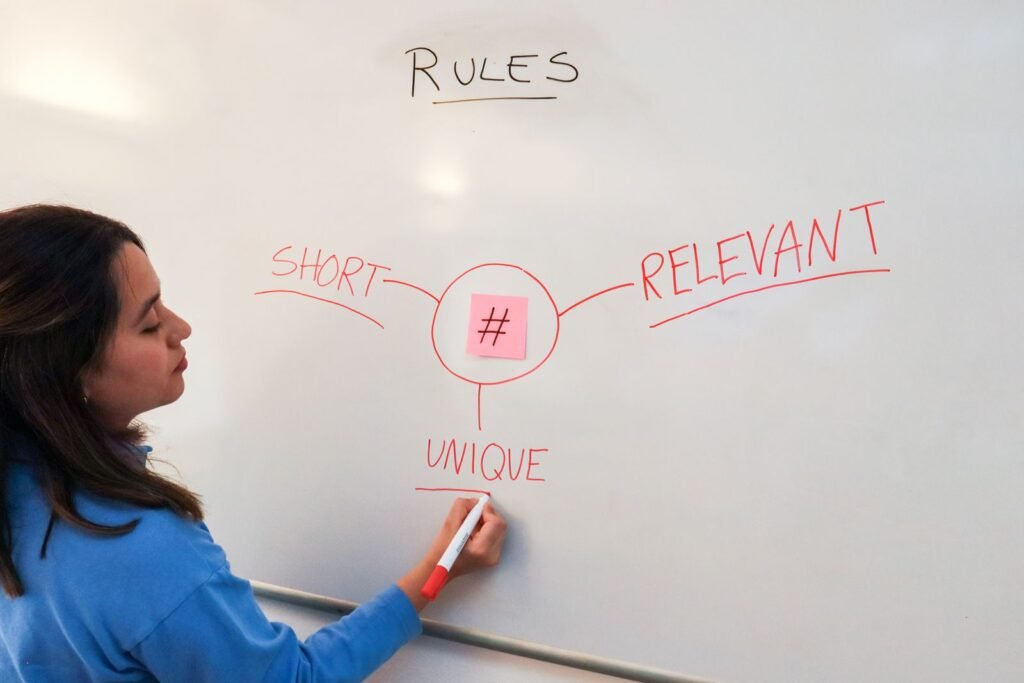
A brand marketing agency should help your business become easier to recognise, understand and choose. That means more than a new logo or a campaign slogan. It means connecting your positioning, customer experience and marketing activity so that the same clear promise shows up wherever a customer encounters you. For Singapore SMEs, that work has to account for a compact, competitive market where customers compare providers quickly and often switch between English, Mandarin and other languages. The right agency will diagnose what is holding your brand back, agree how progress will be judged and make practical improvements across the channels that matter. Before appointing one, ask how its strategy will influence actual decisions, from your website and sales materials to advertising and customer service.
What a brand marketing agency should actually do
Brand marketing is the work of shaping what people understand and remember about a business, then expressing that meaning consistently enough to influence consideration and choice. A brand marketing agency should help you decide who you are trying to reach, why those people should care, what makes your offer distinct and how to communicate that difference across the customer journey.
That is broader than visual identity, but it is not an excuse to produce abstract strategy with no operational consequence. A useful positioning statement should help a sales person explain the offer, help a copywriter choose a headline and help a marketing manager decide which campaign to fund. If the strategy cannot change a decision, it is probably not specific enough.
Brand work can include customer and competitor research, positioning, messaging, visual identity, campaign concepts, content, website direction and measurement. The exact mix depends on the problem. A company with a strong reputation but inconsistent sales materials may need a messaging system and sales enablement, not a full rebrand. A new business entering a crowded category may need research and a distinctive proposition before it invests in media.
In our experience, SMEs get more value when the agency connects brand decisions to execution from the start. That does not mean every brand project must include every channel. It means your agency should explain how the strategic choices will affect the channels you already use. For example, a positioning shift may change your website copy, the audience selected for paid campaigns and the proof points used by your sales team.
This is where related disciplines matter. A brand promise that customers cannot find on the site will not help conversion, so it should inform website design. A consistent narrative needs writing that makes the value clear, which is why brand strategy often connects directly to copywriting and content. These are not add-ons by default. They are execution choices that should follow from the business problem.
Singapore market angle: local relevance beats borrowed playbooks
Singapore is a small, highly connected market, but it is not one uniform audience. An SME selling professional services to local decision-makers has a different buying context from a food and beverage operator attracting neighbourhood traffic, a retailer selling across Southeast Asia or a fintech company that has to communicate trust and compliance. A generic regional brand platform can easily flatten those differences.
Language and cultural context also need practical judgement. English may be the primary language for many business communications, but some consumer categories need Mandarin or other language considerations in creative and customer support. Translation alone is not localisation. A phrase that sounds confident in English may feel unnatural or overly aggressive when translated literally. Ask how the agency will test meaning and tone with the actual audience, rather than treating language adaptation as a final production task.
Privacy should be part of the planning conversation as well. Singapore's Personal Data Protection Act affects how organisations collect, use and manage personal data. A brand programme that relies on customer research, mailing lists, testimonials or personalised campaigns should consider consent, data handling and internal approvals before launch. The agency should not present privacy as a last-minute legal box to tick. It should help define responsible processes and make clear where your organisation needs legal advice.
Local market conditions also change how brand investment should be evaluated. A smaller audience can make word of mouth and reputation influential, while high competition in sectors such as F&B, retail and financial services means that a distinctive brand still needs consistent visibility. Brand building and immediate acquisition are not opposing choices. A business can strengthen a memorable proposition while using search or paid media to reach people actively looking for its service.
For example, a new Singapore professional services firm might have limited awareness but clear expertise. It could use SEO to become discoverable for relevant searches while using brand messaging to give prospective clients a reason to trust and contact it. If the brand work is disconnected from search intent, the firm may attract visitors who do not understand its specialism. If performance marketing is disconnected from brand, each ad can become a short-lived offer with little cumulative recognition.
How to evaluate an agency before you appoint one
Start with the business issue, not the agency's preferred deliverable. A useful brief explains what is happening now, which audience matters, what the business wants to change and what constraints exist. The issue might be low awareness in a new segment, a confusing product portfolio, weak differentiation against established competitors or a website that attracts traffic but does not explain why the company is credible.
Ask the agency to show how it moves from evidence to recommendation. It should be able to explain what research it would use, what it would not assume and how findings would affect the work. Research does not always require a large formal study. Interviews with customers, analysis of sales conversations, review of search behaviour and an audit of competitor claims can all reveal useful patterns. The point is to distinguish a strategic choice from a creative preference.
Look closely at the people who will do the work. The senior strategist in a pitch may not be involved after appointment. Ask who leads research, who writes the messaging, who approves creative and who coordinates implementation. Our team sees better outcomes when the people responsible for delivery can explain the reasoning behind the strategy, rather than receiving a deck and being asked to execute it without context.
The agency should also be clear about boundaries. Is the scope limited to strategy, or does it include design and production? Are website development, media spend, translation and research incentives included? Who owns the final assets? What happens when feedback changes the agreed direction? Clear answers prevent a common source of friction: the client assumes the retainer covers a broad range of execution, while the agency has priced a narrower advisory role.
For a business deciding between strategic guidance and full execution, an SEO consultant can be a useful comparison point. Advisory work may diagnose a challenge and guide an internal team, while an agency engagement may include delivery as well. A brand marketing agency should state where it sits on that spectrum. The distinction affects your budget, your team's workload and how quickly recommendations can be put into practice.
What to expect from the process and timeline
A sound engagement usually begins with discovery. The agency learns about your offer, customer segments, sales process, existing marketing, competitor landscape and internal constraints. It should ask to speak with people who interact with customers, not only senior management. Sales and support teams often hear the objections and points of confusion that do not appear in a polished brief.
Next comes diagnosis and strategic direction. The agency identifies the gap between what the business intends to communicate and what a customer is likely to understand. It then develops a positioning and messaging direction, with the rationale and evidence behind it. This is where you should challenge assumptions. If the proposed difference could describe five competitors, it is not yet a useful point of distinction.
Once the direction is agreed, the work moves into expression and implementation. That might mean a visual identity, website updates, a campaign platform, sales collateral or a content plan. Not every business needs all of these at once. We recommend sequencing work according to the customer journey and internal capacity. A rebrand that launches with no updated website, sales deck or staff guidance creates inconsistency at the moment customers start noticing it.
Finally, agree how the work will be reviewed. Brand outcomes are not captured by one metric. Recognition, branded search, direct traffic, qualified enquiries, conversion quality and customer feedback can each contribute evidence, but they have different limitations. A short campaign may be judged on response, while a longer brand programme should also be assessed for whether the intended audience understands and recalls the offer. Do not claim that one activity caused a sales change unless the measurement supports that conclusion.
A business that needs near-term demand alongside foundational work can consider SEM or PPC as separate, measurable channels. Paid campaigns can capture existing intent while brand work improves the clarity and credibility of the message. The agency should be explicit about which part of the programme is designed to create immediate response and which is intended to build durable preference.
Comparison: choosing the right agency scope
The best engagement is not automatically the broadest one. The table below compares common scopes by the conditions under which they are useful, the main trade-off and the evidence you should expect. Treat the cost column as an indicative planning guide, not a quoted DMS rate or a published Singapore market average. Actual scope and fees depend on research needs, deliverables, approvals and implementation.
|
Engagement scope |
Best fit |
Main trade-off |
Evidence to request |
Indicative planning budget in SGD |
|---|---|---|---|---|
|
Positioning and messaging project |
The offer is sound, but customers struggle to understand the difference |
Recommendations may sit unused without an owner for implementation |
Interview plan, strategic rationale, message framework and handover session |
$8,000 to $20,000 project |
|
Brand identity and rollout |
The business needs a coherent expression across key customer touchpoints |
A visual refresh alone will not fix weak positioning or customer experience |
Identity rationale, usage guidance, priority asset list and rollout plan |
$15,000 to $40,000 project |
|
Integrated brand and marketing programme |
Multiple channels need to express one clear proposition |
Greater coordination and approval demands on the client team |
Strategy, channel roles, delivery calendar, measurement plan and named owners |
$4,000 to $12,000 per month |
|
Specialist advisory |
An in-house team can execute but needs outside diagnosis or senior direction |
Progress depends on available internal capacity |
Defined advisory hours, decision log, recommendations and review cadence |
$1,500 to $5,000 per month |
These figures are working ranges for budgeting conversations, not a promise that a particular agency will deliver the same scope at those prices. A low quote can be appropriate for a narrow project, but compare deliverables and senior involvement before treating it as better value. A high quote should be supported by a clear explanation of research, production, implementation and account management, rather than a larger presentation deck.
The comparison also shows why it helps to separate strategic and production needs. A company with a capable internal marketing team may benefit from positioning and periodic expert review. A smaller business with no copywriter or designer may need execution support to make the strategy usable. If your organisation sells online, the work may need to connect with ecommerce website design and a dedicated ecommerce SEO approach, rather than a generic brand scope.
Field Notes
-
1 clear business problem should lead the brief, because an agency cannot prioritise sensibly if every concern is presented as equally urgent.
-
2 kinds of evidence are a practical minimum for testing a positioning idea, such as customer conversations and competitor message analysis, because internal opinion alone can reinforce existing assumptions.
-
3 customer touchpoints are worth auditing before a rebrand, for example the website, sales presentation and post-enquiry email, because inconsistency often appears between channels rather than within a single design.
-
4 to 6 weeks can be a reasonable planning window for a focused discovery and messaging phase, depending on access to stakeholders and the number of decision rounds; it is not a universal delivery guarantee.
-
1 named internal decision-maker helps keep approvals moving, because feedback from a large committee without a final owner can turn a clear strategy into a compromise.
The uncomfortable truth: a stronger brand will not rescue a weak offer
A common mistake is to treat brand as the solution to every commercial problem. If customers understand the offer and still reject it because the price, service, availability or product experience is wrong, more distinctive design will not resolve the underlying issue. It may make the weakness more visible by increasing attention without improving the experience that follows.
Brand work is most useful when the business is prepared to make choices. That could mean focusing on a specific customer group, simplifying an overcomplicated service range, changing how the offer is explained or aligning delivery with the promise. Sometimes that process reveals that the existing claim is not supportable. The responsible recommendation may be to improve the product or service before scaling promotion.
There is also a case for not rebranding. If customers already recognise the business, the proposition is clear and enquiries are strong, a redesign may introduce cost and confusion without solving a real problem. In that situation, sharpen campaign consistency or improve conversion paths first. We found that a disciplined diagnosis can make a smaller engagement more valuable than a dramatic relaunch, because it directs spend towards the actual bottleneck.
This position can sound less exciting than a full rebrand, but it protects the business from mistaking visible activity for progress. A brand programme should make the company easier to choose and easier to deliver on. If it only makes the company look different, it is incomplete.
Client example: giving an engineering consultancy one clear message
A building services engineering consultancy we work with, about 25 staff, was presenting itself inconsistently. Staff, clients and documents used four different short forms of its name, six logo versions were in use, and the firm won 22% of the proposals it sent.
We started with positioning, interviewing the two directors, four senior engineers and six clients, and comparing proposals the firm had won and lost. That gave one clear message, which we carried into a new logo, colour and type system, a pitch deck and proposal templates, then trained the whole team on using them. Six months later the proposal win rate had risen from 22% to 31% and the time to produce a proposal had fallen from 3.5 days to 1.5.
Brand marketing starts with deciding what to say, before any design. You can read the full story in our engineering consultancy branding case study.
Frequently Asked Questions
What does a brand marketing agency in Singapore do?
A brand marketing agency researches your market and customers, clarifies your positioning, develops messaging and helps apply the strategy to relevant touchpoints. Depending on scope, it may also deliver identity, campaign creative, content, website work or channel management. Ask which outputs are included and who is responsible for implementation. A strategy-only engagement and a full execution programme solve different problems and need different levels of internal support.
How do I decide whether I need a rebrand or a marketing campaign?
Choose a rebrand when the current identity or message creates a real barrier, such as confusion about the offer, poor fit with the intended audience or inconsistent presentation after a major business change. Choose a campaign when the proposition is already clear and the immediate need is to promote it to a defined audience. If evidence is mixed, begin with a diagnosis rather than committing to a large redesign or media spend.
How much does a brand marketing agency cost in Singapore?
As an indicative planning range, a focused positioning or messaging project may cost around SGD 8,000 to SGD 20,000, while a broader identity and rollout can be around SGD 15,000 to SGD 40,000. An integrated monthly programme may sit around SGD 4,000 to SGD 12,000, depending on work included. These are budgeting examples, not a standard market tariff or a DMS quote. Request a scope that separates strategy, production, media spend and ongoing support.
How long should a brand strategy engagement take?
A focused discovery and messaging phase may take several weeks, while a wider identity and implementation programme can take longer because it involves more stakeholders, assets and approvals. The agency should provide a timeline tied to decisions and dependencies, not only a launch date. Ask what access it needs from your team, how many review rounds are included and what happens if research changes the initial direction.
Should a small business hire a brand agency or handle branding in-house?
An in-house team can be effective when it has the time, strategic experience and authority to make decisions across departments. An agency may be useful when the team needs independent diagnosis, specialist skills or additional capacity. Consider the gap you need to fill, not the prestige of hiring externally. If you appoint an agency, keep an internal owner who can provide context, approve priorities and carry the agreed system into day-to-day work.
How can I judge whether brand marketing is working?
Set a baseline and choose indicators that match the objective. For an awareness challenge, look at audience recall, branded search trends and qualified direct interest, alongside customer feedback. For a clarity or conversion challenge, review enquiry quality, questions prospects ask and how users move through key pages. No single metric proves that brand activity caused a commercial result. Agree the measurement method in advance and report limitations as well as positive signals.
Make the appointment about the problem, not the presentation
Before choosing a brand marketing agency in Singapore, write down the decision you need help making and the business evidence behind it. Ask each agency to explain its proposed scope, who will do the work, how it will involve your team and how recommendations connect to execution. Compare like with like, keep strategic work separate from media budgets and avoid paying for a rebrand when the real issue is an unclear offer or inconsistent customer experience.
If you want an agency to assess how brand strategy could connect with SEO, paid media, content and web work, start with a practical conversation about your current bottleneck. Digital Marketing Singapore outlines its wider digital marketing services and can discuss a suitable scope through its contact page. The right next step is a diagnosis that leads to clear choices, not a promise that one campaign or new identity will fix everything.

Natasha Tan is the founder of Digital Marketing Singapore, a full-service SEO and digital marketing agency based in Singapore. With hands-on experience across SEO, paid media, and content strategy, she works directly with Singapore businesses to build organic visibility and generate consistent leads. Natasha specialises in the Singapore market — including local search behaviour, PDPA compliance, and government grant navigation for SMEs.