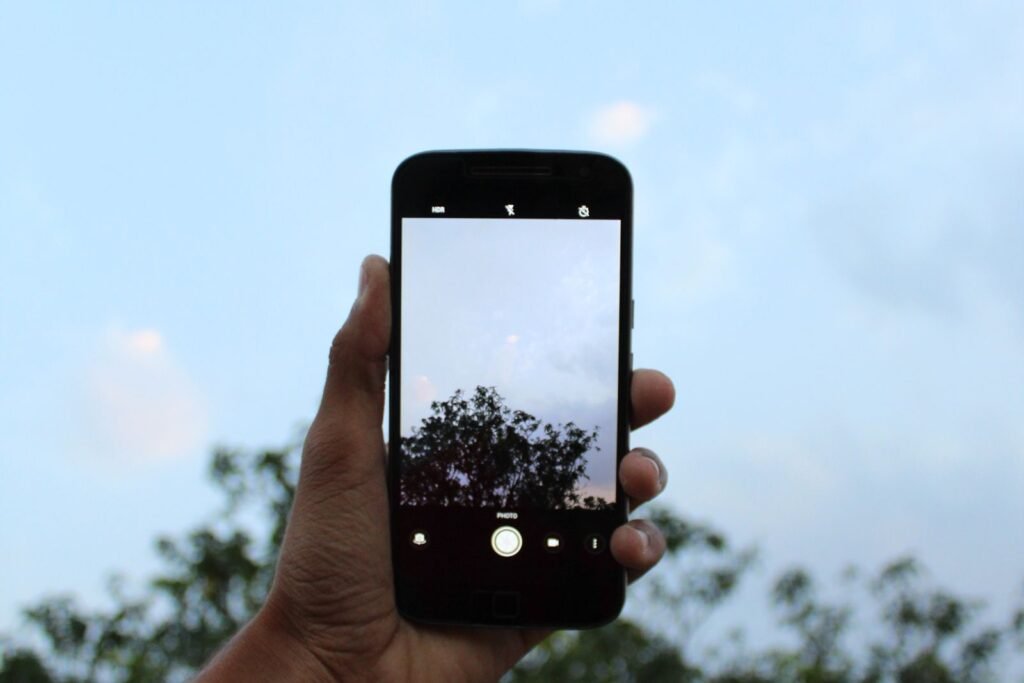
If you take a beautifully made ninety second brand film, crop it to vertical and post it to Reels, it will underperform. Not because the film is bad, but because social media video production is built around a different set of physical constraints: a phone held in one hand, a thumb that moves in under two seconds, a viewer in a lift lobby with the sound off, and an algorithm that rewards watch time rather than craft. Almost everything that makes a corporate film good makes a social video worse.
Singapore brands tend to arrive at this the expensive way. They commission one hero piece, cut it into four, post it, see flat numbers, and conclude that video does not work for their category. What usually happened is that they made television and posted it to a format that is not television.
The five constraints that shape everything
Every decision in social video traces back to five facts about how the content is consumed.
The frame is vertical and the safe area is small. A 9:16 frame is 1080 by 1920, but the top and bottom are occupied by interface. Captions, handles, CTA buttons, progress bars. Anything important in the top 250 pixels or the bottom 400 is at risk of being covered, and it varies by platform and by whether the viewer is on the feed or the profile grid.
The first two seconds decide everything else. Not the first ten. Viewers scroll before a logo sting finishes rendering. Any structure that builds to a payoff will lose most of its audience before the payoff.
Most viewers have the sound off. Autoplay is muted in the majority of contexts, and plenty of people who turn it on are in an office or on the MRT and turn it straight back off. If your video requires audio to make sense, you have built a video that most of your audience will not understand.
The feed is native-first. Content that looks like an advertisement gets treated like an advertisement. Content that looks like it belongs in the feed gets watched. This is not about production value being low, it is about the visual grammar matching what surrounds it.
Volume beats polish. One video a quarter cannot learn anything. Twelve videos a quarter can tell you which hook, which format and which subject actually hold attention, and the winner is almost never the one everyone predicted in the kickoff meeting.
Specs that actually matter, platform by platform
Specs change, so treat the table below as the shape of the problem rather than a permanent reference, and check the platform's own guidance before a shoot. What does not change is the principle: shoot wider than you need, protect the safe area, and never let the master be the only version.
| Placement | Aspect ratio | Practical length | Safe area to protect | Captions |
|---|---|---|---|---|
| Instagram Reels | 9:16 | 7 to 25 seconds | Top ~250px, bottom ~420px | Burned in, always |
| TikTok | 9:16 | 9 to 34 seconds | Right edge for icons, bottom third | Burned in, high contrast |
| Instagram feed | 4:5 | 10 to 30 seconds | Minimal, but no text near edges | Burned in |
| Instagram Stories | 9:16 | Under 15 seconds per card | Top and bottom thirds | Burned in |
| Facebook feed | 4:5 or 1:1 | 15 to 45 seconds | Lower third for headline | Burned in |
| LinkedIn feed | 1:1 or 4:5 | 30 to 90 seconds | Lower third | Burned in |
| YouTube Shorts | 9:16 | 15 to 45 seconds | Bottom ~400px for title | Burned in |
| Paid placements | Match organic | Shorter than organic | Depends on placement set | Burned in |
Two things in that table are worth arguing about. The first is that we recommend burned-in captions everywhere rather than relying on platform auto-captions. Auto-captions are inconsistent with Singaporean names, product names, and any accent the model was not trained heavily on, and they render in a style you do not control. The second is that the lengths are shorter than most briefs assume. When we review client accounts, the most common structural problem is not quality, it is that everything is twice as long as it needs to be.
Shooting for the sound off
This is the discipline that separates people who make social video from people who make video and post it socially.
Write the video so the visuals carry the meaning. Before a shoot, run the storyboard as a silent film. If a viewer who cannot hear a word still knows what is being sold and what they should do, it works. If the whole thing hinges on a voiceover line, it does not.
Front load the subject. Whatever the video is about should be physically on screen in frame one. A product, a face, a problem being demonstrated. Not an empty establishing shot of a building, which is the default instinct from corporate work and the most reliable way to lose half the audience.
Use text as a design element, not a subtitle track. A hook line in the first frame, held long enough to read, positioned inside the safe area. Then captions underneath for the dialogue. The two do different jobs and should look different.
Record clean audio anyway. A meaningful share of watch time does have sound on, and those viewers are usually the engaged ones. Sound-off design and good audio are not in tension. Shoot for the majority, reward the minority.
Shoot to be cropped. Frame with headroom and side room so the same take can be delivered as 9:16, 4:5 and 1:1 without reshooting. This is a small discipline on the day that roughly triples the usable output. Our videography team frames every social shoot this way as standard.
The volume argument, and where it breaks
Conventional advice in Singapore agency land is still weighted towards the hero piece. One big shoot, one big film, cut down for social. There is a reason for that: it is easier to sell, easier to approve, and it produces something the founder can show people.
In reality, for most SMEs, a single polished film is the worst possible use of a video budget. It tests one hypothesis. You get one hook, one format, one subject, one length, and no way of knowing which of those variables drove the result. If it underperforms, you have learned nothing actionable and you have no budget left to act on it anyway.
Split the same budget into a batch shoot producing fifteen to twenty pieces and you get something else entirely: a test matrix. Three hooks across five subjects, two lengths, a mix of talking head and demonstration. After a month you know which combination holds attention in your category. That knowledge is the asset, not the individual clips.
Here is where the volume argument genuinely breaks, and you should be suspicious of anyone who does not mention it.
Volume without a point of view produces noise. Twenty pieces of content that all say nothing distinctive will perform exactly as badly as one piece that says nothing distinctive, at twenty times the production effort. The batch approach only works if the underlying proposition is sharp enough to be worth repeating. If you cannot articulate in one sentence why someone should care, more videos will not rescue it. Fix the message before you scale the output.
Volume also breaks when it degrades below a floor. There is a quality level beneath which content reads as careless rather than casual, and it is not about camera cost. Bad audio, shaky handheld with no intent, illegible captions, poor lighting on a face. Native-looking is not the same as amateur. The most effective social video we produce looks unfussy and is technically tight underneath.
What a batch shoot actually looks like
A properly run batch day is closer to a production line than a film set, and clients are often surprised by how different it feels.
Pre-production does the heavy lifting. Scripts for every piece, locked before the day. A shot list grouped by setup rather than by video, so the crew lights once and shoots six things. Wardrobe changes planned to create the illusion of different days. Every hook written out and printed, because the hook is the variable you most want to test and the easiest to fumble on the day.
On the day, you are aiming for six to eight hours of shooting producing enough raw material for a month or a quarter of posting. That means running to schedule, not chasing perfection on any single take. The rule we work to is that a good take now beats a perfect take in twenty minutes, because the twenty minutes costs you two other videos.
Post-production is where the multiplication happens. Each piece gets its primary cut, then the alternate aspect ratios, then caption burn-in, then platform-specific length variants. This is why the post-production stage is frequently underestimated in social briefs: the edit is not one job per video, it is three or four deliverables per video.
A Singapore case-study scenario
One Singapore food and beverage group we worked with came to us after two years of what they described as video not working. They had commissioned a brand film each year, roughly SGD 18,000 each time, cut it into three social edits, and posted them. Engagement was modest, and the numbers were indistinguishable from their static posts.
When we looked at the footage the problem was visible in about ninety seconds. Both films opened on a slow exterior drone shot of the restaurant frontage. Both were landscape, cropped to square, so the framing was loose and the subject small. Neither had burned-in captions. The story in both was structured as a build, with the emotional payoff at around the fifty second mark, which almost nobody reached.
We ran a single batch day instead. Same total budget, roughly. Eighteen pieces, all vertical, all shot with a phone-first grammar: hands in frame, food being assembled, the first frame always showing the dish or a face, hooks written as questions or claims rather than brand statements. Nothing longer than twenty-two seconds. Everything captioned.
Two patterns emerged within a month. First, pieces that opened on hands doing something held attention roughly twice as long as pieces that opened on a person talking. Second, the hooks that named a specific dish outperformed the hooks that talked about the brand by a wide margin, which was mildly deflating for the marketing team and extremely useful for planning. The third month's shoot was built entirely around those two findings, and it did not require a new strategy document, just a willingness to let the data overrule the kickoff meeting.
The part worth noting is that the winning format was cheaper to produce than the one that had been failing. Better performance did not come from spending more.
The hook library, and why it is the real deliverable
If there is one idea to take from this post, it is that the durable output of a social video programme is not the clips. It is the hook library: a written, tested list of opening lines and opening images that you know hold attention in your category, with evidence attached.
Most brands never build one, because hooks feel like a small creative detail rather than an asset. In practice the hook does more work than anything else in the piece. Same footage, same edit, same offer, different first two seconds, and the watch time can differ by a multiple. That is not an exaggeration and it is easy to verify yourself: post the same video twice with different opening frames and look at the retention graph.
A workable hook library has four or five categories and a handful of tested examples in each. Question hooks that name a specific problem the viewer recognises. Claim hooks that state something mildly contentious. Demonstration hooks that show a result before explaining it. Negative hooks that name what people get wrong. Specificity hooks that lead with a number, a price or a named product rather than a category.
The discipline is to write every hook down before the shoot, film each one as a separate take, and then attribute performance back to the hook rather than to the video as a whole. This costs almost nothing on the day. Each alternate hook is thirty seconds of shooting time. It is the highest return thirty seconds in the entire production, and it is the part most crews skip because it feels repetitive to film the same opening five ways.
Over two or three shoots the library stops being guesswork. You know that your audience responds to price specificity and ignores aspirational framing, or the reverse, and every subsequent brief starts from evidence instead of from a creative director's instinct. That is the compounding asset. The videos themselves have a shelf life of weeks. The library does not.
Equipment, and why it matters less than people think
We get asked about cameras more than any other production question, and the honest answer disappoints people. For social output, the camera is close to the least important variable.
What actually shows up on a phone screen, in rough order of impact: whether the subject's face is well lit, whether the audio is clean, whether the framing is tight enough to read at small size, whether the movement is intentional, and whether the captions are legible. A modern phone with a small light and a decent microphone, in the hands of someone who understands those five things, will beat a cinema camera operated without them.
Where better equipment does earn its place in social work is in flexibility rather than image quality. A higher resolution sensor allows genuine reframing in post, which means one setup yields multiple crops without softening. Better glass in low light means a cafe or retail interior at 6pm does not fall apart. Proper audio capture means you are not rescuing dialogue in the mix. Those are practical production advantages, not aesthetic ones, and they are why our video production crews still bring proper kit to a shoot that will only ever be seen on phones.
The failure mode to avoid is the opposite of underinvestment. Bringing a full corporate crew to a social batch slows everything down, produces fewer pieces, and imposes a visual grammar that reads as advertising in a feed that punishes advertising. We have seen brands spend more and get less usable output for exactly this reason.
Briefing a social video shoot well
A few things we ask for that clients do not always expect.
Tell us the placement before the concept. A piece designed for Instagram ads and a piece designed for organic TikTok should not be the same piece with a different length. The intent differs, so the hook differs.
Give us one measurable objective per batch. Watch time, saves, profile visits, click-throughs. Different objectives change the edit. A video optimised for saves ends differently to one optimised for clicks.
Bring your top and bottom performers. Whatever you have posted before, including the failures, tells us more about your audience than any brief. We look at what held attention, not what won internal approval.
Nominate one approver. Batch production dies in committee. Fifteen pieces through three rounds of five-person review is more hours than the shoot itself. One person with authority, one round, clearly scoped.
Be honest about who will appear on camera. A founder who is uncomfortable on camera will read as uncomfortable, and no amount of coaching fixes it in a day. Staff who are naturally good on camera are an asset most businesses have and never use. Ask around before you default to the managing director.
Where social video sits in the wider mix
Social video is not a standalone channel. It feeds several things at once and works best when that is planned rather than accidental.
The best performing organic pieces become the starting creative for paid social, which is the cheapest reliable way to pick ad creative. Cutdowns feed YouTube advertising placements. Stills pulled from the footage feed the content calendar and cost nothing extra if you brief a photographer to shoot alongside. Longer assemblies become the video content on landing pages and product pages, where they measurably help conversion, and that overlaps with the video content side of the content programme.
If you are also working with creators, the same production discipline applies to what they deliver. We cover that in more detail in our piece on working with influencer agencies, but the short version is that creator content and brand content should share a hook library, not run as two disconnected streams.
Field Notes
Across the social video projects we delivered this year, the clearest single pattern was in length. Pieces under 20 seconds held a substantially higher completion rate than pieces over 40 seconds, and the drop-off was not gradual. It clustered around the 25 to 30 second mark, which is roughly where a viewer decides they have got the idea and moves on. Across one client's library of 34 pieces, the 11 shortest accounted for the large majority of total watch time, and 4 of those 11 were shot as offcuts rather than planned pieces.
The other number worth reporting: on shoots where we framed deliberately for multi-crop, we averaged around 3.2 usable deliverables per setup, against roughly 1.1 on projects where the client supplied existing landscape footage and asked for social cutdowns. That ratio is the whole economic case for planning the format before the shoot rather than after it.
If you want to see how we scope a batch, the production team page sets out the process, or get in touch with whatever you have posted so far and we will tell you what the numbers say before anyone writes a script.

Natasha Tan is the founder of Digital Marketing Singapore, a full-service SEO and digital marketing agency based in Singapore. With hands-on experience across SEO, paid media, and content strategy, she works directly with Singapore businesses to build organic visibility and generate consistent leads. Natasha specialises in the Singapore market — including local search behaviour, PDPA compliance, and government grant navigation for SMEs.



