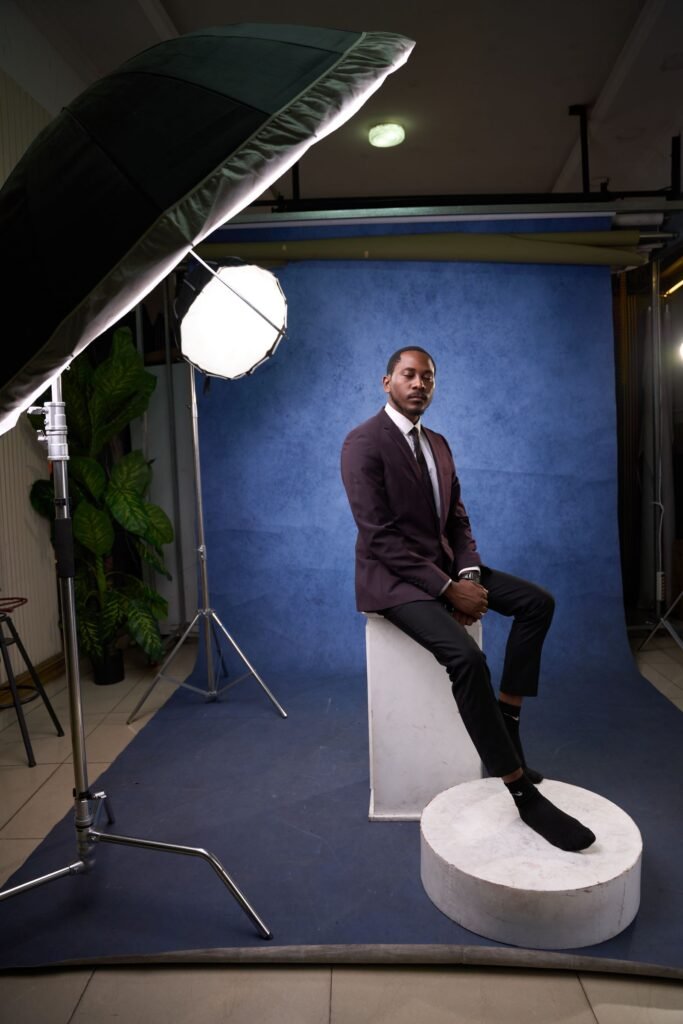
Corporate photography Singapore companies commission usually ends up in one of two places: a library of on-brand images the marketing team pulls from for years, or a folder of stiff, awkwardly lit shots that quietly disappears from the website within a few months. The difference is almost never the photographer's technical skill. It is almost always the planning that happens before the shutter clicks once.
Here is the contrarian part most agencies will not tell you: spending more on the photographer is rarely the fix. In our experience running production for Singapore SMEs and mid-size enterprises, the single biggest driver of a wasted shoot budget is a missing brief, not a missing lens. We have seen S$8,000 shoots produce almost nothing usable, and S$1,800 shoots produce a library that lasted three years, because the difference sat entirely in the planning stage.
This guide is built for marketing managers, HR leads, and founders planning corporate photography in Singapore in 2026. It covers what good corporate photography should actually deliver, realistic Singapore market pricing, the brief structure that determines whether a shoot pays for itself, a comparison of your production options, and the field-level numbers we track when we plan shoots for clients.
What Corporate Photography Should Actually Deliver in 2026
The old definition of corporate photography, stiff boardroom portraits against a plain backdrop, has mostly aged out. Singapore businesses now need photography that works across a wider surface area: website hero images, LinkedIn and Instagram content, pitch decks, recruitment pages, press kits, and paid social creative. A single shoot that only produces headshots is a shoot that under-delivers on its budget.
A well-planned shoot in 2026 typically produces four categories of image: environmental portraits (people in their actual workspace, not against a backdrop), process or "how we work" shots, leadership and team photography, and flexible background or texture shots that designers can use behind text and calls to action. Our clients who plan for all four categories get libraries that last two to three years. Clients who plan only for headshots are usually back in touch within six months asking for more images, at a higher effective cost.
Good corporate photography should also be planned with distribution in mind from day one. Our photography production team plans every shoot around where the images will actually live, since a portrait-orientation Instagram Reel cover and a landscape display banner need very different framing from the same subject.
Common Corporate Photography Mistakes We See in Singapore Shoots
Beyond the missing brief, a handful of recurring mistakes show up again and again across the shoots we review for clients. Knowing them in advance is usually enough to avoid all of them.
Booking the shoot before the marketing calendar is set. Businesses often book a photographer first and figure out what the images are for afterward. This produces generic, purpose-less images. In our experience, the shoots that age best are booked after the marketing team already knows which campaigns, page launches, or recruitment pushes the images need to support.
Treating hair, makeup, and wardrobe as optional. For leadership portraits and any imagery destined for press or investor use, skipping basic grooming guidance is one of the fastest ways to shorten a library's usable life. A one-line wardrobe note in the brief, solid colours over busy patterns, avoid logos from other brands, prevents most of this.
Not confirming who owns final selects. When nobody is explicitly responsible for choosing the final image set, shoots stall in review for weeks and the library never actually gets used. We recommend naming one decision-maker before the shoot day, not after delivery.
Ignoring accessibility and alt text at the planning stage. Images that will support SEO or a redesigned website need meaningful alt text and file naming thought through before upload, not retrofitted months later. This is a small addition to the brief that pays off well beyond the shoot itself.
Assuming one shoot covers every channel forever. A library shot for a static website rarely holds up for a full year of social content on its own. Our clients who plan a light "top-up" shoot every six to twelve months, rather than one large shoot every three years, consistently report a stronger and more current-feeling brand presence.
Making the Library Last: Organising and Reusing Your Images
A strong shoot is only half the outcome. What happens after delivery determines whether the library actually gets used across the two to three years it should last.
We recommend three habits for any Singapore marketing team managing a photography library. First, organise final selects into folders by use case, not by shoot date: "website hero", "LinkedIn square crops", "press kit", and so on, rather than one undifferentiated folder of 90 files. Second, keep a simple usage log noting where each image has already been published, so the same three photos do not end up recycled across every channel while eighty others sit untouched. Third, revisit the library every two quarters and flag anything that looks dated, a haircut that has changed, a since-departed staff member, an old office backdrop, before it embarrasses the brand by appearing in a current campaign.
Teams that treat the image library as a living asset, reviewed on a schedule, get meaningfully more mileage from the same shoot budget than teams that treat delivery day as the finish line.
Client example: what better project photography changed for an interior design firm
One interior design firm we worked with had strong projects but weak images. Photos were taken on a phone by the designers on handover day, often while the owner's furniture was still being moved in, so the portfolio read like a record of finished jobs rather than a reason to hire the firm.
We chose three recent homes that showed the firm's range, a compact HDB flat, a condominium unit and a small shophouse office, wrote a shot list for each covering wide room shots and material close-ups, and produced project photography, a showreel and short videos over a 4-week shoot and edit.
Three months later, monthly website enquiries were up 121% and consultation bookings were up 140%. Read the full interior design photo and video case study.
Corporate Photography Pricing in Singapore: What You Actually Get
Singapore corporate photography pricing splits fairly cleanly into three tiers. The table below reflects typical market rates we see quoted across Singapore production vendors as of 2026, not a fixed Digital Marketing Singapore price list.
| Tier | Typical Price (SGD) | What It Usually Includes | Best Suited For |
|---|---|---|---|
| Entry | S$800 - S$1,800 | Half-day, single location, basic retouching, 20-40 finished images | Small teams, single-purpose headshot refresh |
| Standard | S$1,800 - S$3,500 | Half to full day, one to two locations, shot list, 40-90 finished images | Website relaunch, LinkedIn and recruitment content, brand refresh |
| Enterprise | S$3,500 - S$12,000 and above | Multi-day, creative direction, hair and makeup, complex logistics, broadcast-quality retouching | Annual reports, major executive features, integrated campaigns |
The trap most Singapore businesses fall into is optimising for the lowest headline price instead of cost per usable, on-brand asset. A S$1,200 shoot that produces 25 usable images costs S$48 per image. A S$3,200 shoot that produces 88 usable images costs roughly S$36 per image, and the images are far more versatile across channels. We recommend asking every quote for an estimated deliverable count before comparing price on the invoice alone.
The Brief That Determines Whether Your Shoot Pays Off
The single biggest predictor of a successful corporate shoot is the quality of the brief. A weak brief produces a folder of images nobody uses. A strong brief produces a library that gets pulled from for years. A complete corporate photography brief has seven parts.
1. Business objective for the imagery. Be specific: "support a new About page launch and refresh our LinkedIn presence for Q1", not "we need new photos." The objective shapes every other decision in the brief.
2. Required deliverables list. This is the part most Singapore briefs skip entirely, and it is the one we push back on hardest with new clients. List exactly what you need: number of team headshots, environmental wide shots, process shots, leadership portraits, and so on. The shot list sets the shoot timing, not the other way around.
3. Brand and visual references. Three to five images you like, your own past work, a competitor, or an unrelated brand, with notes on what works. Two or three you do not like, with notes on why. References communicate far more accurately than adjectives ever do.
4. Location plan. Where exactly will the shoot happen: office, cafe, client site? Each location needs walkthrough time, light scouting, and sometimes a permit or a landlord's permission.
5. Talent list. Who needs to be in shots? Get availability confirmed in writing before the shoot date. The single most common shoot day failure we see is half the required team being unavailable.
6. Usage rights. Standard corporate usage, website, social, decks, press, should be included by default. Paid media usage, broadcast, or print advertising at scale usually triggers an upgraded licence. Put the boundary in writing before the shoot, not after.
7. Final file delivery format. Web-optimised JPEGs are standard, but specify upfront whether you also need high-resolution print files, social-cropped variants, or RAW source files.
If you need help structuring the brief itself, our content marketing team and social media marketing team can help translate a business objective into a working shot list before you ever contact a photographer.
Field Notes
On a project photography and video shoot we ran for an interior design firm, monthly website enquiries rose 121% and consultation bookings rose 140% within three months, from a 4-week shoot and edit covering three homes.
Comparing Your Production Options
Singapore businesses planning corporate photography generally choose between three routes. Each has a real tradeoff, and the right choice depends on frequency of need and internal bandwidth, not just budget.
| Option | Typical Cost Structure | Strength | Watch-Out |
|---|---|---|---|
| Freelance photographer | Per-shoot, S$800 - S$3,500 | Flexible, fast to book | No brief support, inconsistent retouching style shoot to shoot |
| Boutique production agency | Per-shoot or retainer, S$2,000 - S$8,000 | Brief support, consistent retouching, faster turnaround | Higher per-shoot cost than a solo freelancer |
| In-house or DIY | Equipment and staff time only | Lowest marginal cost per additional shoot | Requires internal skill and time most SMEs do not have spare |
Our clients who need photography more than twice a year usually end up better served by a production partner who also understands where the images will live, on the website, in paid campaigns, or across social, rather than a photographer booked fresh each time with no continuity in style.
Choosing a Corporate Photographer in Singapore: Five Questions to Ask
Beyond seeing a portfolio, five questions tend to separate a photographer who will deliver a usable library from one who will deliver a folder of files.
1. "Can you work from a written brief and shot list?" A photographer who resists a structured brief is telling you how the shoot day will actually go.
2. "What is a realistic usable-image count from a half-day shoot?" Photographers who undersell volume tend to deliver thin libraries. Photographers who oversell volume often deliver lower average quality. A realistic half-day answer is 40 to 80 finished images.
3. "Who handles post-production, and how long does it take?" In-house retouching is usually faster and more consistent. Outsourced retouching often adds five to ten working days. Either is fine, but you need to know which you are getting before the invoice arrives.
4. "What is your retouching philosophy?" Heavy skin-smoothing and aggressive colour grading dates quickly. Subtle, natural retouching ages far better over a two to three year library life. Ask to see before-and-after examples.
5. "What is included in your licensing, and what triggers an upgrade?" Standard corporate use should cover your owned channels indefinitely. Paid media, regional advertising, and print at scale often trigger upgraded licensing. Get the boundary in writing before the shoot.
When Photography Alone Is Not the Right Investment
Here is a genuinely contrarian point worth sitting with: not every business that thinks it needs a photography shoot actually does. If your core marketing problem is that your website has no visual identity to begin with, a redesigned website or a foundational brand pass usually needs to happen before a photography budget is well spent, otherwise the new images just sit inside an outdated site. Similarly, if your primary distribution channel is short-form video rather than static images, budget is often better spent on video production instead of, or alongside, stills.
We have turned away photography-only briefs more than once and recommended a different first step, because the honest answer to "what do you need" was not "more photos."
Where Corporate Photography Fits Into a Wider Marketing Plan
Photography rarely works as a standalone line item. The images from a well-briefed shoot typically feed straight into SEO content and on-page imagery, paid search and display campaigns, and broader digital marketing work across a business's channels. If your brand also works with creators, the same shoot brief can be extended to cover influencer and creator collaboration content, and if you sell products online, the same planning discipline applies directly to e-commerce product photography for your storefront.
In our experience, businesses that treat photography planning as part of the wider marketing calendar, rather than a one-off task handed to whoever is free that week, consistently get more mileage out of every dollar spent.
A Realistic Shoot Day Timeline
Most Singapore corporate photography confusion happens because nobody has walked through what an actual shoot day looks like before booking one. A typical half-day shoot with a written brief runs roughly as follows: thirty minutes for setup and light testing on arrival, forty-five minutes to an hour for leadership and headshot portraits, ninety minutes for environmental and process shots across the agreed locations, and a final thirty to forty-five minutes for group shots and any remaining items on the deliverables list. Buffer time matters more than most Singapore businesses budget for; a shoot with zero buffer is a shoot where the first delay, a late arrival, a meeting running over, cascades into every slot afterward.
We recommend building fifteen to twenty minutes of buffer into every hour-long block on the schedule, not just at the end of the day. In our experience, shoots built with buffer time finish their full shot list more often than shoots scheduled back-to-back with no slack, even when the back-to-back schedule looks more "efficient" on paper.
One more planning detail worth flagging: weather and daylight matter more in Singapore than most marketing teams initially plan for. Outdoor or window-lit environmental shots are highly weather-dependent, and afternoon tropical showers are common enough that any outdoor component of a shoot should have an indoor backup slot built into the same day, not rescheduled as a separate booking. We have seen otherwise well-briefed shoots lose an entire outdoor sequence to a thirty-minute downpour with no contingency plan in place.
Frequently Asked Questions
How much does corporate photography cost in Singapore? Most SMEs land between S$1,800 and S$3,500 for a half to full day shoot producing 40 to 90 usable images. Enterprise shoots with creative direction and multi-day logistics run from S$3,500 to S$12,000 and above.
How long does a corporate photography shoot take? A half-day shoot, roughly three to four hours, is standard for headshots plus a modest environmental set. Full-day shoots suit multi-location or larger team requirements.
Do we own the images after the shoot? Usage rights depend on the contract, not on payment alone. Standard corporate usage should be spelled out in writing before the shoot, and any paid media or broadcast usage should be confirmed as a separate line item.
Should we hire a videographer at the same time? If your channels lean toward short-form video, planning stills and motion together in a single brief usually saves on location and logistics costs versus booking two separate shoots on two separate days.
Can we reuse the same photographer for future shoots? Yes, and it is usually the better option once you have a photographer who understands your brand and brief format. Continuity in retouching style and shot composition matters more for a multi-year library than switching photographers each time to chase a slightly lower quote.
What is the biggest reason Singapore corporate shoots underperform? In our experience, it is almost always a missing or vague brief, not the photographer's skill, the location, or the budget. Fixing the brief fixes most of the downstream problems.
Getting Your Shoot Right the First Time
Corporate photography Singapore businesses commission does not fail because of the photographer. It fails because the brief was an afterthought. Build the seven-part brief above before you contact anyone with a camera, ask the five vendor questions, and price the shoot on cost per usable image rather than the invoice total.
If you would like a second pair of eyes on a shoot brief before you book it, or want photography planned as part of a wider Digital Marketing Singapore campaign, get in touch with our team and we will help you scope it properly the first time.

Natasha Tan is the founder of Digital Marketing Singapore, a full-service SEO and digital marketing agency based in Singapore. With hands-on experience across SEO, paid media, and content strategy, she works directly with Singapore businesses to build organic visibility and generate consistent leads. Natasha specialises in the Singapore market — including local search behaviour, PDPA compliance, and government grant navigation for SMEs.